
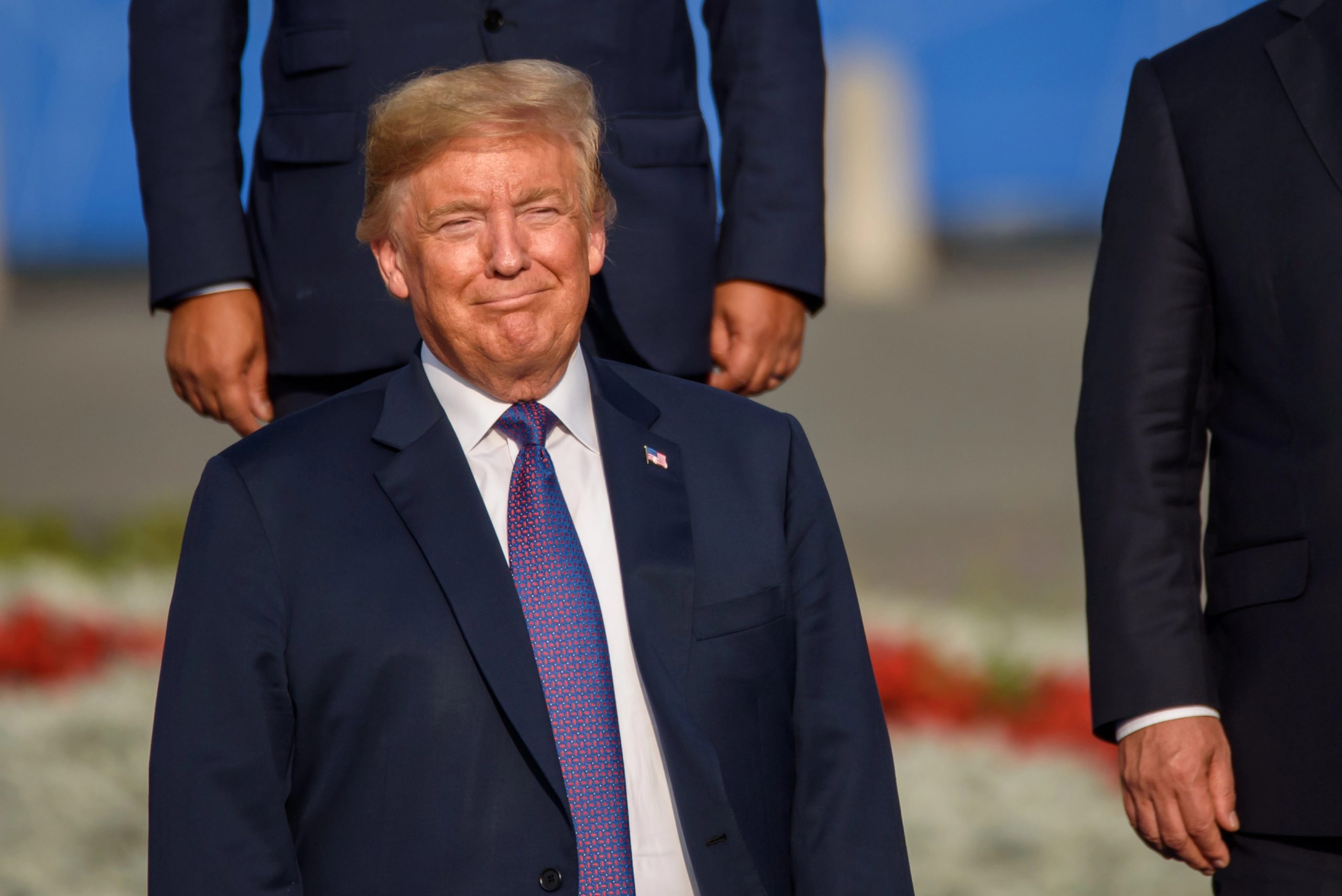
The ruling is not the final word, but it keeps a massive new immigration charge off the books for now. The fight now turns on whether the White House can impose a fee of that size without Congress.
Donald Trump and the Trump administration were dealt another court setback in Boston on Friday when a federal appeals court rejected the administration’s bid to pause a ruling blocking the $100,000 H-1B visa fee. The fight stems from Trump’s September 19, 2025 proclamation, set to take effect September 21, 2025, to impose the fee on new H-1B visas. The article explains what the court ruling means for employers and foreign workers in the H-1B program: the fee remains blocked for now.
The U.S. Chamber of Commerce and Democratic-led states have challenged the policy in court, arguing the administration overstepped its authority. For companies that sponsor skilled foreign workers, the immediate takeaway is simple: they do not have to pay the extra $100,000 charge while the appeal continues.
The court refused a pause
The Boston-based First U.S. Circuit Court of Appeals declined to put a lower-court ruling on hold, according to reporting on the case. That lower-court decision had blocked the administration from collecting the new H-1B charge.
The appeals court’s move is procedural, but it has real-world consequences. The judges did not issue a final ruling on every legal question in the case. They instead refused to let the government enforce the fee while the appeal plays out.
To win that kind of pause, the administration needed to show, among other things, that it was likely to succeed on appeal. The panel found the government had not made that showing.
That leaves the old H-1B cost structure in place for now, rather than the dramatic $100,000 payment the administration sought to attach to new affected visa applications.
Why the fee was challenged
The legal fight centers on a basic separation-of-powers question: can a president impose a six-figure visa charge without explicit approval from Congress?
A lower-court judge had ruled that the $100,000 payment functioned more like a tax than a routine administrative fee, and that Congress had not authorized it. Reuters reported earlier that the fee had prompted at least three lawsuits, including a challenge involving the U.S. Chamber of Commerce.
The administration has defended the policy as part of a broader attempt to reshape legal immigration and discourage what it views as abuse of the H-1B system. Trump has argued that the program can be used to replace American workers rather than fill genuine skill gaps.
Opponents say the fee is not a targeted reform. They argue it is an enormous financial barrier imposed by executive action, with consequences for employers, universities, hospitals, research groups and foreign professionals who rely on the visa pathway.
What employers avoid for now
Before the disputed policy, employers generally paid several thousand dollars in H-1B-related costs, depending on the filing, company size and other factors. Reporting on the case has put the typical range at roughly $2,000 to $5,000.
A $100,000 fee would be a different category of expense. For a large technology company, it could sharply raise the cost of overseas hiring. For a startup, a lab, a school district or a smaller health care employer, it could make sponsorship impossible.
That is why the court’s refusal to revive the fee matters even though it is not a final judgment. Hiring plans are made months in advance, and employers need to know whether a sponsorship decision carries a normal legal cost or a six-figure surcharge.
For now, companies do not have to budget for the extra $100,000 fee on affected H-1B applications. They still have to follow the normal H-1B rules, filing requirements and existing fees.
What it means for workers
For foreign professionals seeking H-1B sponsorship, the ruling preserves access to the program under the prior fee structure. That does not guarantee anyone a visa, but it removes a major cost shock from the process while the litigation continues.
The H-1B program is capped at 65,000 visas a year, with another 20,000 reserved for workers with advanced degrees from U.S. institutions. Demand regularly exceeds supply, which means many applicants already face a lottery and strict filing windows.
The blocked fee would have added another hurdle, especially for candidates outside the United States whose prospective employers might have reconsidered sponsorship. Reporting on the policy has noted that it did not apply to foreign citizens already in the U.S. on student visas, a group that often feeds into the H-1B pipeline after graduation.
Still, the uncertainty is not gone. Workers and employers remain exposed to whatever happens next in the appeal, and to any revised policy the administration may attempt if courts continue to reject this version.
The larger H-1B fight
The H-1B debate has long split business groups, labor advocates, immigration restrictionists and universities. Supporters say the visa helps U.S. employers recruit specialized talent in fields such as software, engineering, medicine, data science and research.
Critics counter that some employers use the program to undercut wages or displace U.S. workers. Those concerns are not new, and both Republican and Democratic administrations have adjusted enforcement priorities around the program.
The $100,000 fee, however, is unusually blunt. It does not merely tighten eligibility rules or increase scrutiny. It changes the economics of sponsorship by making the upfront cost potentially larger than a worker’s annual salary in some fields.
That is why courts are focused not only on immigration policy, but on authority. If the executive branch can impose a charge this large without Congress, the ruling could reshape how far presidents can go in using fees to steer legal immigration.
What happens next
The administration can continue its appeal and could eventually seek review by the Supreme Court if it keeps losing in lower courts. The appeals court’s refusal to grant a stay does not end the case.
Congress could also step in, though major immigration legislation remains politically difficult. Lawmakers have often debated H-1B changes, but durable compromise has been rare.
For employers and applicants, the practical position is clearer than the legal future: the $100,000 H-1B visa fee is not in effect today. The existing system remains in place while courts decide whether Trump’s proclamation can survive.
The next phase will determine whether this was only a temporary roadblock for the administration or a sign that the courts see the fee as an executive move too large for the law to bear.




Leave a Reply