
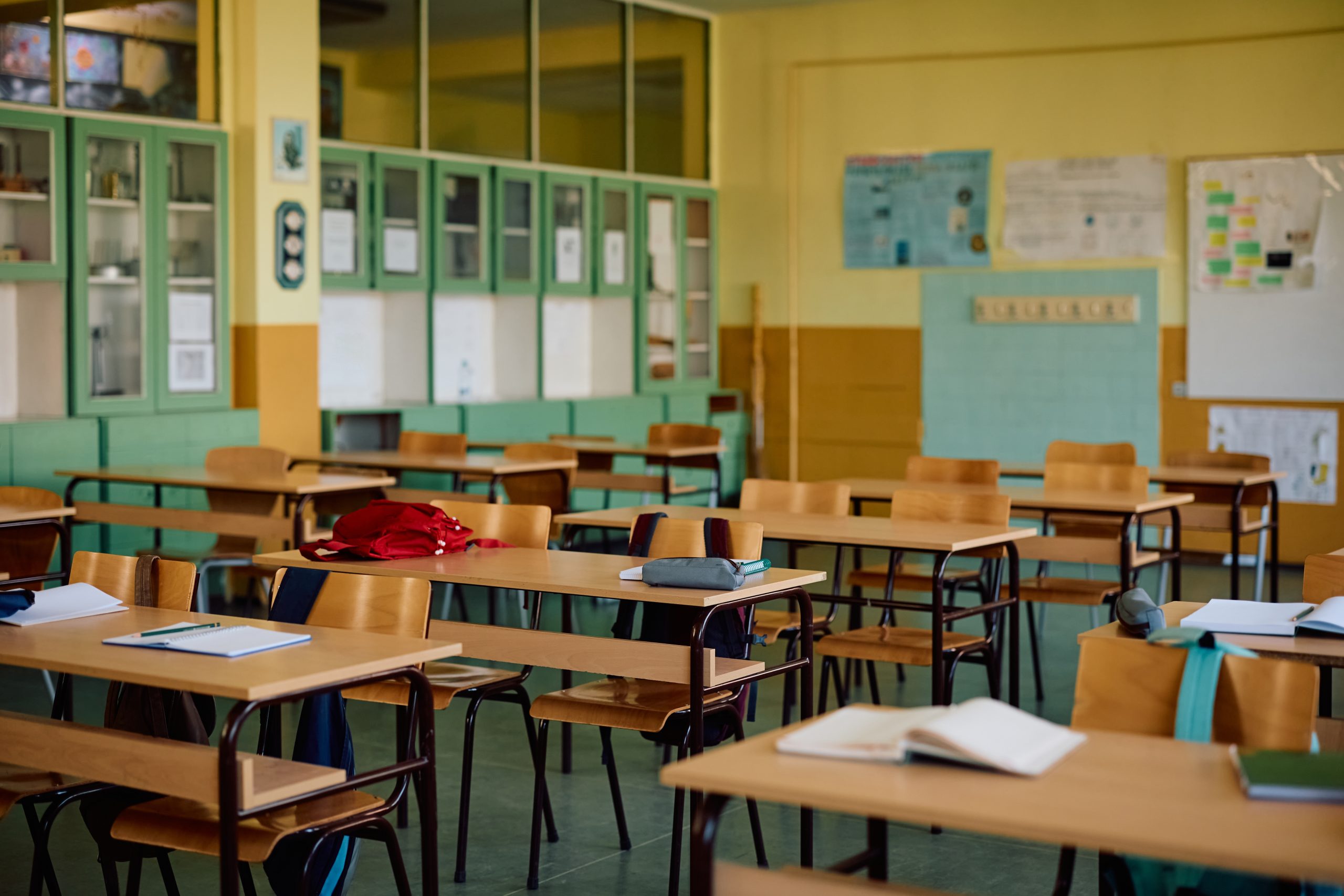
The robot, named Sally, is part of an AI education pilot planned for this fall. Educators say the debate is less about novelty than whether schools are replacing human connection with machines.
Teachers are criticizing a plan to introduce a humanoid robot at a New York high school, calling the school’s robot pilot program inappropriate before its launch this fall. At Salamanca High School in Salamanca, Western New York, on the Allegany territory of the Seneca Nation, the school district bought a $57,590 robot named Sally as part of an AI pilot that has drawn objections from educators and residents.
The dispute is not only about a machine in a classroom. It is about student data, teacher autonomy, cultural history and whether a humanoid device belongs in a school where many families say human connection should come first.
A robot called Sally
The pilot centers on a Realbotix M-Series humanoid robot and an AI-powered educational assistant called Optio, according to details reported by The Guardian and a Realbotix announcement. The company has described the Salamanca effort as a limited pilot planned for fall 2026.
Realbotix has said the humanoid robot uses natural conversation, facial expressions and real-time interaction to create hands-on learning experiences. A presentation on the program, cited by The Guardian, said Sally would operate as a closed-loop system and be available virtually to students around the clock for those with access.
Supporters of classroom AI often argue that these tools can personalize learning, give students extra practice and help schools stretch limited resources. That promise is part of why education technology companies have moved quickly into tutoring bots, automated feedback tools and AI assistants.
But Salamanca’s proposal has landed in a more sensitive place: a human-shaped robot in a high school setting, not just a chatbot on a laptop. That distinction is driving much of the backlash.
Why teachers object
Lacey Pihlblad, president of the Salamanca Teachers’ Association and a teacher at the high school, told The Guardian the union is concerned about the company behind the robot, the security of the software and whether student data could be stored, gathered or recorded.
She said the union wants the district to pause the robot and the software portion of the AI technology until more people can weigh in. The union is also negotiating a new contract and intends to seek protections around artificial intelligence.
Melinda Person, president of New York State United Teachers, said educators across the state are alarmed. She described the plan as “really inappropriate” and said the initial reaction among many teachers was that the idea felt “creepy,” according to The Guardian.
The teachers’ core argument is not that schools should ban every new tool. Person told The Guardian that educators are not anti-technology, but “pro-child.” Their concern is that a robot designed to simulate human interaction could weaken the very relationships students need most.
The cultural stakes in Salamanca
Salamanca High School is located in a city with deep ties to the Seneca Nation, and nearly 40% of the school’s student body is Native American, according to The Guardian. That has made the selection of the school especially controversial among some local residents.
Sierra May Abrams, a substitute teacher at Salamanca High School and local resident, criticized the idea of testing the pilot in a school serving Native American students. She connected the decision to a broader history of institutions experimenting on Native communities and imposing education systems that harmed Native families.
Alyson Brown, a community health specialist, local resident, Seneca Nation member and Salamanca graduate, told The Guardian that many students have family connections to the trauma of Native American boarding schools, including the Thomas Indian School on Cattaraugus territory.
The Seneca Nation declined to comment to The Guardian. Even without an official statement, the local criticism shows why the pilot is being judged not only as an education technology decision, but as a community decision.
Realbotix and the company question
Realbotix has described the Salamanca project as a limited pilot involving Optio and one new humanoid unit. The company did not address the teachers’ criticisms or the call for a pause when contacted by The Guardian, but confirmed the pilot’s basic outline.
Another source of concern is Realbotix’s corporate history. The Guardian reported that Realbotix, formerly Tokens.com, bought Simulacra, a Las Vegas-based company known for realistic sex dolls, in 2024 as part of a move from crypto into humanoid robots.
Realbotix has denied that the dolls are related to the school pilot and has denied the inferences critics have drawn from that background. Still, for teachers and parents already uneasy about a human-like robot interacting with teenagers, the company’s past has intensified scrutiny.
That does not prove the pilot is unsafe or educationally useless. It does explain why educators are asking for more transparency before the device enters a classroom.
AI in schools is shifting
The Salamanca fight comes as schools are still trying to decide what AI should be allowed to do. Many districts have moved from panic over cheating to cautious experimentation with tutoring tools, lesson planning support and accessibility features.
At the same time, New York has been moving toward tighter limits on student phone use and reconsidering how much technology belongs in classrooms. Pihlblad told The Guardian that putting a humanoid robot in front of students feels like a major step in the wrong direction at a moment when many educators want less screen dependence, not more.
The unresolved issue is who defines the boundary between helpful support and replacement. An AI assistant that helps a student practice vocabulary after school may be seen as useful. A humanoid robot that mimics expression, conversation and social presence raises a different set of questions.
Those questions include whether students understand they are interacting with a machine, whether recordings or behavioral data are created, how access is controlled, and whether teachers can opt out of using the system.
What happens before fall
The clearest demand from the Salamanca Teachers’ Association is a pause. Teachers want more review of the robot, the AI assistant, the data practices and the broader implications before the pilot begins.
The district and Realbotix have framed the project as limited, but “limited” can mean different things to different audiences. To a company, it may mean one robot and one school. To a community, it may mean students becoming the first test case for a technology that has not yet earned public trust.
That gap is the heart of the controversy. Salamanca is not just debating whether Sally can answer questions or hold students’ attention. It is debating whether a school should invite a human-like machine into the classroom before teachers, families and Native community members are convinced it belongs there.
For now, the robot is a symbol of a bigger education dilemma: AI may be arriving quickly, but schools still have to move at the speed of trust.




Leave a Reply