
The Florida result is being read as a warning against treating anti-Trump politics as a complete campaign strategy. But one primary offers clues, not a settled verdict, about what Democratic voters want next.
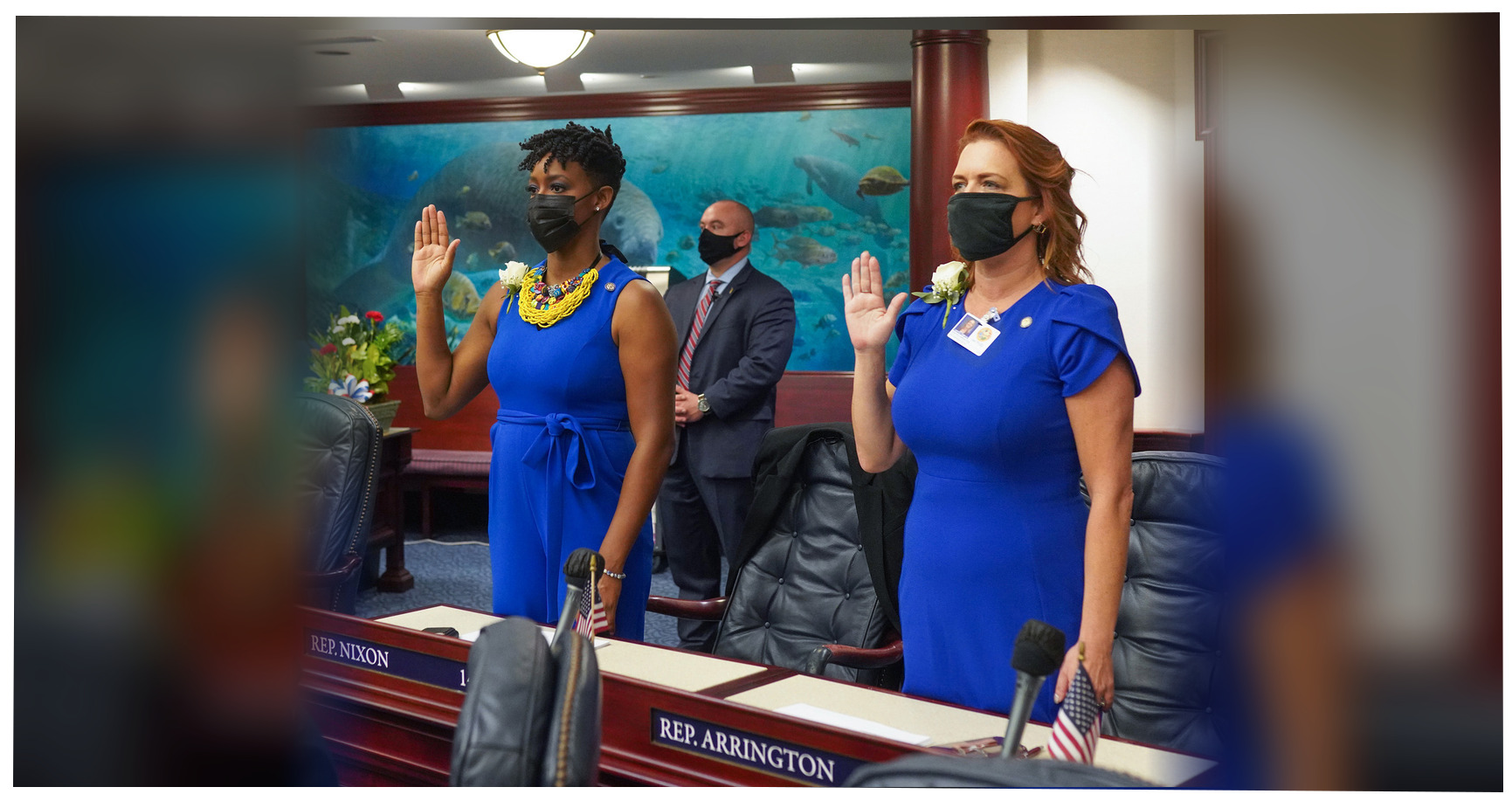
Democratic voters and the Democratic Party are turning toward a new political playbook after a surprise election upset challenged the party’s established approach. In Florida’s Senate primary, progressive state Rep. Angie Nixon defeated Alex Vindman, a center-left figure associated with Democratic “resistance” politics. The result has renewed an argument that opposition to Donald Trump alone is no longer enough to motivate Democratic voters.
That is a larger claim than a single primary can prove. Still, Nixon’s win matters because it puts a sharp question in front of Democratic strategists: if anti-Trump messaging is no longer a sufficient organizing idea, what does a campaign need to offer voters instead?
Angie Nixon’s unexpected primary win
NBC News described Nixon’s victory over Vindman as an upset in Florida’s Democratic Senate primary. Its live election coverage reported that a Democratic strategist working on 2026 races viewed Nixon’s victory as a possible “blessing in disguise” for the party, arguing that a better-funded Democratic campaign might have drawn substantial donor attention to a state where Republicans remain favored.
The immediate outcome is straightforward: Nixon emerged as the Democratic nominee, while Vindman did not. The broader meaning is less straightforward, and it should be treated carefully.
A primary result can reflect a mix of candidate appeal, campaign organization, local political networks, turnout and the electorate that actually showed up. It does not automatically establish that every Democratic voter has rejected a particular national message.
But the symbolism is hard to miss. Vindman’s political identity was linked in part to the era when Democratic politics was heavily shaped by resistance to Trump. Nixon’s victory gives advocates of a more economically focused and progressive campaign style a prominent result to point to.
Why anti-Trump messaging has limits
Donald Trump remains a powerful force in American politics, and criticism of his record can still energize many Democratic voters. Campaigns routinely use contrasts with the opposing party because elections are choices, not policy seminars.
The limitation comes when contrast becomes the entire argument. Voters can oppose Trump or Republican policies while still asking what a Democratic candidate would do about rent, wages, insurance costs, schools, abortion access, public safety or the quality of local government.
That distinction is especially important in a primary. Democratic candidates are not merely trying to persuade people that Republicans are wrong; they are competing with other Democrats for voters who may share the same basic opposition to Trump but differ sharply on priorities, tone and trust.
Nixon’s win does not demonstrate that Democratic voters have stopped caring about Trump. It does suggest that anti-Trump credentials alone may not settle a contest when voters are offered a candidate with a more direct ideological identity or a stronger connection to local concerns.
A contest shaped by Florida’s reality
Florida is central to the strategic debate because it has become a difficult statewide environment for Democrats. The NBC News report quoted an unnamed Democratic strategist who argued that Vindman could have attracted major donor spending in a race the party might still be unlikely to win.
That view will be contested. Writing off a large, diverse state can become a self-fulfilling strategy if it discourages investment in organizing, candidate development and voter registration. A party that abandons difficult terrain too quickly can weaken its future bench.
Still, the argument highlights a practical concern: money and national attention do not guarantee that a campaign has a path to victory. Democrats deciding where to spend limited resources will weigh the competitiveness of a race alongside the value of building long-term infrastructure.
Nixon’s primary win therefore raises two separate questions. One is whether her political approach can compete statewide in Florida. The other is whether national Democratic donors and leaders will see the race primarily as an investment opportunity, a long-shot test case or both.
The new playbook is not one message
Calling for a “new playbook” can be misleading if it implies there is one slogan or ideological lane that works everywhere. Democratic electorates differ across states, districts and even neighborhoods. A candidate’s biography, record and campaign operation can matter as much as national branding.
The more durable lesson is about balance. A campaign can make a forceful case against Trump and Republicans while also giving voters a clear affirmative reason to choose its candidate.
- Local credibility: Voters often respond to candidates who understand the immediate pressures of their communities.
- Specific priorities: Broad warnings about national politics are stronger when paired with concrete commitments on costs, health care, housing, jobs or rights.
- Turnout work: Messaging has limited value if supporters are not identified, contacted and brought to the polls.
- Candidate fit: The most recognizable national profile is not always the best match for a particular electorate.
Progressives will likely cite Nixon’s victory as evidence that clearer economic and left-leaning politics can outperform a campaign built around establishment credentials. More centrist Democrats may counter that Florida’s general election conditions, not only the primary result, should determine how a nominee campaigns.
What the result does not establish
The available reporting does not provide a full account of the race’s vote margin, turnout composition, spending, advertising, field operation or the issues that most influenced voters. Without those details, sweeping conclusions about the national Democratic electorate would be premature.
It also does not show that “hating Trump” is irrelevant. Trump’s role in motivating Democratic voters has been repeatedly visible in modern elections, and his policies, endorsements and political movement will remain part of the 2026 campaign environment.
The more precise conclusion is that opposition can mobilize, but it may not be enough to distinguish one Democrat from another or persuade voters who want an immediate answer to everyday problems. That is a challenge for every party, not just Democrats.
For Democrats, the risk is assuming that national anger automatically becomes local turnout. For Republicans, the Florida result is also a reminder that primaries can disrupt expectations; NBC News reported multiple Trump-backed Republican candidates lost primaries that same night.
Democrats now face a practical test
Nixon’s nomination moves the conversation from primary symbolism to general-election execution. Can her campaign turn an upset into a durable coalition in a Republican-leaning state? Can Democrats explain why her candidacy matters to voters who are not already closely engaged in party politics?
The answer will depend on much more than one message. It will involve fundraising, organizing, the Republican nominee, the state’s political climate and whether voters see a credible connection between campaign promises and their daily lives.
The surprise election upset has not delivered a finished Democratic blueprint. It has, however, made the old shortcut harder to defend. A party cannot simply assume that opposition to Donald Trump will do the work of defining its own candidates, priorities and reasons for asking voters to show up.









Leave a Reply