
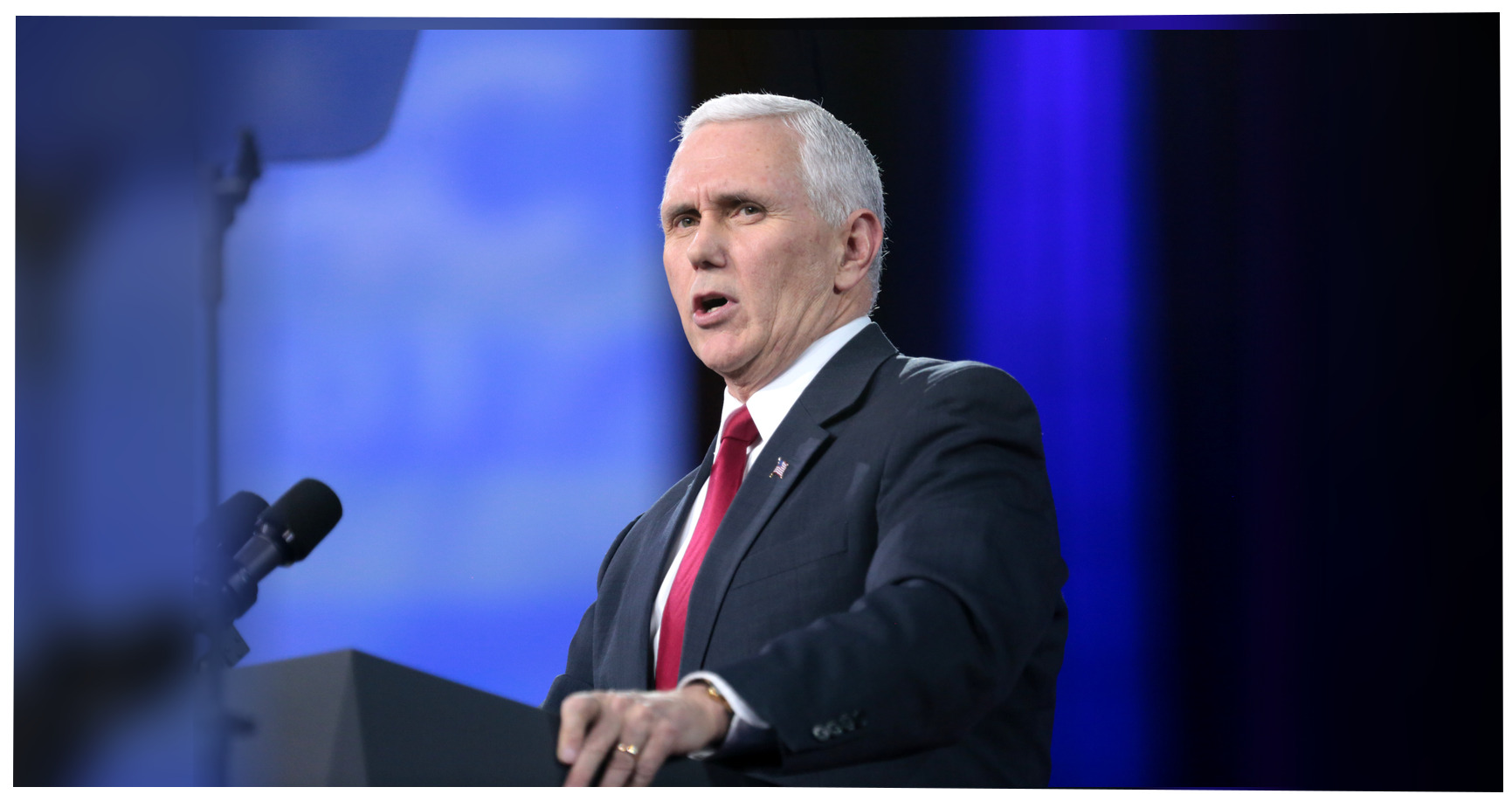
The former vice president’s warning lands as Washington and Ottawa prepare reciprocal tariffs that could raise costs on both sides of the border. The dispute also puts a strain on one of the world’s closest trading relationships.
Mike Pence warned that a trade war with Canada could damage the U.S. economy after trade negotiations between the United States and Canada broke down and the United States imposed 50% tariffs on roughly $20 billion in Canadian goods. The former vice president said the tariff fight is a poor fit for an American economy he described as still regaining its footing.
The dispute is no longer just a tense round of talks. Canada has said it will answer with matching 50% tariffs on U.S. goods beginning Sept. 8, raising the prospect that companies and households in both countries will face higher costs while negotiators remain far apart.
Pence urges talks over escalation
Speaking on CNN’s State of the Union, Pence argued that tariffs imposed by Washington ultimately affect Americans who buy goods and operate businesses in the United States. His point was straightforward: a tariff may be levied at the border, but its costs can move through importers, manufacturers, retailers and consumers.

Pence did not argue that the United States should abandon bargaining leverage. Instead, he said the administration should pursue a tough deal without allowing negotiations to become an extended economic confrontation with Canada.
That places him in a familiar Republican trade-policy divide. One camp sees tariffs as necessary leverage against trading partners it believes have taken advantage of the U.S. market. Another, represented by Pence’s comments, warns that broad tariffs can work like a domestic cost increase even when they are designed to pressure another country.
A deal appeared within reach
The breakdown came after a period of intensive negotiations between Trump administration officials and the Canadian government. According to reporting by the BBC, negotiators had been discussing possible reductions in U.S. tariffs affecting Canadian steel, aluminum and automobiles.
Those talks ended late last week. Canadian Prime Minister Mark Carney said last-minute changes to the proposed U.S. terms were unfair and economically unsound, and raised doubts about whether an agreement could be relied upon.
The U.S. trade representative offered a sharply different account, saying Canada had declined to finalize an agreement after the two sides had reached a balance earlier in the week. The competing explanations matter because they point to the central unanswered question: whether the gap is mainly about the terms of a deal or about trust that either side would stick to one.
Tariffs now move in both directions
President Donald Trump’s 50% tariffs on approximately $20 billion in Canadian products took effect Saturday. Carney responded by announcing commensurate duties on goods entering Canada from the United States, scheduled to begin Sept. 8.
Carney described Canada’s move as reluctant, acknowledging that tariffs can mean higher prices and fewer choices for Canadian consumers. He also said American companies and U.S. states could become collateral damage in a conflict they did not seek.
That is the uncomfortable symmetry of retaliatory tariffs. Each government can frame its response as protection for domestic interests, yet the immediate commercial disruption often falls on firms that sell across the border, source components internationally or depend on predictable prices.
- U.S. importers may face increased costs on covered Canadian goods.
- Canadian importers could face comparable pressure when retaliatory duties begin.
- Manufacturers with supply chains spanning both countries may have less room to absorb repeated cost increases.
- Consumers may encounter higher prices if businesses pass along part of the tariff burden.
The closest trade relationship faces strain
The United States and Canada are not distant rivals with limited commercial ties. Their economies are deeply connected through energy, agriculture, autos, industrial materials and consumer products. A tariff imposed on one category can ripple into pricing and production decisions elsewhere.
Pence drew on his experience during the first Trump administration’s negotiations over the U.S.-Mexico-Canada Agreement, or USMCA. That agreement replaced NAFTA and was intended to provide a modern framework for North American trade.
His appeal for substantive negotiations reflects a concern that the current conflict could overshadow the framework both countries already share. Trade agreements do not eliminate disputes, but they are designed to give governments channels for resolving them without turning every disagreement into a new round of tariffs.
Trump has kept the political temperature high, including by again suggesting that Canada seeks the benefits of U.S. statehood without becoming a state. Those remarks may play into a broader argument about sovereignty and leverage, but they also make a quick reset harder when both governments need room to compromise.
Why consumers are part of the fight
The economic argument over tariffs often turns on who pays. Supporters can say tariffs make foreign goods less competitive and encourage domestic production. Critics respond that import taxes do not disappear; they are paid by importers and can be reflected in prices, margins, investment decisions or supplier contracts.
In a U.S.-Canada dispute, that distinction is especially important because so many goods and inputs cross the border in both directions. A Canadian part, metal product or agricultural item may be built into a U.S. product before it reaches an American customer. The same is true in reverse for Canadian buyers.
Not every tariff cost is passed directly to shoppers, and the effect can vary by product and industry. Some companies may absorb part of it, find alternative suppliers or renegotiate contracts. Still, Pence’s warning focuses on the broader risk: retaliatory policy can compound costs at a time when businesses and consumers are sensitive to them.
The next test is whether talks restart
Canada’s planned Sept. 8 response gives both governments a clear deadline, but not necessarily a clear path to a settlement. Officials could resume negotiations, revise the disputed terms or allow the tariffs to remain in place while trying to extract concessions.
For now, both sides maintain that they were prepared to strike a deal and that the other side moved away from acceptable terms. That makes the rhetoric around the dispute more than a sideshow; it can influence whether either government can present a compromise as a win at home.
Pence’s message is ultimately an argument about priorities. He is not dismissing the case for hard bargaining. He is warning that the United States should measure any negotiating gain against the risk of a prolonged fight with its largest neighbor and one of its most consequential trading partners.











Leave a Reply