
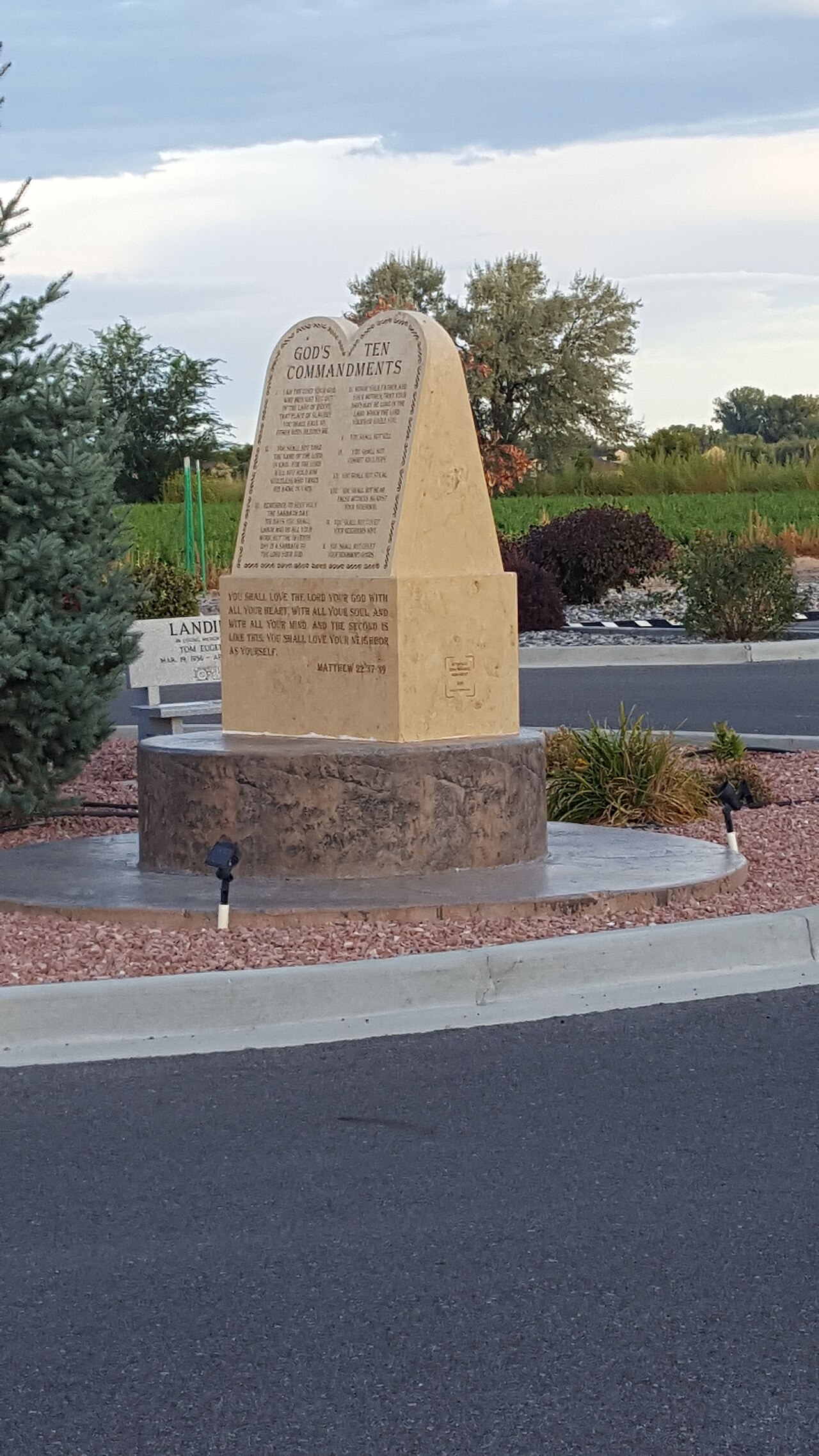
The debate is not only about wall posters in Texas schools. It is also a test of how far a changed Supreme Court approach to religion in public life may reshape classrooms nationwide.
David Barton, the Texas conservative activist, is working to restore Ten Commandments displays in American classrooms through a broader campaign to integrate religion into public education. His effort is closely tied to Texas public schools, where lawmakers have considered requiring a Ten Commandments poster or framed copy in every elementary and secondary classroom.
The immediate stakes go beyond a single display. Barton’s campaign arrives as supporters argue that the Supreme Court’s recent turn toward history-based religious-freedom analysis has weakened older barriers to religious material in schools, while critics say compulsory classroom postings still amount to state-backed religious instruction.
Barton’s campaign reaches the classroom
Barton has spent decades promoting a view of American history that places Christianity at the center of the nation’s founding and civic identity. The Wall Street Journal described the 72-year-old activist as a quiet force in a state-by-state effort to bring religion more directly into public education.
His work is not limited to the Ten Commandments. The larger project involves influencing how public institutions discuss the country’s religious past, what schools may display, and where advocates believe constitutional limits should now be drawn.
That makes the classroom poster debate more than a dispute over décor. Public schools serve students from many faiths and no faith, and the messages required on their walls carry a different weight than displays in private homes, houses of worship, or voluntary student groups.
Texas laid out a detailed model
Texas Senate Bill 10 offered a concrete blueprint for the kind of policy Barton and allied advocates support. The bill analysis said public elementary and secondary schools would be required to place a durable poster or framed copy of the Ten Commandments in a conspicuous location in every classroom.
The proposal was unusually prescriptive. It called for displays at least 16 inches wide and 20 inches tall, using the specific text set out in the legislation and type large enough for a person with average vision to read from anywhere in the room.
Supporters of the measure frame the Commandments as an influence on American and Texas law, as well as a statement of civic morality. The Texas Legislature’s committee analysis said the bill sought to remind students of what its backers view as the Commandments’ foundational role in the state’s and nation’s legal traditions.
Opponents see a crucial difference between teaching about religion in history or literature classes and requiring a religious text to be displayed in every classroom. That distinction is likely to shape any court fight as much as the wording on the poster itself.
An old ruling shadows the push
The most direct legal obstacle has been Stone v. Graham, a 1980 Supreme Court decision that struck down a Kentucky law requiring Ten Commandments postings in public-school classrooms. The Court concluded that the requirement had no clearly secular legislative purpose and violated the First Amendment’s Establishment Clause.
Texas lawmakers acknowledged that history in the SB 10 analysis. But they also argued that the legal terrain has shifted since Stone, particularly after the Court moved away from the once-dominant Lemon v. Kurtzman test in later religion cases.
In Kennedy v. Bremerton School District in 2022, the Supreme Court ruled for a public-school football coach who prayed on the field after games. The Court said Establishment Clause questions should be evaluated with reference to historical practices and understandings, rather than the Lemon framework.
That did not expressly overturn Stone. Still, it gave advocates a reason to argue that a modern Court might evaluate mandatory Ten Commandments displays differently than the Court did four decades ago.
Why supporters cite Texas history
Backers also point to Van Orden v. Perry, a 2005 case involving a Ten Commandments monument on the Texas Capitol grounds. In that case, the Supreme Court allowed the monument to remain, emphasizing its setting and historical context.
But the Capitol ruling did not settle the classroom question. A monument among many markers on government grounds is not the same as a religious text posted where children attend compulsory classes every day.
That contrast is central to the competing arguments. Supporters say the Commandments can be recognized as part of the country’s legal and cultural history without forcing religious observance. Critics say a requirement directed at every classroom communicates official endorsement of one religious tradition, especially to younger students.
The law’s fate, if challenged, would likely depend on context: the mandated wording, the purpose lawmakers articulate, the setting in which students encounter it, and the Supreme Court’s evolving interpretation of the Establishment Clause.
The debate extends beyond Texas
Texas matters because statewide education policies often become models for other legislatures. A policy written with standardized dimensions, exact text, and a classroom-by-classroom mandate gives supporters elsewhere a ready-made template and gives opponents a clear target for litigation.
Barton’s campaign also reflects a broader political strategy: pursue policies in states where leaders are receptive, then use court challenges to test constitutional boundaries. A favorable ruling could encourage similar efforts far beyond Texas; an unfavorable one could reaffirm that public-school classrooms receive special constitutional scrutiny.
There is also a practical question schools would have to confront. Even where a law specifies a display, administrators may still need guidance on implementation, funding, translations or accessibility, and how the rule interacts with instruction about religion, student speech, and the rights of religious minorities.
The legal line remains unsettled
For now, the key fact is that the argument is not resolved simply because the Supreme Court’s religion cases have changed. Stone v. Graham remains a major precedent on mandatory classroom postings, and the Court has not issued a new decision directly approving such a requirement.
Barton and other supporters are betting that the Court’s history-and-tradition approach offers a path around that precedent. Civil-liberties advocates and many religious-freedom scholars counter that public schools remain a uniquely sensitive setting, where government pressure can be felt most strongly by children.
The fight over the Ten Commandments is therefore a test of competing ideas about public education itself: whether schools should visibly affirm religious roots that supporters see in American law, or maintain institutional distance from religious doctrine to protect every student’s freedom of conscience.
Texas may be the present battleground, but the outcome could help define what religion, history, and government authority look like on classroom walls across the country.







Leave a Reply