
Federal officials say an ICE officer fired in self-defense. Araujo’s family says key details do not add up, and the public still has not seen evidence that settles the dispute.
A traffic stop tied to an ICE enforcement operation has become a flashpoint in Houston after a 52-year-old man was fatally shot and more than a thousand people took to the streets demanding answers.
The central question is painfully direct: did Lorenzo Salgado Araujo threaten a federal officer with his vehicle, as federal officials say, or did an aggressive and unclear stop escalate into a death that now requires independent scrutiny?
A shooting with two narratives
U.S. Immigration and Customs Enforcement officers tried to stop a vehicle in Houston shortly before 7 a.m. Tuesday as part of a targeted enforcement operation, according to the Department of Homeland Security account reported by Time. DHS identified the driver as Araujo, a man from Mexico.
Federal authorities said Araujo attempted to evade arrest, rammed an ICE law enforcement vehicle, ignored multiple verbal commands and used his vehicle in an attempt to run over an officer. DHS said the officer fired in self-defense. Araujo was taken to a hospital and died from his injuries.
That account has not ended the matter. Time reported that DHS did not provide evidence to support its claims in the public statement it issued. That gap is now at the center of the backlash from Araujo’s family, civil rights advocates and elected officials.
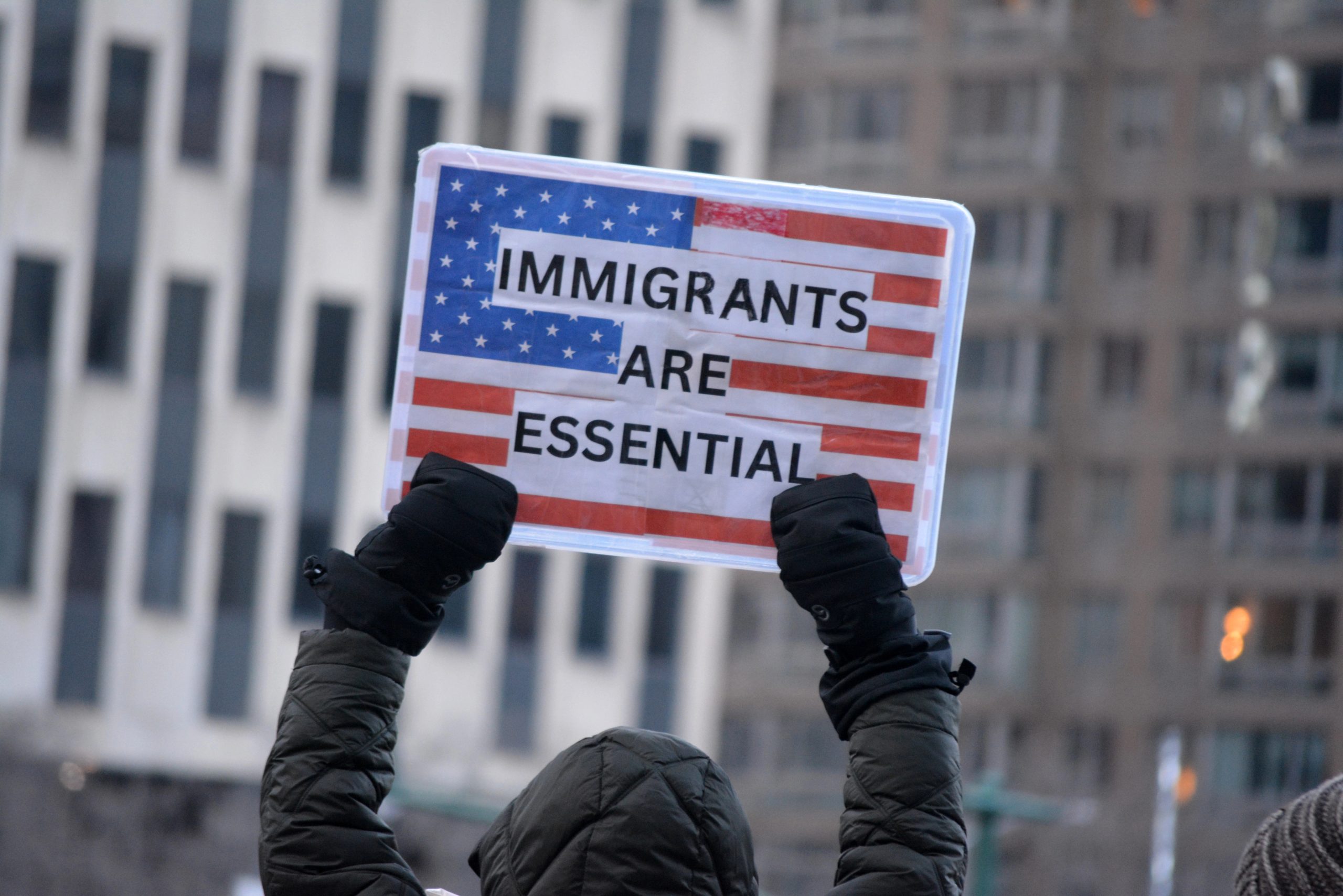
Reuters reported that more than a thousand protesters marched Wednesday near the site of the shooting, chanting ICE out of Houston and calling for transparency. The size and speed of the protest reflected how quickly the case moved from a local death investigation to a broader confrontation over federal immigration tactics.
Family challenges the official account
Araujo’s son, Ronaldo Salgado, offered a sharply different picture of what his father was doing that morning. At a Wednesday press conference, he said his father was a construction worker on his way to pick up colleagues so they could finish work on houses, according to Time.
Salgado said his father may have been frightened because unmarked cars were following him. He argued that if Araujo had seen a clear ICE emblem or other law enforcement marking, he would have complied and stopped.
The family also suggested Araujo may have worried that the people following him intended to steal tools he used for work. That claim does not prove what happened in the moments before the shooting, but it underlines why the family is pressing for more than an agency summary.
Salgado said Araujo had lived in the United States for roughly 35 years and had been trying to obtain legal status. He described his father as a husband, father and job creator, and rejected the idea that his life should be reduced to a shorthand immigration label.
The evidence gap is the story
Fatal encounters with law enforcement often turn on details that are difficult to evaluate without video, radio traffic, witness accounts, vehicle damage reports and a precise timeline. In this case, the known public record remains thin.
The federal government has made serious claims: that Araujo rammed a vehicle, refused commands and attempted to run over an officer. The family has raised serious doubts: that unmarked vehicles may have contributed to fear and confusion before the shooting.
Those claims cannot both fully explain the same moment. That is why demands for transparency are not a side issue. They are the mechanism by which the public can judge whether deadly force was justified, whether the operation was conducted safely and whether officials are presenting a complete account.
Democratic Rep. Sylvia Garcia of Texas, who appeared with Araujo’s family, said Araujo had no criminal record and called for a full, transparent and independent investigation, Time reported. Her demand tracks the central concern from protesters: the agency involved in the operation should not be the only institution shaping the public narrative.
Investigations are already underway
DHS has said its inspector general’s office is investigating the incident. The FBI’s Houston office is also investigating the alleged assault on a federal law enforcement officer, according to the account reported by Time.
Those reviews matter, but they do not automatically answer the family’s call for independence in the way many residents may understand it. An inspector general can provide oversight inside a federal department, while the FBI can examine possible federal crimes. Neither process guarantees that the public will quickly see all evidence.
For now, several basic questions remain unresolved in the public record:
- Were the vehicles used in the stop clearly marked or unmarked?
- Was there body-camera, dashboard-camera or nearby surveillance footage?
- What commands were given, and in what language?
- How close was the ICE officer to Araujo’s vehicle when shots were fired?
- When will investigators release a fuller timeline?
Those are not technicalities. They are the details that determine whether this was a justified defensive shooting, a preventable escalation, or something investigators have yet to fully explain.
Why Houston erupted so quickly
Houston is a city with deep immigrant communities, a large construction workforce and long-running tensions over federal immigration enforcement. A fatal shooting during an ICE operation touches all of those nerves at once.
The protest also comes during a period of intensified immigration enforcement under the Trump administration. Time noted that the Houston case follows other fatal federal enforcement encounters that drew outrage, including incidents in Minneapolis where bystander videos later contradicted official accounts.
That history helps explain why many protesters are not willing to wait quietly for an internal process. When communities have seen official descriptions challenged by video in other cases, a promise of review can sound insufficient unless it is paired with visible evidence and clear deadlines.
The Houston case is especially volatile because it appears to have begun not with an emergency call, but with a planned enforcement operation. That raises additional questions about preparation, identification, communication and whether the tactics used were appropriate for the risk involved.
The next answers matter
At this stage, the public should be cautious about treating either side’s account as the final word. Araujo is dead. An officer says he faced a deadly threat. A family says a working man may have been scared by vehicles he did not recognize as law enforcement.
The next phase will turn on what investigators release and when. If there is video, it will be central. If there is not, investigators will need to explain how they assessed witness statements, physical evidence and officer accounts.
For Araujo’s family, transparency is about more than policy. It is about whether his final moments are defined solely by the agency that shot him. For Houston’s protesters, it is about whether federal immigration enforcement can operate with public accountability when a stop ends in death.
The cleanest path forward is also the most obvious: preserve the evidence, release a detailed timeline, identify what can be made public without compromising the investigation, and allow outside scrutiny. Anything less will likely deepen the mistrust already visible in the streets.


Leave a Reply