

The plan targets one of Dulles’ most debated passenger experiences while raising big questions about cost, construction and who ultimately pays. The promise is a more modern gateway for the Washington region, but the details still matter.
President Donald Trump announced a $22.5 billion renovation of Washington Dulles International Airport on Wednesday, July 29, 2026, laying out a Virginia makeover aimed at ending one of the Washington region’s most recognizable airport rituals: the mobile lounges, or people movers, that shuttle passengers to and from the main terminal.
The renovation will eliminate the airport’s people movers; this article explains what will replace the people movers: a new U-shaped passenger train, a central walking tunnel and more moving walkways, with new terminals and parking also targeted. For travelers around Washington and Northern Virginia, the stakes are time, convenience and who pays for a project this large.
A familiar ride nears retirement
Dulles’ people movers have long been part of the airport’s identity, even for passengers who would rather not ride them. The large mobile lounges have been used for decades to carry travelers between the main terminal and other parts of the airport.
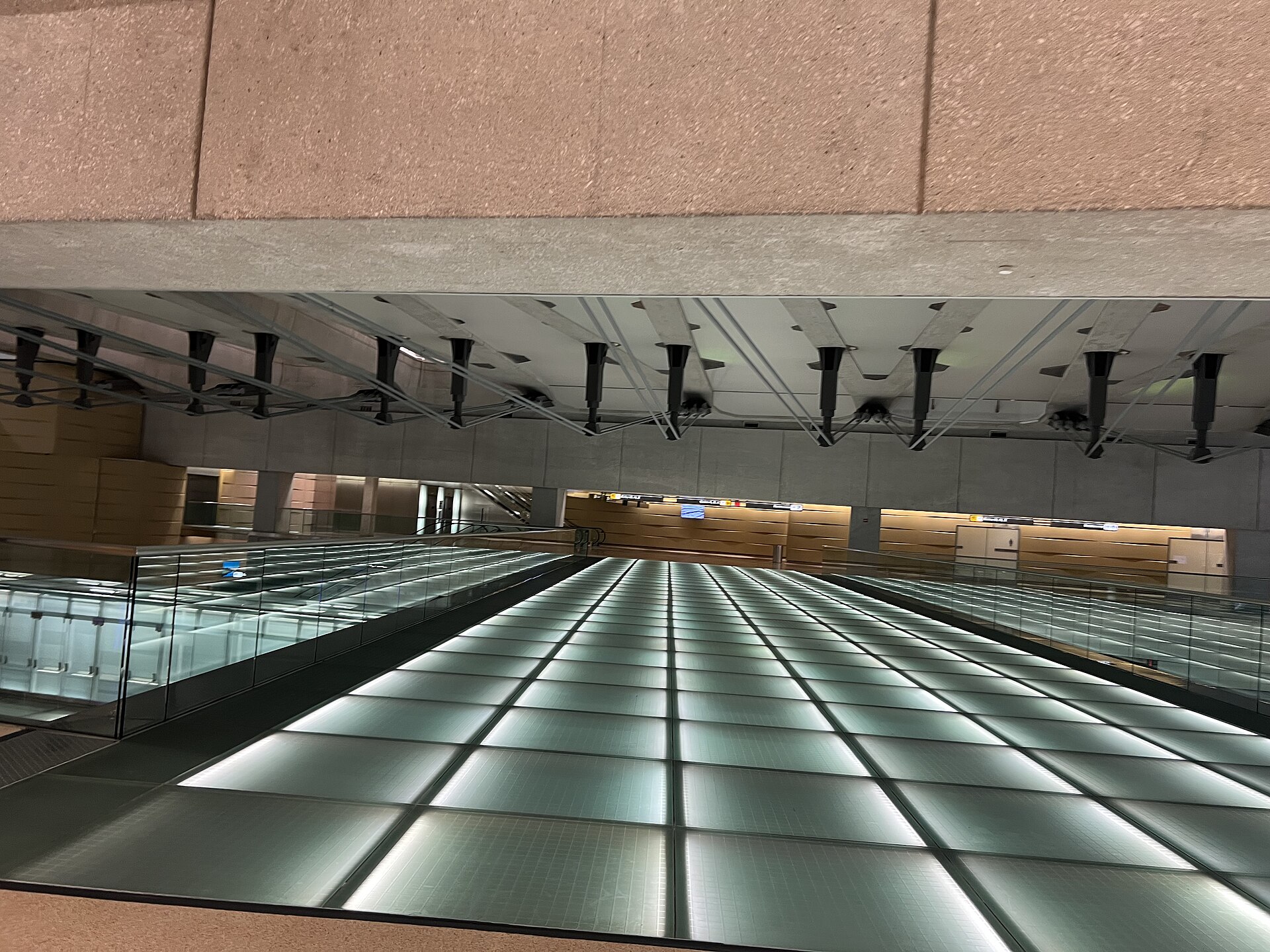
The Associated Press described them as widely disliked, and that reaction is not hard to understand. At many airports, passengers expect a rail system, a direct concourse connection or a predictable walk. At Dulles, the people movers can make the trip feel like a second boarding process before the actual flight begins.
Trump’s announcement puts that experience at the center of a much larger airport redesign. The end of the people movers is the easy part to explain. The harder question is whether the replacement system will make Dulles feel simpler, faster and more intuitive for passengers who use it every day.
What would replace them
The plan outlined by Trump and Transportation Secretary Sean Duffy calls for a new U-shaped passenger train, a central walking tunnel and additional moving walkways. The upgrade also includes new terminals, according to reports on the announcement.
That combination matters because it suggests the administration is not simply trading one shuttle vehicle for another. It is proposing a different passenger flow: more rail, more walking connections and more fixed infrastructure between the main terminal and the gates.
An above-ground parking garage closer to the main terminal is also part of the plan. Officials said the garage would have space for 32,000 vehicles, a major change for an airport where the distance between car, terminal and gate can shape the whole travel experience.
The White House’s Rapid Response Team shared renderings of the proposed project on X, according to KRCR. Renderings can help sell a vision, but they are not the same as a construction schedule, a final design or a guarantee that passengers will avoid years of disruption.
The price tag and payers
The number attached to the project is enormous: $22.5 billion. The White House has said the construction would be partially funded with taxpayer money and that costs would be split between the Metropolitan Washington Airports Authority and airlines operating at Dulles.
That funding structure is likely to draw close attention. The Metropolitan Washington Airports Authority operates Dulles and Reagan National Airport, and airline participation can affect the economics of airport projects in ways travelers may eventually notice through fees, fares or service decisions.
The announcement, as reported, did not provide a full dollar-by-dollar breakdown of who pays what. That leaves important questions about how much public money is involved, what airlines will be asked to contribute, and how the project will be financed over time.
For passengers, the funding debate is not abstract. A beautiful new terminal system is one thing. A project that becomes a long, expensive construction maze without clear benefits is another.
Why Dulles became a target
Trump framed the Dulles project as part of a broader push to make American airports more competitive with major international gateways. He said the United States had watched other global cities welcome travelers with modern airports and noted that Denver, opened in 1995, was the last major airport built in the country.
He has also been openly critical of Dulles. During a December Cabinet meeting, Trump said the airport should be great but was not, calling it a terrible airport. KRCR reported that his motorcade also detoured through Northern Virginia last October to assess possible future projects.
Dulles is not just another regional facility. Formally dedicated by President John F. Kennedy in 1962 and named for former Secretary of State John Foster Dulles, it is one of the three major airports serving the D.C.-Maryland-Virginia area.
Its role as an international gateway gives the project political and practical weight. For visitors arriving in the nation’s capital region, Dulles can be a first impression. For residents, it is a workhorse airport that can be both useful and frustrating.
A legacy project in Washington
The Dulles renovation also fits into a larger pattern of Trump pursuing highly visible projects in the Washington region. The Associated Press noted that he is also pursuing a new White House ballroom and a towering triumphal arch near the Lincoln Memorial before his term ends in January 2029.
That context will color how the airport plan is received. Supporters may see a long-overdue modernization of an aging gateway. Skeptics may view it as another expensive legacy project in a capital already shaped by politics, symbolism and federal money.
Both reactions can be true at once. Dulles has real passenger-experience problems, and modernizing a major airport can deliver lasting public value. But scale alone does not guarantee success. Airport projects live or die by phasing, wayfinding, reliability and whether the new system solves the problems travelers actually feel.
What remains unanswered
The biggest unknown is timing. The reports on the announcement did not specify when major construction would begin, when the people movers would be retired, or how long passengers should expect interim disruptions.
It is also unclear how the new U-shaped train would be phased in, how existing airport operations would be protected during construction, and how the planned terminal and parking changes would connect to the airport’s current layout.
Accessibility will be another key test. More walking tunnels and moving walkways can make an airport easier for some travelers, but only if elevators, escalators, signage, seating and service reliability are designed for families, older passengers and people with disabilities.
The promise is straightforward: retire the aging people movers and make Dulles feel like a modern airport. The test will be whether $22.5 billion produces a smoother trip through Washington Dulles International Airport, not just a more impressive rendering.









Leave a Reply