
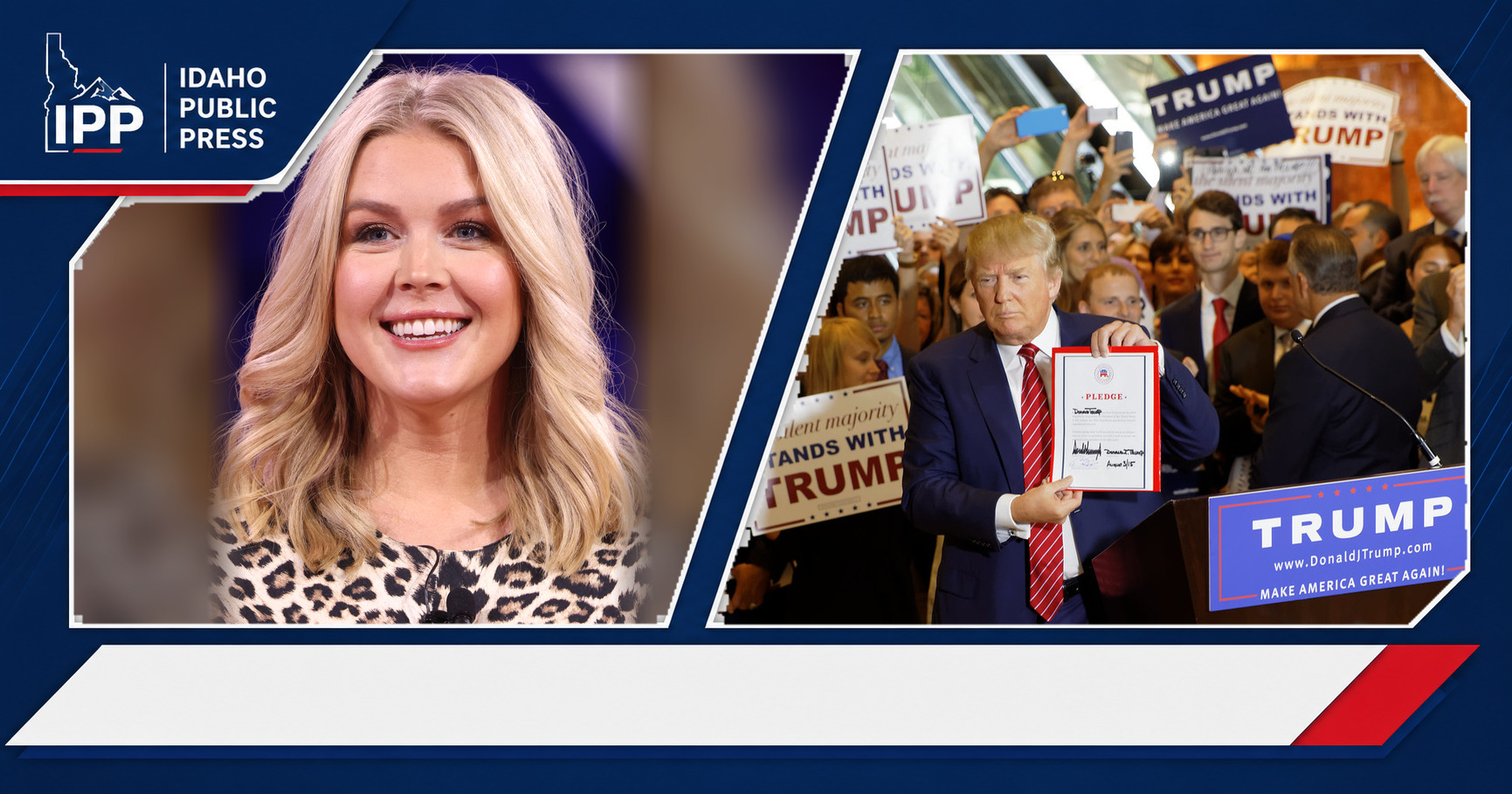
The dispute centers on whether a sweeping White House claim about Trump’s openness was political puffery or a factual assertion that deserved pushback. It also shows how quickly briefing-room language can become a credibility test.
Karoline Leavitt is accused of lying about Donald Trump, and critics are urging action in response to the accusation after the White House press secretary portrayed Trump as unusually open with the press. A Mirror US item circulating on MSN framed the backlash as Karoline Leavitt critics pleading for someone to “do something,” but the clearest source record is Leavitt’s own White House briefing language: she told reporters Trump was “the most transparent and accessible president in American history.”
That claim matters because it turns a routine briefing-room boast into a larger fight over whether official White House statements should be treated as political spin, factual assertions, or both.
The line that lit the fuse
The White House transcript of Leavitt’s press briefing shows her praising Trump’s media access in sweeping terms. “There has never been a president who communicates with the American people and the American press corps as openly and authentically as the 45th and now 47th president of the United States,” she said, before calling him “the most transparent and accessible president in American history.”

Leavitt pointed to multiple news conferences, exchanges with reporters on Air Force One, and a Fox News interview as evidence that Trump was highly visible and frequently taking questions.
Critics seized on the breadth of the statement. The issue is not whether Trump talks often — he plainly does — but whether “most transparent and accessible” is a provable claim, a partisan flourish, or a misleading description of a president whose relationship with the press has long been combative.
Why this claim travels fast
White House press secretaries are not neutral narrators. They are advocates for the president they serve. Still, the briefing room carries a different weight than a campaign rally or social media post.
When a press secretary makes a sweeping statement from the podium, critics often treat it as an official claim by the administration. That is why an allegation that Leavitt “lied” about Trump can spread quickly: it gives opponents a simple charge and gives supporters an equally simple defense, that she was making a political argument rather than reciting a statistic.
The phrase “do something” reflects that frustration. In this context, action could mean reporters pressing harder in real time, news organizations fact-checking official statements more aggressively, or the White House being asked to clarify what evidence supports the claim.
Leavitt’s broader Trump message
Leavitt’s transparency line came inside a much larger presentation about the early Trump administration. In the same briefing, she said Trump had taken “more than 300 executive actions,” secured “nearly $1 trillion in U.S. investments,” and moved aggressively on immigration, energy, federal diversity programs and other priorities.
Her message was clear: Trump was active, visible and moving quickly. That framing is politically useful because it presents intensity as competence and media exposure as accountability.
But those are not the same things. A president can be highly visible while still withholding information, attacking unfavorable outlets, limiting access in certain settings or using frequent media appearances to bypass scrutiny. Visibility is easy to count. Transparency is harder.
The case critics are making
The strongest version of the criticism is that Leavitt turned a debatable political claim into an official-sounding fact. “Most transparent” is not a casual adjective when spoken by a White House press secretary; it implies a historical comparison across administrations.
To prove it, the White House would need more than examples of Trump talking to reporters. It would need a standard: press availability, document disclosure, response to records requests, access for independent media, accuracy of official statements, willingness to answer hostile questions, and openness around policy decisions.
Without that standard, critics argue, the claim is designed to flatter Trump rather than inform the public. That is where the accusation of lying enters the argument.
The more cautious reading is that Leavitt was using political hyperbole. Presidents of both parties have press aides who describe their bosses in exaggerated terms. The difference is that Trump’s team often embraces provocation, and critics are primed to challenge statements they see as part of a broader pattern of overstating achievements.
The defense Leavitt’s allies would offer
Leavitt’s defenders would likely point to the president’s constant media presence. Trump frequently speaks in unscripted settings, takes shouted questions, holds lengthy exchanges, and uses social media and friendly interviews to communicate directly with supporters.
That style can look more accessible than a tightly managed communications operation. Supporters also argue that traditional measures of press access can be biased toward establishment media outlets, while Trump’s approach reaches voters through podcasts, blogs, social platforms and conservative media.
Leavitt made that argument in the briefing, saying the Trump White House would speak to “all media outlets and personalities” rather than only legacy news organizations. She linked that strategy to declining public trust in mass media.
That defense does not settle the transparency question. It reframes it. For Trump’s team, accessibility means constant direct communication. For critics, transparency means verifiable information, accountability and openness to scrutiny beyond friendly platforms.
What remains unresolved
The public record available here does not identify a formal finding that Leavitt lied, nor does it show an official correction from the White House. The controversy is built around critics’ accusation and the administration’s own transcript.
That distinction matters. Calling a statement false requires evidence and a clear standard. Calling it exaggerated is easier. Calling it misleading may be the most precise description if the claim blurs frequency of communication with transparency.
The bigger issue will not disappear with this one line. Trump’s presidency has always produced a high volume of claims, counterclaims and instant fact-checking. Leavitt’s job is to defend him forcefully, but the White House podium also carries an expectation that words mean something beyond applause lines.
For readers, the takeaway is simple: the controversy over Karoline Leavitt’s alleged falsehoods about Donald Trump is really a dispute over accountability. If the White House wants credit for unmatched transparency, critics will demand proof. If it offers campaign-style superlatives instead, the backlash will keep coming.





Leave a Reply