
The criticism lands as FIFA’s U.S. strategy remains under scrutiny after years of courting political power. The dispute is less about one friendship than about how far soccer’s global governing body should go to protect its biggest event.
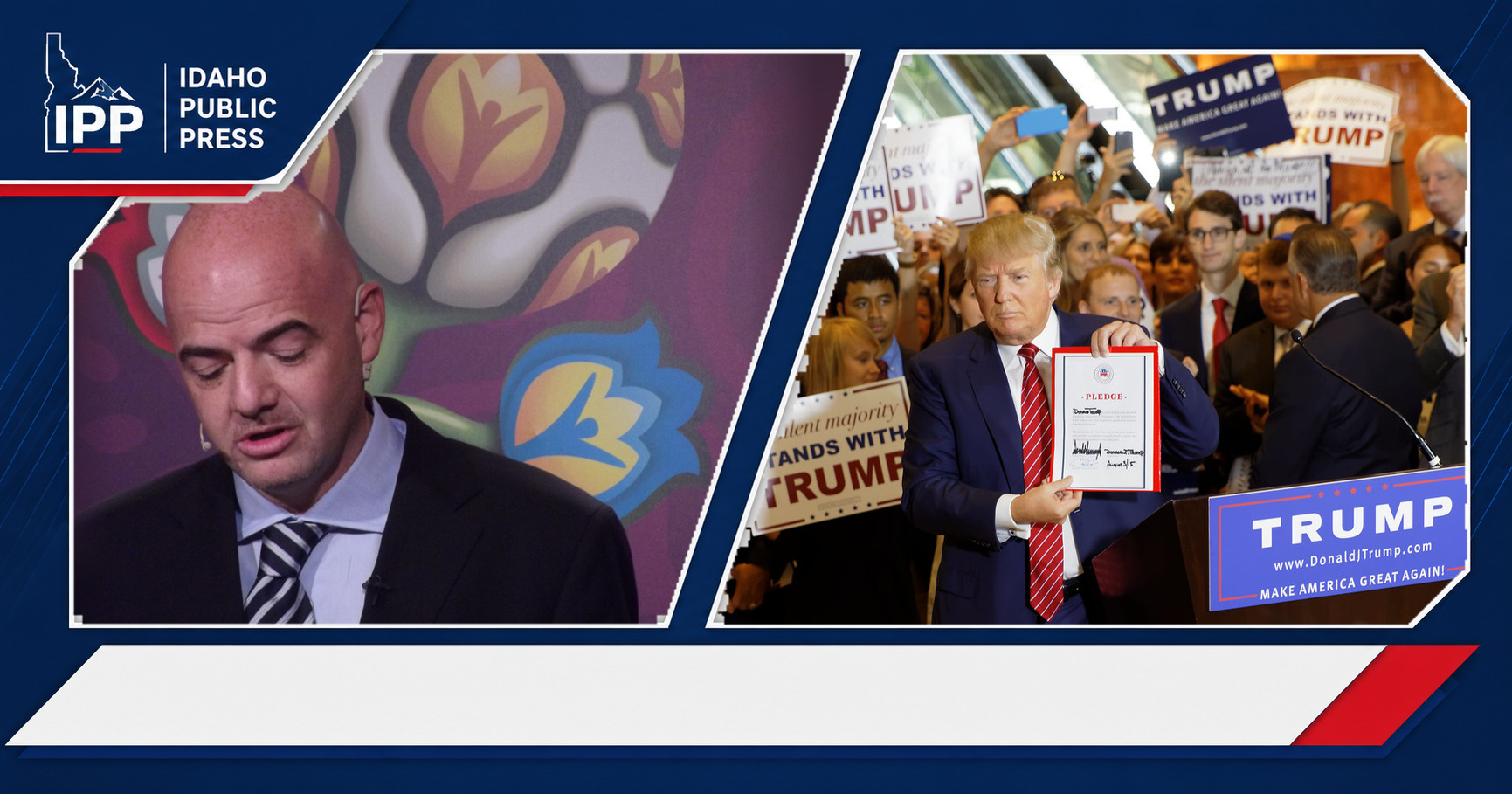
Joseph S. Blatter is criticizing Gianni Infantino’s close relationship with Donald Trump, saying the relationship is “deeply damaging” to soccer and harmful to FIFA’s image. The former FIFA president’s attack targets the current FIFA president’s ties to Trump at a moment when soccer’s governing body is trying to grow its influence in the United States.
The charge matters because Infantino has defended political closeness as necessary for staging major tournaments. Blatter’s warning asks a harder question: when does access to power stop looking like smart diplomacy and start looking like the sport has been pulled into someone else’s political orbit?
Blatter targets Infantino’s alliance
Blatter’s criticism, reported by HITC, centers on the unusually visible bond between Infantino and Trump. His phrase, “deeply damaging,” is blunt even by the standards of FIFA politics, where public attacks between former and current power brokers often carry years of rivalry beneath the surface.

Blatter, who led FIFA before being forced out amid the corruption crisis that engulfed the organization, has long been a complicated messenger. He knows better than most how quickly FIFA’s reputation can be defined by its leadership’s relationships, habits and political calculations.
That history makes his criticism both pointed and imperfect. Infantino replaced the old FIFA order by promising a cleaner, modernized institution. Now Blatter is arguing that Infantino’s own style of leadership risks making FIFA look less independent, not more.
The issue is not whether a FIFA president should speak with heads of state. For World Cups, that is unavoidable. The issue is the degree of closeness, the optics around it and whether FIFA’s interests are clearly separate from the political and commercial interests of a powerful host-country leader.
Why Trump matters to FIFA
Trump is not just another political figure in this debate. The United States is central to FIFA’s North American strategy, and American government cooperation matters on security, visas, immigration logistics, stadium operations and the broader commercial push around the sport.
The New York Times reported in June 2026 that Infantino had spent years courting Trump, including visits to Trump properties and repeated public gestures of praise. The report described FIFA leasing office space in Trump Tower, with a FIFA spokesman saying the organization was paying market rent and that the office would be used during the World Cup.
Supporters of Infantino’s approach see a practical calculation. A World Cup requires government coordination, and Trump’s influence over federal agencies could affect the tournament experience for teams, officials, fans and sponsors.
That is the case for the defense: FIFA’s president may have decided that flattery and proximity were the price of operational certainty. In that view, Infantino was not embracing politics for its own sake; he was managing a volatile relationship on behalf of a global event.
The neutrality problem
FIFA’s own challenge is that it presents itself as a global sporting body above partisan politics, even while its biggest events depend on governments. That tension has always been part of the World Cup. Infantino’s relationship with Trump makes it harder to keep the line clean.
According to The New York Times, Infantino has said it is “absolutely crucial” for the success of a World Cup to have a close relationship with the president and government of a host country. That argument is not unreasonable on its face. No FIFA president can stage a modern World Cup by ignoring the host nation’s leadership.
But critics see a different pattern. The Times reported that some FIFA insiders privately questioned whether Infantino’s closeness to Trump served FIFA or Infantino himself. It also reported that Infantino had appeared alongside Trump at high-profile political and diplomatic moments, prompting questions about what those appearances had to do with soccer.
Blatter’s reported critique lands directly on that pressure point. If FIFA appears too closely aligned with one politician, the sport risks alienating fans, federations and players who expect the global game to remain open to all.
Access can carry a price
The practical benefits of political access can be real. The Times reported that Trump appeared to defer to Infantino on the question of allowing Iranian players into the United States, saying, “If Gianni said it,” he was OK with it. For FIFA, moments like that can look like proof that personal diplomacy works.
Yet the same report noted signs that access did not solve everything. It said support staff for Iran’s national team and a Somali referee were denied visas, and that Trump also criticized high ticket prices, undercutting FIFA on an issue that angered many fans.
That mix is why the relationship is so sensitive. If FIFA gets favors, critics ask what was traded for them. If FIFA does not get results, critics ask why its president invested so much reputation in the relationship at all.
There are also commercial optics. The Times reported that FIFA had explored hotel deals that would license its name and that Infantino had shown interest in a FIFA cryptocurrency, comparisons that drew attention because the Trump family has also pursued licensing and crypto ventures. FIFA has not been shown to have done anything improper in those discussions, but the optics add to the broader concern about brand direction.
Blatter is a flawed critic
None of this makes Blatter a neutral referee. His own FIFA tenure ended in disgrace, and his era remains closely tied to the corruption scandal that damaged the organization’s credibility across world soccer.
That matters because Infantino’s supporters can fairly argue that Blatter is hardly the ideal person to lecture FIFA on reputational harm. His criticism may reflect genuine concern, personal grievance, or both.
Still, flawed critics can identify real problems. Blatter’s most cutting point, reported by The New York Times in a separate discussion of the relationship, was that “nobody can lead Trump.” The implication is that Infantino may believe he is managing the relationship, while the relationship may actually be managing him.
That is the central risk for FIFA. Political leaders come and go, but FIFA’s decisions remain attached to the institution. If the governing body looks captured by one leader’s style, it can damage trust well beyond a single tournament cycle.
What FIFA still has to answer
Several important questions remain unresolved. FIFA has said, through a spokesman cited by The New York Times, that its Trump Tower rent was at market rate. But the broader public concern is not only whether a specific payment was legal or properly priced. It is whether FIFA’s governance is transparent enough to reassure fans and member associations that decisions are being made for soccer reasons.
Infantino’s defenders can point to results: growth in the U.S. market, political access and the enormous complexity of staging a World Cup across North America. His critics can point to the same record and see a president too comfortable blending soccer diplomacy with personal proximity to power.
Blatter’s “deeply damaging” claim is therefore less a final verdict than a challenge to FIFA’s current leadership. If Infantino believes the Trump relationship helped soccer, FIFA will need to show how, not simply assert that closeness was necessary.
The clean takeaway is that world soccer cannot avoid politics, but it can choose how it behaves around power. The more FIFA depends on personal alliances, the more it will be judged not just by the matches it stages, but by the company its leaders keep.



Leave a Reply