
The finding does not erase community fears in Keyport. It narrows the public health question to whether contamination can actually reach people through water, soil, air or vapor.
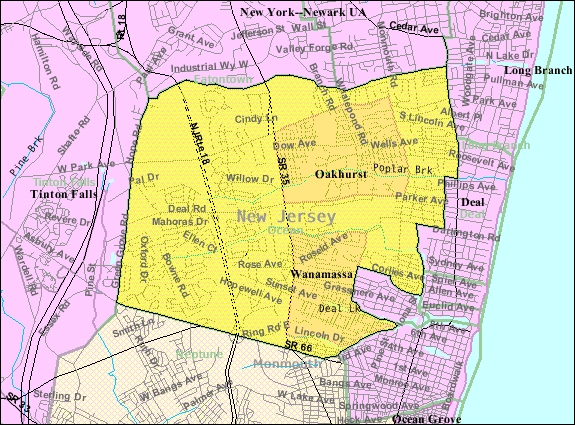
New Jersey officials say the Keyport landfill has no path to expose nearby residents, a finding aimed at cancer concerns linked to the site in Keyport, Monmouth County, New Jersey. The inactive Keyport Sanitary Landfill at Aeromarine Industrial Park has been blamed by some community members for illness, but the state’s current assessment says officials do not see a route for contamination to reach people living nearby.
That distinction matters now because residents want health answers while the New Jersey Department of Environmental Protection and the New Jersey Department of Health review environmental and public health data and coordinate the response.
The state’s central claim
The key phrase in the state’s position is exposure pathway. In plain terms, officials are saying they do not see a complete route by which pollution from the landfill could travel from the site to a resident’s body.
That is different from saying the landfill is attractive, harmless in every respect or fully resolved. The public health question is narrower: is there a source of contamination, a way for it to move, a place where people can contact it, and a route into the body such as drinking, breathing or skin contact?
New Jersey’s update on the inactive Keyport Sanitary Landfill has focused on that chain. State agencies have said their immediate objective is to determine whether contamination has migrated off site and whether any human exposure pathway exists.
For residents who believe the landfill is tied to cancer, that can sound frustratingly technical. But it is the test agencies use before they can say whether a site is creating a measurable public health risk.
Why water is getting attention
Drinking water is often the first concern near old landfills because buried waste can affect groundwater or surface water if contaminants move beyond a property. In Keyport, the state has pointed to several reasons it does not view the borough’s drinking water as an obvious exposure route.
According to the state’s public update, the Borough of Keyport is served by the Keyport Water Department, which was described as meeting all drinking water standards. State officials also said the public drinking water wells supplying Keyport are not in the vicinity of the landfill.
The update added that those wells are in confined aquifers, which are not readily exposed to the type of shallow, surface-level contamination associated with landfills. The state also noted that Keyport’s water department had not had a drinking water standard violation since 2007, and that violation involved coliform bacteria rather than a chemical contaminant.
None of that will automatically reassure every household. People worried about cancer often want definitive answers, not regulatory language. Still, the drinking water information is central to why officials say they do not see a direct path from the landfill to residents.
Cancer fears need different proof
Cancer allegations carry an emotional and medical weight that environmental paperwork does not. A cluster of illnesses in a neighborhood can feel like evidence, especially when a landfill is nearby and has long been a source of concern.
Public health agencies approach that question differently. To connect a site to cancer, investigators generally need more than proximity and stories of illness. They look at environmental sampling, possible routes of exposure, the types and levels of contaminants, how long people may have been exposed, and whether disease patterns are higher than expected for a comparable population.
The New Jersey Department of Health has said it can conduct public health assessments when environmental data are available, including through its cooperative work with the federal Agency for Toxic Substances and Disease Registry. Those reviews are designed to identify potential exposure pathways and recommend steps if risks are found.
That means the state’s current position should not be read as a broad medical ruling on every cancer concern in Keyport. It is a statement about exposure routes as officials understand them from the available environmental information.
Testing still shapes the answer
The landfill issue is not closed simply because officials say they do not see a current exposure path. The state has also described additional environmental testing as part of the work needed to assess site conditions and guide next steps.
In its public update, the NJDEP said it was reviewing relevant data, including results from 2010, and wanted current data to determine whether additional action was needed. The agency said it intended to test water along the site and to collect independent samples during work connected to a potential property transaction.
The state said a permit was issued on April 23, 2026, for environmental testing at the site to current owner Bay Ridge Realty and to SESI Consulting Engineers on behalf of Pacer Group Holdings, a prospective buyer. SESI was expected to conduct soil, groundwater, soil-gas and geotechnical investigations.
Those categories matter. Soil can show what is present on the property. Groundwater can show whether material is moving below the surface. Soil gas can indicate whether vapors could migrate into nearby structures. Geotechnical work helps define the physical conditions that affect closure or redevelopment.
Closure is the long-term issue
For Keyport, the most important next step may be less dramatic than a single health finding: properly closing the landfill. NJDEP has said the owner is responsible for properly closing the inactive sanitary landfill so waste does not contaminate surrounding soil, groundwater or surface water.
The agency’s role is oversight. It supervises closure, post-closure maintenance and monitoring for inactive sanitary landfills. That process can determine whether the site remains an unresolved community worry or becomes a managed property with clearer controls.
Potential redevelopment adds another layer of public scrutiny. Testing tied to a possible sale can generate useful data, but residents may question whether the pace and scope of the work are driven by public health, real estate interests or both.
The state has said it is coordinating with the Governor’s Office, federal agencies, and federal and local officials. That broad coordination suggests officials know the issue is not only technical. It is also about trust.
What remains unsettled
The state’s message gives Keyport residents one answer: officials do not currently see a pathway for the landfill to expose nearby residents. It does not answer every question that has made the site controversial.
Residents may still want to know what the newest tests show, how the state will communicate results, whether any future sampling changes the exposure-pathway analysis, and what a final closure plan will require. They may also want clearer public explanations of how cancer concerns are reviewed and what kind of evidence would change the state’s assessment.
The practical takeaway is that environmental risk is not measured only by whether contamination exists somewhere on a site. Risk depends on whether people can actually contact it at harmful levels.
For now, New Jersey officials are saying that missing link is the reason the Keyport landfill is not considered a direct exposure threat to nearby residents. The pressure on the state will be to keep proving that conclusion with current data, plain language and visible follow-through.









Leave a Reply