
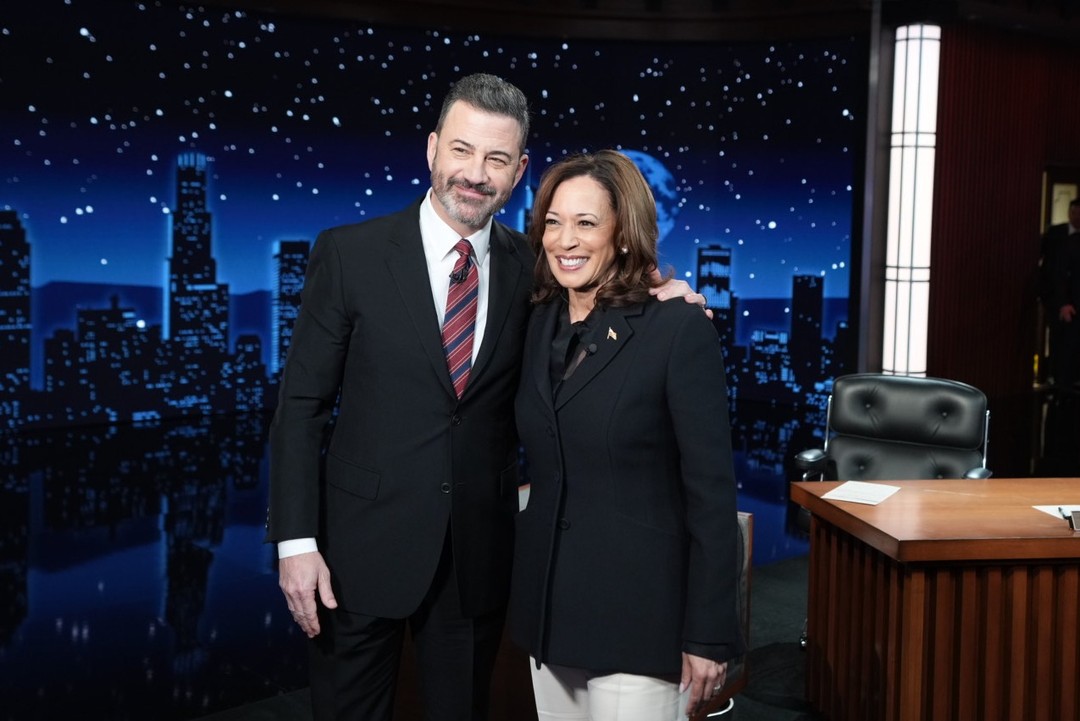
Colbert declined for now, according to Kimmel, but the invitation keeps the debate over CBS, late-night economics and political pressure alive.
Jimmy Kimmel invited Stephen Colbert to guest-host Jimmy Kimmel Live after Stephen Colbert’s show was canceled amid controversy, putting CBS and The Late Show With Stephen Colbert back at the center of late-night TV’s biggest argument.
Kimmel said Colbert declined because the timing felt “premature,” but the offer matters now because it turns a scheduling vacancy during Kimmel’s summer hiatus into a public show of support for a fellow host whose exit critics have framed as bigger than ratings.
Kimmel’s open seat for Colbert
Kimmel told Variety, in remarks reported by Entertainment Weekly, that he asked Colbert to step behind the Jimmy Kimmel Live desk while Kimmel is away and guest hosts rotate through the ABC show.
“Of course, I asked [Colbert to host], and I think it feels premature,” Kimmel said, according to the report. He added that he told Colbert, “anytime you want to host, it doesn’t matter if it’s the summer, I’ll gladly step aside.”
That phrasing is doing a lot of work. Kimmel is not simply offering Colbert a cameo or a friendly drop-in. He is saying, publicly, that one of late night’s most prominent voices still has a desk available if he wants one.
Colbert, at least for now, appears to have passed. Entertainment Weekly reported that it had reached out to Colbert’s representatives for comment.
Why the cancellation still stings
CBS has described the end of The Late Show With Stephen Colbert as a financial decision. In the network’s statement cited by Entertainment Weekly, CBS said the cancellation was “purely a financial decision against a challenging backdrop in late night.”
That explanation has not quieted the backlash. Many critics and industry observers have questioned whether politics played a role, especially because Colbert had long been one of Donald Trump’s sharpest late-night critics.
The controversy has also been tied, by some critics, to the broader corporate climate around CBS parent Paramount and its then-impending Skydance merger. The allegation, as summarized in the reporting, was that removing Colbert could be seen as a way to avoid friction during a period when federal approval mattered.
CBS has denied that framing through its financial explanation. The tension is the point: one side sees brutal late-night math, while the other sees a network retreating from a politically inconvenient comedian.
Colbert’s absence changes late night
Late-night television has been under pressure for years. Audiences are fragmented, younger viewers often see the best monologue clips on social platforms the next morning, and traditional network economics are less forgiving than they were when late-night shows were cultural gatekeepers.
Even so, Colbert’s cancellation landed differently because of who he was in that ecosystem. The Late Show was not a minor franchise, and Colbert was not a peripheral host. He occupied the desk once held by David Letterman and turned political satire into a central piece of the show’s identity.
Kimmel’s invitation underlines that the issue is not only whether one show made enough money. It is also about whether broadcast late night still has room for hosts who make political confrontation part of the product.
That question matters beyond Colbert and Kimmel. If networks decide that outspoken hosts carry too much corporate risk, the genre could become safer, blander and less willing to irritate powerful people.
Letterman framed the bigger fear
David Letterman, who hosted Late Show before Colbert, returned near the end of Colbert’s run and made clear he viewed the moment personally and institutionally.
“You folks wouldn’t be at this theater if it weren’t for me, and Stephen wouldn’t be here if it weren’t for me,” Letterman told Colbert, according to the report. He praised what Colbert built in the space and then offered the line that has echoed through the late-night conversation: “You can take a man’s show, you can’t take a man’s voice.”
Letterman also voiced concern for “the Jimmys,” a reference to Kimmel and Jimmy Fallon, and whether they would be all right in the same environment. That comment now reads less like nostalgia and more like a warning about the whole format.
Kimmel’s public invitation to Colbert answers that warning in one way: he is not distancing himself from the controversy. He is leaning into it.
A guest-host slot with subtext
Guest hosts are normal for Jimmy Kimmel Live during Kimmel’s summer hiatus. On paper, Colbert would have been one more famous face in a rotating lineup.
But this would not have been a normal guest-host week. Colbert sitting at Kimmel’s desk after the end of The Late Show would have turned an ABC episode into a statement about CBS, corporate decision-making and the value of late-night voices.
That may be why Colbert’s apparent hesitation makes sense. A quick return could look triumphant to supporters, but it could also flatten a major career rupture into a stunt. “Premature,” the word Kimmel used, suggests Colbert may not be ready to process the end of one institution by temporarily occupying another.
Kimmel, for his part, has kept the door open. That matters because public offers in television can become pressure points. They tell audiences, networks and rivals where alliances stand.
What happens next
The immediate programming path is clearer than Colbert’s next move. Entertainment Weekly reported that Rosie O’Donnell, another longtime Trump critic, is set to guest-host Jimmy Kimmel Live for one week beginning Aug. 17.
That booking keeps the show’s summer lineup politically charged even without Colbert. It also suggests Kimmel’s hiatus is being used not just to fill airtime, but to showcase performers with strong public identities.
What remains unclear is whether Colbert wants another nightly platform, a different kind of show, or time away from the grind that defines late night. Also unclear: whether CBS’s explanation will gain acceptance over time, or whether the cancellation will remain shorthand for political pressure inside entertainment companies.
For now, Kimmel’s invitation has done what a good late-night segment often does: it turned one line into a larger argument. Colbert may not be guest-hosting Jimmy Kimmel Live yet, but the open chair has become part of the story.

Leave a Reply