
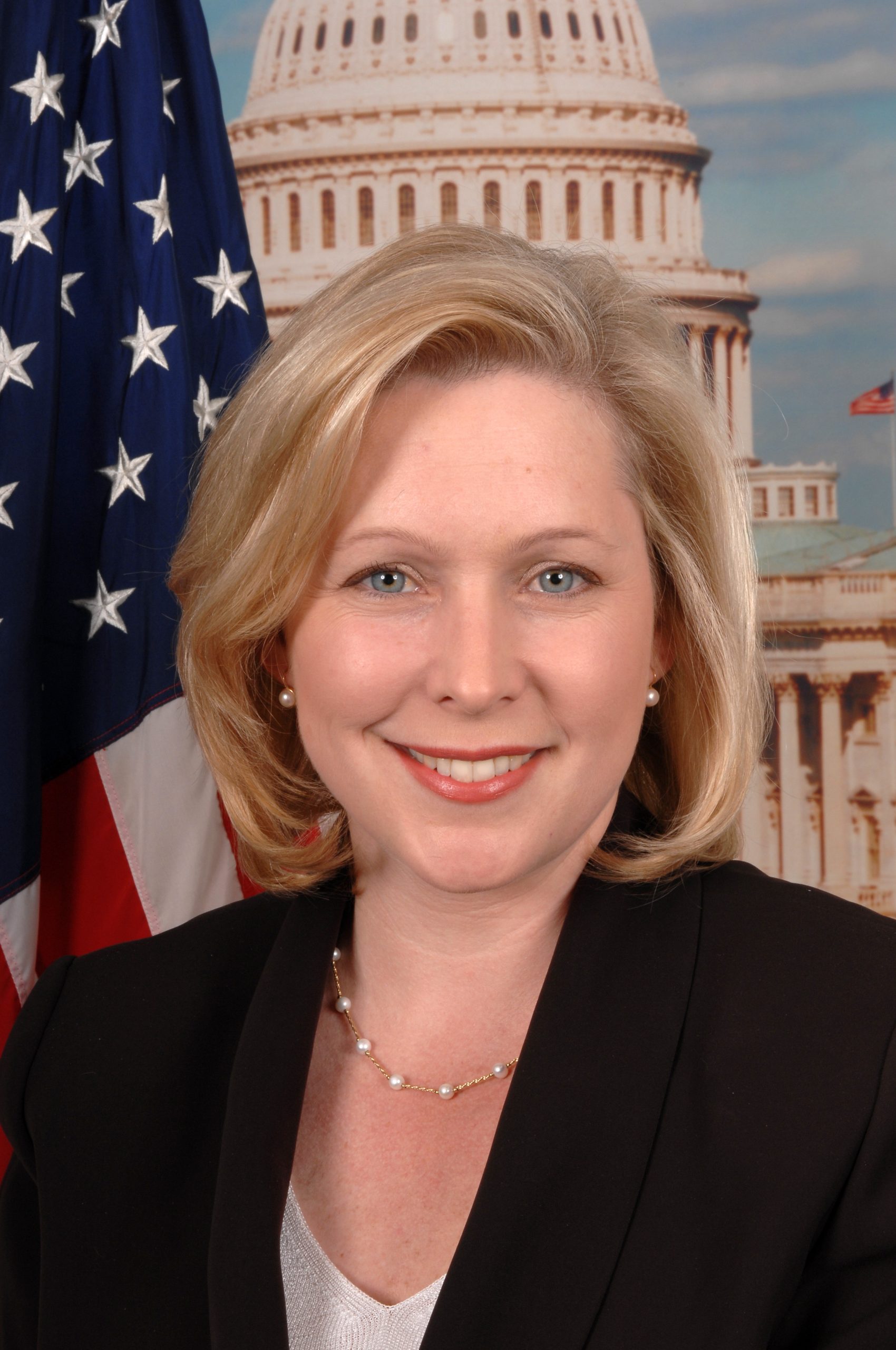
The clash put a familiar Washington fight in blunt terms: how much the U.S. should spend on military action abroad while families struggle with food, health care and housing costs at home.
Kirsten Gillibrand criticized Pete Hegseth over military spending on Capitol Hill, telling the Defense secretary, “You’re asking for unlimited money for bombs when people can’t feed their families.” The dispute over defense funding and family hardship unfolded in Congress as Gillibrand questioned the Pentagon’s priorities under the Trump administration and Hegseth defended more military funding for the United States.
The exchange matters because it turned an abstract budget fight into a direct political contrast: money for war planning and weapons versus money for groceries, health care, housing and farm support.
Gillibrand’s sharp budget charge
According to a transcript released by Gillibrand’s Senate office, the New York Democrat pressed Hegseth over what she described as billions in supplemental funding tied to the administration’s military campaign involving Iran.

Gillibrand framed the request as coming at the same time Americans are facing higher costs for essentials. She pointed to groceries, gas, health care, housing and pressures on farmers, arguing that the administration was prioritizing military spending abroad over financial strain at home.
Her most pointed line came after Hegseth defended the need for funding. Gillibrand responded that the administration was asking for “unlimited money for bombs” while people could not feed their families.
She also referred to a $1.5 trillion figure during the exchange, saying Hegseth was “asking for literally $1.5 trillion” for a war President Donald Trump had claimed was already won. The transcript does not, by itself, resolve the full budget mechanics behind that figure, but it shows how Gillibrand sought to turn the hearing into a broader argument over national priorities.
Hegseth defended the military request
Hegseth did not accept Gillibrand’s framing. In the transcript released by her office, he said she was talking about “political tradeoffs” while his job was to deliver for the U.S. military and the president.
He argued that preventing Iran from obtaining a nuclear weapon requires funding, supplemental spending and “next-generation capabilities.” His answer put the Pentagon’s position in familiar terms: the cost of military preparation is justified if it prevents a more dangerous conflict later.
That is the central divide in the exchange. Gillibrand treated the request as evidence of misplaced priorities. Hegseth treated it as part of a national security mission that cannot be measured only against domestic spending needs.
Neither side was only debating a line item. They were debating the story voters should believe about the same money: either an open-ended commitment to war or a necessary investment in deterrence.
Iran claims drove the tension
The confrontation was not limited to budget math. Gillibrand also challenged Hegseth over the administration’s public claims about Iran’s nuclear and missile capabilities.
She argued that past statements from Trump and Hegseth did not line up. In her telling, officials had claimed Iran’s nuclear capacity had been “obliterated,” while later defending continued military action by saying Iran remained close to obtaining a weapon.
Hegseth’s response, according to the transcript, was that nuclear sites hit under the operation he referenced had been obliterated, but that Iran continued trying to pursue nuclear capabilities. He said that was why the U.S. had targeted Iran’s defense industrial base and other capabilities.
Gillibrand pressed again, citing previous claims that Iran’s missile program had been destroyed or made ineffective. She asked why missiles remained capable of striking and causing casualties if the program had been so thoroughly degraded.
Two stories about security
The hearing exchange exposed two competing political arguments that are likely to keep colliding in Washington.
One argument says military spending is preventive. From that view, Pentagon officials must have the money and tools needed to stop adversaries before they create a larger threat. Hegseth leaned on that logic when he said the administration was focused on ensuring Iran never gets a nuclear weapon.
The other argument says military commitments become easier to fund than domestic needs. Gillibrand’s questioning tapped into frustration that Washington can often move quickly for weapons, emergency military spending and overseas operations, while food aid, health care and housing support face tighter scrutiny.
Her office said she also pressed Agriculture Secretary Brooke Rollins on food assistance cuts, including the claim that more than 160,000 New Yorkers had been forced off SNAP. That part of the exchange linked the defense debate to an immediate kitchen-table issue: whether families have enough food support while the government funds military operations.
What the transcript does not settle
The public transcript gives a vivid snapshot of the confrontation, but it does not answer every factual dispute embedded in it.
It does not independently verify the full scope of the spending request, the precise budget categories behind Gillibrand’s $1.5 trillion reference or the complete intelligence picture on Iran’s nuclear and missile programs. Those questions would require budget documents, intelligence assessments and administration testimony beyond the excerpts released by Gillibrand’s office.
It also does not settle whether higher consumer costs can be directly attributed to the military campaign Gillibrand criticized. She argued that gas, diesel, fertilizer and other essentials had become more expensive in connection with the war. Hegseth’s answer focused instead on national security risk.
That gap is important. Political hearings often compress complicated budget and security questions into sharp exchanges built for public impact. The quote travels because it is blunt. The underlying fight is harder: how to weigh uncertain security threats against visible household strain.
Why this clash may stick
Gillibrand’s line landed because it sounded less like a policy memo than a voter’s complaint. Many Americans do not track supplemental defense funding closely, but they do understand food bills, medical bills and rent.
For Democrats critical of Trump’s foreign policy, the exchange offers a clean argument: the administration is demanding expansive military resources while cutting or constraining programs people rely on at home. For the administration and its defenders, the counterargument is just as direct: failing to fund the military now could invite a much greater cost later.
That is why the Gillibrand-Hegseth clash is bigger than one hearing. It is a preview of how defense spending fights may be sold to the public in a year when household affordability remains politically potent.
The unanswered question is not whether bombs or groceries make the better sound bite. It is whether Congress can explain, in concrete terms, what the Pentagon needs, what families are losing and why one set of priorities should outrank the other.






Leave a Reply