
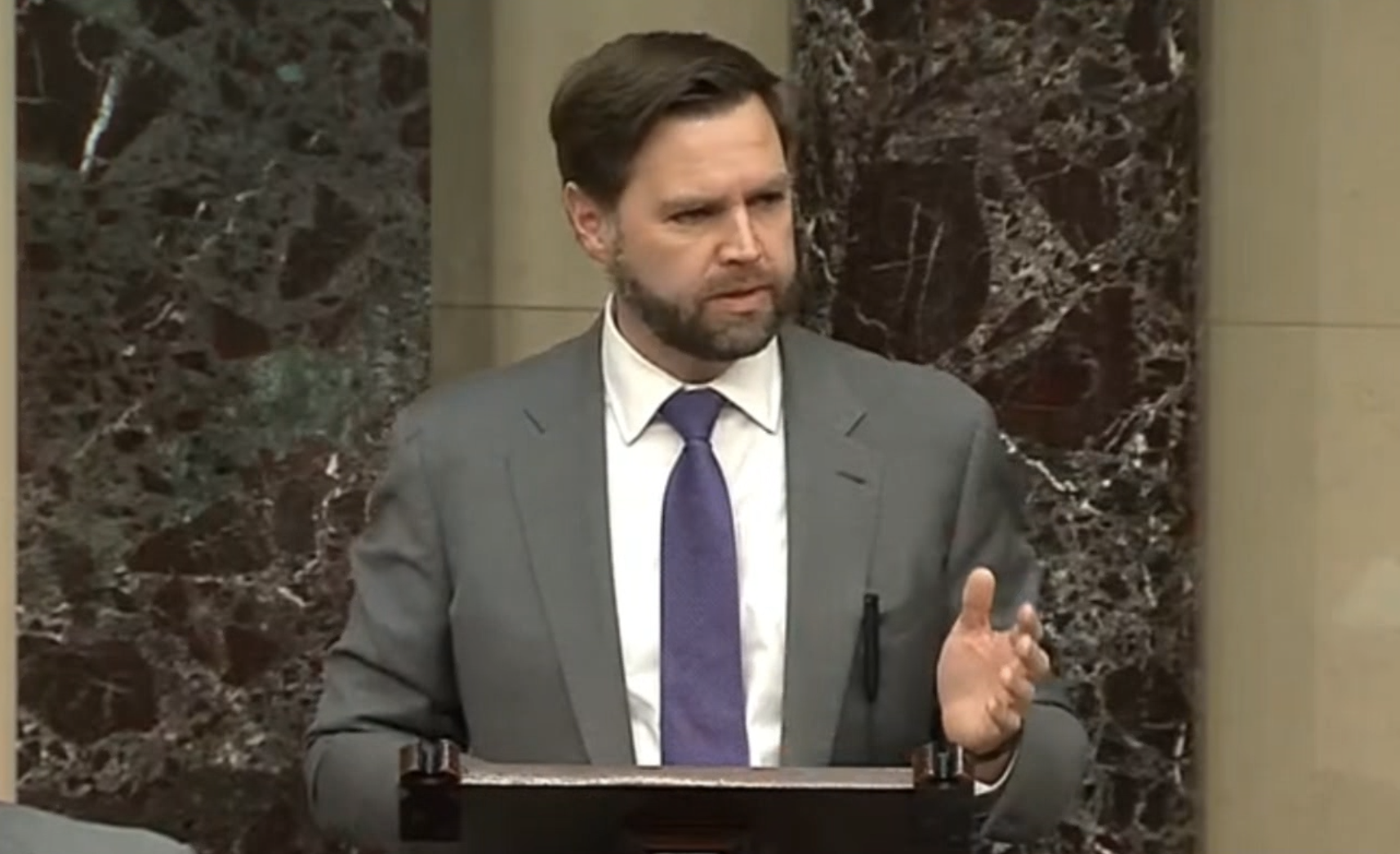
The vice president’s Joe Rogan appearance turned a lingering transparency fight into a rare public acknowledgment from inside Trump’s team. The issue still cuts directly into trust with the president’s own base.
JD Vance says the Trump administration mishandled communications about the Jeffrey Epstein files, telling Joe Rogan in a podcast interview released Wednesday, July 15, 2026, that officials “absolutely screwed up” the messaging. In Washington, the admission matters because Vance pointed to Pam Bondi as part of the communications failure while trying to draw a line between a botched rollout and any deliberate cover-up.
The vice president’s comments, reported by The Associated Press and Axios, put fresh pressure on an issue that has frustrated parts of Trump’s own political coalition: why a promised show of transparency around Epstein records instead deepened suspicion.
A rare admission from inside
Vance’s remarks were unusually blunt for a sitting vice president discussing his own administration’s handling of a politically explosive subject. He did not merely say the rollout was imperfect. He said the administration mishandled it.
“We absolutely screwed up the comms of the Epstein files. Like, we just did,” Vance told Rogan, according to the AP. He also said that if people wanted to say the administration mishandled the release, “guilty,” Axios reported.
That choice of language is why the interview is drawing attention. Administrations often blame process problems, hostile media coverage or bad-faith critics. Vance conceded the core complaint from many critics: the communications around the files raised expectations, then failed to satisfy them.
At the same time, Vance rejected the more damaging interpretation. “Do I think the reason we screwed up the comms is because we were trying to hide something? No,” he said, according to the AP.
Why Bondi became the flashpoint
Vance pointed largely to former Attorney General Pam Bondi, though he framed his criticism as a mistake rather than misconduct. He told Rogan he knows Bondi, likes her and does not believe “there was anything malicious going on.”
The problem, in Vance’s telling, was expectation-setting. Bondi had said an alleged Epstein “client list” was “sitting on my desk right now,” a line that became politically combustible once the public release did not match what many supporters believed had been promised.
The Justice Department under Bondi also gave conservative commentators and influencers binders labeled “The Epstein files: Phase 1” and “Declassified,” according to the AP. For an audience already demanding disclosure, those labels suggested a major unveiling.
Vance said Bondi was trying to respond to the political moment but “overstated what we had and what we didn’t have.” He said the result was public backlash that led people to “mistrust” the administration’s transparency effort.
The politics of a promised reveal
The Epstein files are not an ordinary records dispute. For years, Epstein-related documents have sat at the center of public suspicion about powerful people, government secrecy and whether institutions protect the well-connected.
That made the Trump administration’s messaging especially risky. To supporters who expected dramatic revelations, phrases like “client list,” “declassified” and “Phase 1” sounded like the beginning of a sweeping disclosure. If the release then appeared limited, heavily redacted or confusing, disappointment was almost guaranteed.
Axios described the episode as a major political liability for Trump’s administration, particularly because criticism came not only from Democrats or outside watchdogs, but also from Americans within the MAGA base. That is the heart of the problem for Trump: the controversy hits one of his strongest political themes, distrust of official Washington.
Vance’s interview appears designed to absorb some of that anger without validating claims of a cover-up. He acknowledged a failure of competence and communication while insisting the failure was not evidence of bad intent.
Transparency collided with redactions
One reason the Epstein files fight is so difficult is that transparency promises can collide with legal and ethical limits. Vance told Rogan the documents should have been released as quickly as possible, while acknowledging that redactions for victims would take time, Axios reported.
That caveat matters. In cases involving sexual abuse allegations, victim privacy and identifying details can complicate document releases. The more sensitive the material, the harder it is to satisfy a public demand for everything immediately.
Vance also said investigators had collected millions of documents, including millions tied in some way to the Epstein estate, according to Axios. A document universe that large can create another political trap: officials may cite the volume to explain delays, while skeptics hear the same number and assume there must be more explosive material hidden inside.
The administration’s challenge was not just what it released. It was how it described what was coming before the public saw it.
Vance’s balancing act
Vance’s comments served two audiences at once. To frustrated supporters, he offered validation: yes, the rollout was mishandled; yes, the communications were bad; yes, the administration helped create mistrust.
To Trump loyalists and administration defenders, he offered a limiting argument: the mistake was overpromising and poor messaging, not an effort to conceal damaging information. That distinction is politically important, because a communications failure can be corrected. A perceived cover-up is much harder to put away.
His remarks also gave Bondi a measure of personal defense even as he criticized her role. Saying she “overstated” the evidence is damaging, but saying there was nothing malicious softens the accusation.
That is classic damage control, but with a sharper edge than usual. Vance did not pretend the controversy was manufactured. He said the administration helped create it.
What remains unanswered
Vance’s admission does not resolve the larger fight over the Epstein files. It does not answer whether additional documents will be released, what redactions are still being reviewed, or whether the administration will change how it communicates about sensitive records in the future.
It also does not erase the political effect of the original rollout. Once an administration tells supporters that transparency is coming, the burden shifts. Every delay, blacked-out page or vague explanation can be read as confirmation by people already inclined to distrust the process.
The strongest takeaway from Vance’s Rogan appearance is that the administration now recognizes the Epstein files episode as self-inflicted. Whether that acknowledgment rebuilds trust is a different question.
For now, Vance has given critics and supporters the same headline-level concession: the Trump administration’s Epstein files messaging became a mess, and the political cost is still being counted.






Leave a Reply