
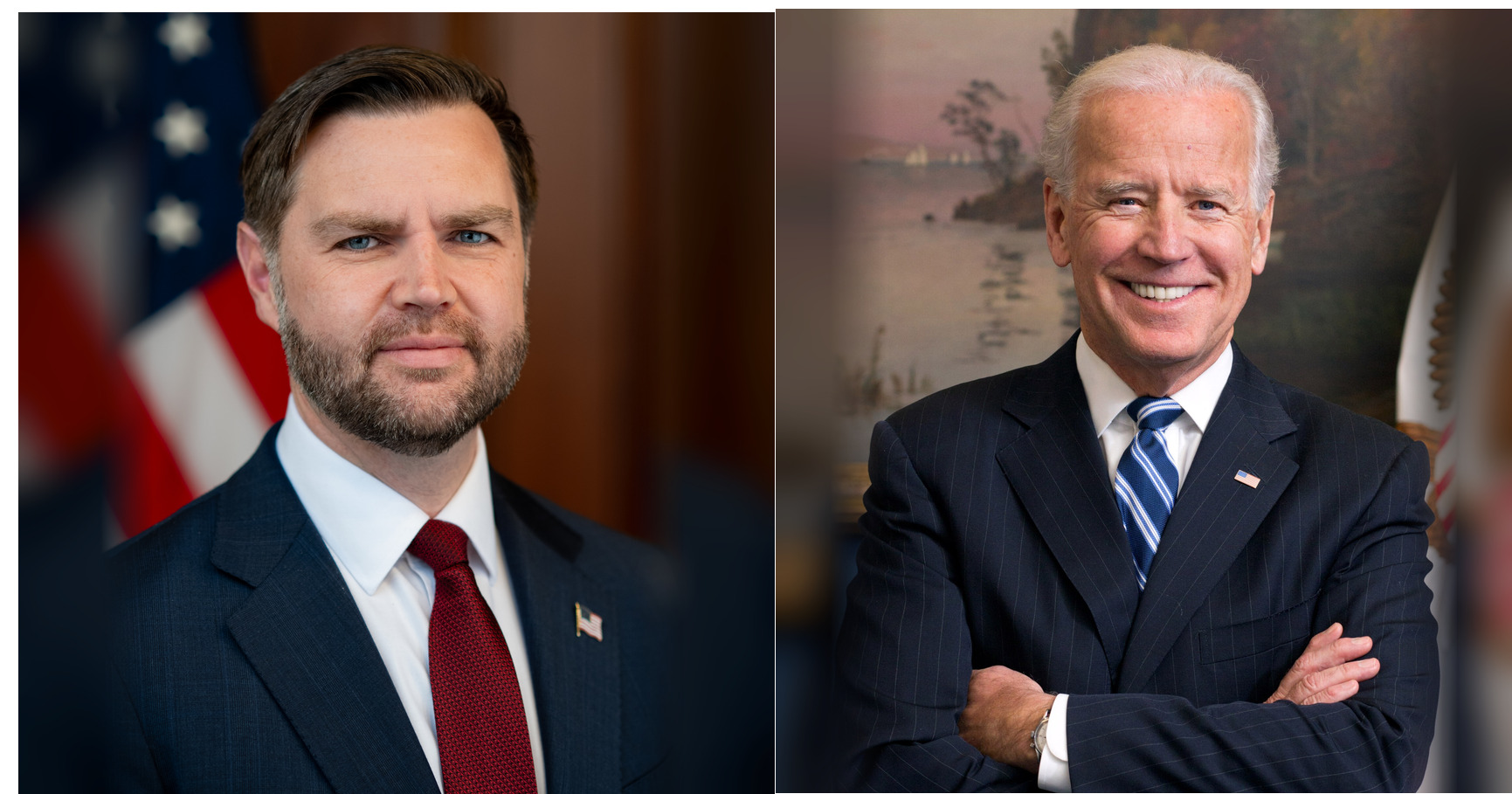
The U.S. debt has crossed $40 trillion, making the argument over who owns the problem politically potent. Treasury data and budget projections show why assigning it to one president leaves out much of the story.
JD Vance blamed Joe Biden for the roughly $40 trillion United States national debt, a claim that critics challenged as another round of the political blame game. The dispute matters because the debt has passed a symbolic threshold, while voters are being offered sharply different explanations for how it grew and who should be held responsible.
Vance’s argument puts Biden at the center of a number that the Treasury describes as borrowing accumulated over the nation’s history. Critics object that calling the entire debt Biden’s fault ignores spending, tax and borrowing decisions made by presidents and Congresses of both parties over many decades.
The number behind the argument
The headline figure is not invented. The Treasury’s Fiscal Data site lists the national debt at about $40.03 trillion and defines it as the total outstanding borrowing of the federal government accumulated over U.S. history.

That definition is crucial to the political fight. National debt is a running total, not a bill created in a single White House term. It incorporates the effect of years when the government spent more than it collected, plus the interest costs associated with prior borrowing.
That does not mean recent policy choices are irrelevant. A president’s budgets, legislative priorities, executive actions and economic conditions can affect federal finances. But Congress writes tax and spending laws, and the ultimate debt figure reflects enacted policy across multiple administrations.
The $40 trillion marker is therefore both a real warning sign and an unusually tempting political tool. It compresses a complicated fiscal history into a number easy to invoke in a speech or social-media post.
What Vance’s accusation argues
The reported Vance claim assigns primary responsibility for the debt total to Biden. The broader Trump administration message has made a similar case: a White House release promoting the One Big Beautiful Bill said Biden had “supersized” the national debt and argued that the administration’s approach would improve the fiscal outlook through economic growth and spending restraint.
That is a political and policy argument, not simply a description of the Treasury’s debt measure. Its case rests on the view that Biden-era spending and policy decisions worsened the nation’s trajectory, and that a different mix of tax, regulatory and spending policies would lower the debt burden relative to the economy.
Supporters of that view can reasonably point to the fact that debt and deficits remain central fiscal problems, not distant historical artifacts. Large annual shortfalls add to the debt, and the costs of servicing existing debt can limit room for other federal priorities.
Still, the available reporting does not establish that Biden alone caused the full $40 trillion total. The Treasury’s own definition makes clear that the total stretches far beyond one administration.
Why critics reject one-person blame
Critics’ objection is not that deficits or debt growth during the Biden years are beyond debate. It is that using the entire national-debt total as proof of one president’s responsibility blurs the difference between new borrowing during a term and the country’s full accumulated balance.
Federal debt has been shaped by recessions, wars, emergency relief, entitlement programs, tax reductions, interest-rate changes and recurring decisions to borrow rather than fully fund spending with revenue. Those choices involved Democratic and Republican presidents, as well as Congress.
Presidents also inherit the laws and debt stock already in place. Even when a new administration changes direction, it cannot erase outstanding Treasury obligations overnight. Interest payments continue, and many major spending and tax provisions remain in force unless Congress changes them.
That is why the blame-game framing draws frustration. It can turn a serious argument about fiscal policy into a contest over who gets tagged with a number built across generations.
Deficits keep the pressure on
The forward-looking numbers help explain why the argument is not merely about historical accounting. The Congressional Budget Office projects a federal budget deficit of $1.9 trillion in fiscal year 2026, with deficits rising to $3.1 trillion by 2036 in its outlook.
CBO also projects federal debt held by the public to reach 120% of gross domestic product in 2036. That measure is different from total national debt, but it is closely watched because it compares the government’s debt burden with the size of the economy.
The distinction matters. A country can have a very large dollar debt total while the burden relative to economic output moves differently. Economic growth may improve debt-to-GDP measures, while sustained deficits can push them higher. Policy advocates disagree over how much growth can offset tax cuts or new spending, and how quickly spending reductions can be made without other consequences.
Those are the questions buried beneath Vance’s charge. The political argument focuses on the past, while the budget challenge is also about the choices that will determine whether future deficits narrow or expand.
Congress is part of the answer
Any serious account of responsibility has to include Congress. Lawmakers authorize appropriations, set tax policy, create or modify benefit programs and decide whether to pair new commitments with revenue or spending cuts elsewhere.
Presidents can set an agenda and use the bully pulpit, but they do not independently write the federal budget into law. That shared authority makes broad claims of sole presidential responsibility inherently incomplete.
It also means a credible debt-reduction plan requires trade-offs rather than just a target. Options generally involve some combination of higher revenue, lower spending, changes to major benefit programs, faster economic growth or acceptance of continued borrowing. Each route has constituencies, costs and political resistance.
The White House has argued its economic agenda would reduce debt relative to GDP, while critics and outside budget analysts often scrutinize whether projected growth, revenue and spending assumptions will materialize. The dispute is ultimately about competing forecasts as much as competing narratives.
A dispute larger than one presidency
Vance’s criticism of Biden lands at a moment when $40 trillion gives the debt debate fresh force. The size of the total should invite scrutiny of recent decisions, including those made under Biden. It should also invite scrutiny of the policy choices that preceded him and those being proposed now.
The clearest takeaway is that the national debt is a cumulative ledger, while annual deficits are the mechanism that keeps adding to it. Treating the whole balance as one president’s fault may be effective politics, but it is not a full explanation of how the United States arrived at $40 trillion.
What remains unresolved is the harder question: which combination of tax, spending and growth policies can slow the accumulation without creating new economic or political costs. That debate cannot be settled by assigning a decades-long total to a single administration.









Leave a Reply