
The most useful word for understanding Donald Trump’s attacks on journalists is delegitimization: rhetoric that challenges not only a report, but the credibility of the people and institutions producing it. The distinction matters because public distrust of the press can shape how citizens judge verified information.
Donald Trump has attacked journalists and the press in terms that go beyond disputing individual stories. There’s one word that characterizes those attacks: delegitimization — an effort, critics argue, to cast reporters and news organizations as fundamentally untrustworthy rather than merely wrong on a particular fact.
That characterization matters because Trump’s treatment of journalists has helped define a long-running political conflict over who the public should believe. Trump says much of the press coverage he condemns is biased, inaccurate or unfair; press-freedom advocates say his language can erode trust in independent reporting itself.
Why “delegitimization” fits the pattern
Political leaders have always challenged coverage they dislike. A president can reasonably contest an error, demand a correction, criticize an editorial judgment or argue that a news outlet has a partisan point of view.
Delegitimization describes something broader: treating the press not as an institution capable of mistakes, but as an adversarial force whose reporting should be presumed suspect. The target is not simply a headline. It is the public standing of the people producing the news.
That distinction is central to the criticism of Trump’s rhetoric. His attacks have frequently used sweeping labels, including “fake news,” to describe coverage and outlets he disputes. Those phrases are powerful because they are short, repeatable and easily applied to a wide range of reporting.
A claim that a report is wrong invites readers to inspect the evidence. A claim that journalists are broadly dishonest can encourage readers to dismiss evidence before they see it. That is why the language has drawn concern from media watchdogs and defenders of press freedom.
The phrase became a political weapon
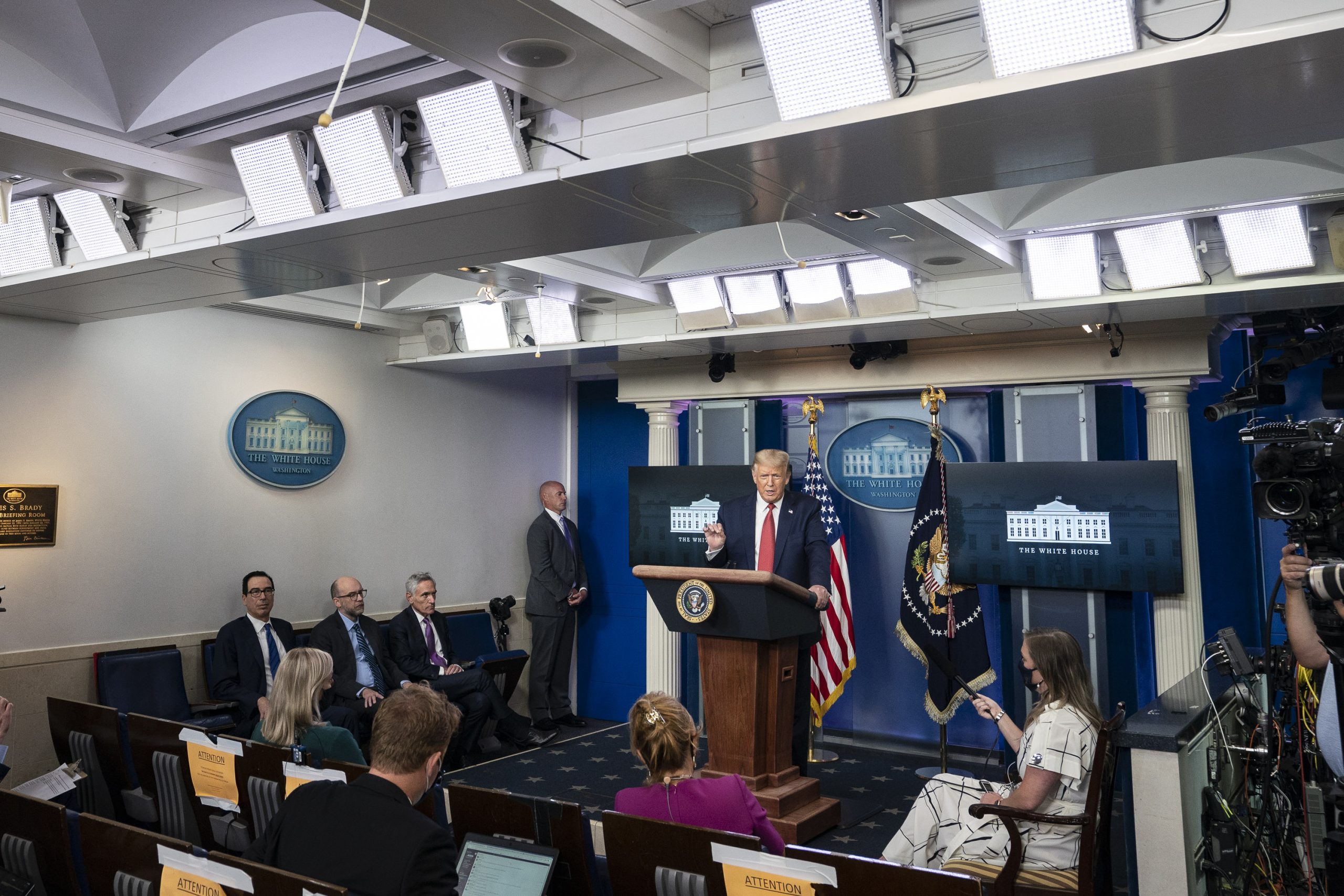
Trump’s conflict with the media did not begin in office, but his presidency gave the confrontation a uniquely visible platform. At a January 11, 2017 news conference, then-President-elect Trump challenged reporting about an unverified dossier and told a CNN reporter, “You are fake news.”
The BBC’s transcript of that event records Trump also saying he had “great respect for the news” and for freedom of the press. Yet he sharply criticized outlets he believed had handled the story irresponsibly.
That combination remains important. Trump’s case is not that every reporter is dishonest; his argument has often been that major news organizations apply unfair standards to him and to his supporters. Many voters share that skepticism, citing corrections, anonymous sourcing, ideological blind spots or coverage they believe minimizes stories damaging to Trump’s opponents.
Critics respond that broad attacks can obscure a necessary difference between flawed reporting and reporting that is simply unwelcome. News organizations can make serious errors, but they also perform a basic democratic function by investigating public officials, testing claims and publishing information those officials might prefer to keep private.
Criticism and intimidation are not identical
It is important not to collapse all criticism of journalists into an attack on press freedom. Journalists are not above scrutiny. They can make factual mistakes, use weak sourcing, frame issues unfairly or overlook perspectives outside their own professional and political circles.
In a healthy media environment, forceful criticism can lead to better reporting. Corrections, transparent sourcing and tough public questions are not threats to journalism; they are part of its accountability.
The concern begins when language moves from criticism of specific work to blanket denunciations of the press as an enemy, a fraud or a force acting against the country. Such rhetoric can change the climate in which reporters work, particularly when supporters direct anger at individual journalists.
Words alone do not explain every conflict between a politician and the media. Still, a president’s words carry unusual weight. They can set expectations for how officials answer questions, how audiences interpret unwelcome facts and how aggressively political allies target reporters online or in person.
Trust is the real battleground
The deeper contest is over public trust. No democracy requires citizens to accept every news report without question. It does require a shared ability to evaluate competing claims using evidence, records, independent witnesses and credible corrections.
When trust in all journalism collapses, citizens do not necessarily become more discerning. They may instead turn to sources that reinforce existing loyalties, dismissing contrary reporting regardless of its quality. That makes it easier for any powerful figure — not only Trump — to avoid meaningful scrutiny.
Trump’s supporters often see the press dispute from the opposite direction. They argue that distrust did not originate with his rhetoric; it grew because established outlets lost credibility with audiences that felt ignored, caricatured or misled. From that view, Trump did not create the divide so much as give voice to it.
Both points can contain truth. Media institutions have reasons to confront their own failures and blind spots. But those failures do not make independent reporting unnecessary. The answer to unreliable information is more verifiable reporting and stronger media literacy, not a public assumption that journalism is inherently fraudulent.
What readers should watch for
The practical test is specificity. When Trump, another politician or a commentator says a story is false, the useful next question is whether they identify the alleged error and provide evidence. A denial, a document, a competing account and a correction request can all be assessed.
- Specific criticism: What fact, quote, image or conclusion is allegedly wrong?
- Available evidence: Does the speaker provide records, named sources or a clear explanation?
- Newsroom response: Has the outlet corrected, clarified or defended its reporting?
- Broader claim: Is the criticism about one article, or does it seek to discredit journalism as a whole?
Those questions do not require blind trust in Trump or in the media. They require resisting the shortcut built into sweeping labels.
The unresolved cost of the fight
The conflict between Trump and the press is unlikely to disappear because it serves political and institutional interests on both sides. Trump benefits when supporters see him as willing to confront powerful media organizations. News outlets benefit from closely covering a political figure whose statements and decisions command public attention.
What remains unclear is whether either side can reduce the temperature without sacrificing its core role. Politicians will keep challenging coverage. Journalists will keep asking difficult questions and publishing investigations that officials contest.
The word delegitimization helps explain why the argument matters. It identifies the risk that criticism of reporting becomes a broader effort to weaken confidence in the press’s right and ability to scrutinize power. In a polarized country, that is not just a media story. It is a test of how the public decides what is credible.





Leave a Reply