
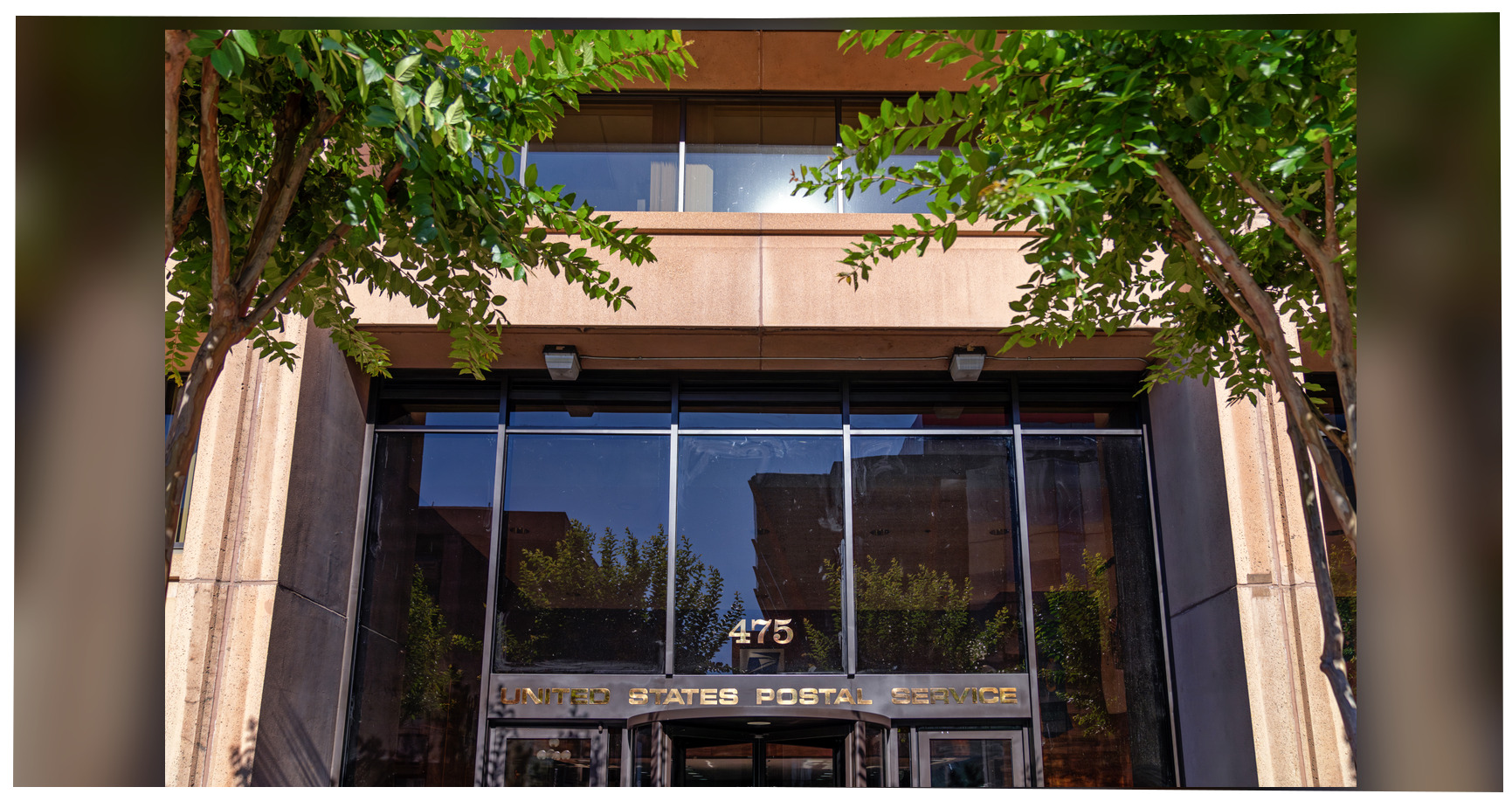
The Postal Service says the rule is meant to help ensure certain federal ballots are accepted under applicable requirements. Its practical effect will depend on court action, state implementation and details that have yet to be spelled out publicly.
The United States Postal Service, or USPS, has issued new rules affecting mail-in ballots that would require states to provide USPS with lists of voters who received mailed ballots. The rule sets acceptance requirements for certain federal election mail, including UOCAVA ballots and covered Outbound Federal Ballot Mail, with USPS saying the change is intended to help make sure those ballots are properly accepted.
The measure is a significant change in how election offices and the mail system would share information, but it is not a blanket rewrite of every state’s voting rules. The Federal Register listed the final rule for publication on Aug. 26 after it was filed for public inspection on Aug. 21, and reporting indicates its implementation depends on court approval.
What the USPS rule changes
The central requirement is straightforward: states would have to give USPS lists identifying voters who were sent mailed ballots. That would create a direct information link between state election administrators and the Postal Service for the federal ballot mail covered by the rule.

USPS has framed the requirement as an acceptance safeguard. The Federal Register summary says the rule will help ensure that both UOCAVA ballots and Outbound Federal Ballot Mail covered by the regulation are properly accepted under applicable requirements.
That wording matters. The rule is focused on whether particular ballot mail is handled and accepted under the governing standards, rather than changing who may vote, which voters may request a ballot, or how states count votes.
Which ballots are in focus
The published materials specifically point to UOCAVA ballots and Outbound Federal Ballot Mail. UOCAVA is shorthand for the federal law governing absentee voting protections for military members, their eligible family members and U.S. citizens living overseas.
Those voters can face obvious logistical hurdles: they may be stationed far from their voting jurisdiction, rely on international mail routes, or have limited time between receiving a ballot and returning it. A postal rule designed around identification and acceptance procedures can carry outsized consequences for them even if it does not alter the underlying eligibility rules.
“Outbound” refers to ballot mail moving from election officials to voters. That is different from a completed ballot traveling back to an election office. The distinction is important because a problem delivering an outgoing ballot can leave a voter with less time to complete every later step.
Why voter lists are central
Requiring states to supply voter lists gives USPS information it may not otherwise have in a standardized form. In principle, that can help match election mail to the administrative process the rule contemplates and reduce uncertainty over whether an item qualifies for the relevant treatment.
Supporters of more structured coordination between election offices and the Postal Service are likely to see the rule as a practical administrative fix. They can argue that clearer data and clearer responsibilities are especially valuable for ballots moving long distances or across jurisdictions.
Critics and election administrators may focus on the operational burden. States run elections under different laws, use different vendors and maintain voter records in different formats. A federal postal requirement can mean new technical work, privacy questions and deadlines for agencies that are already managing election calendars.
What the rule does not settle
The available rule summary does not establish that every mail-in ballot in every election will be subject to the same new process. Its stated focus is on the UOCAVA ballots and Outbound Federal Ballot Mail covered by the regulation.
It also does not answer several practical questions that will matter to voters and local officials: what format states must use for their lists, how frequently the information must be updated, what safeguards will govern the data, and how USPS will handle incomplete or conflicting records.
Those details can determine whether a policy works smoothly or creates new points of friction. A rule may set a national expectation, but local election offices still have to translate it into daily workflows before ballots are printed, addressed and mailed.
Court action remains the hinge
Reuters reported that the USPS final rule would tighten mail-in voting procedures if a court allows it to proceed. That means the rule’s publication should not be confused with a final, unquestioned rollout.
Legal review could affect the timing, the scope or whether the requirement takes effect at all. The research provided does not identify the court, the claims at issue or a schedule for a ruling, so those points remain unclear.
For states, the immediate challenge is planning amid uncertainty. Election officials may need to assess whether their systems can produce the required voter lists and how they would transmit them, while also waiting to learn whether the rule survives judicial scrutiny.
Why the details matter before voting
Mail voting depends on a chain of events that starts well before Election Day: a voter requests or is issued a ballot, an election office prepares it, the Postal Service delivers it, and the voter returns it according to applicable deadlines. Failure at the first delivery stage can narrow a voter’s options later.
USPS’s stated goal is to make acceptance of covered federal ballot mail more reliable. Whether the new requirement advances that goal will turn on implementation, state cooperation and any court decision—not simply on the rule appearing in the Federal Register.
The clearest takeaway for now is narrow but important: USPS is seeking a more formal role in the information that accompanies certain mailed federal ballots. Voters should continue to follow instructions from their state or local election office, while election officials and the courts determine how this postal rule will operate in practice.









Leave a Reply