
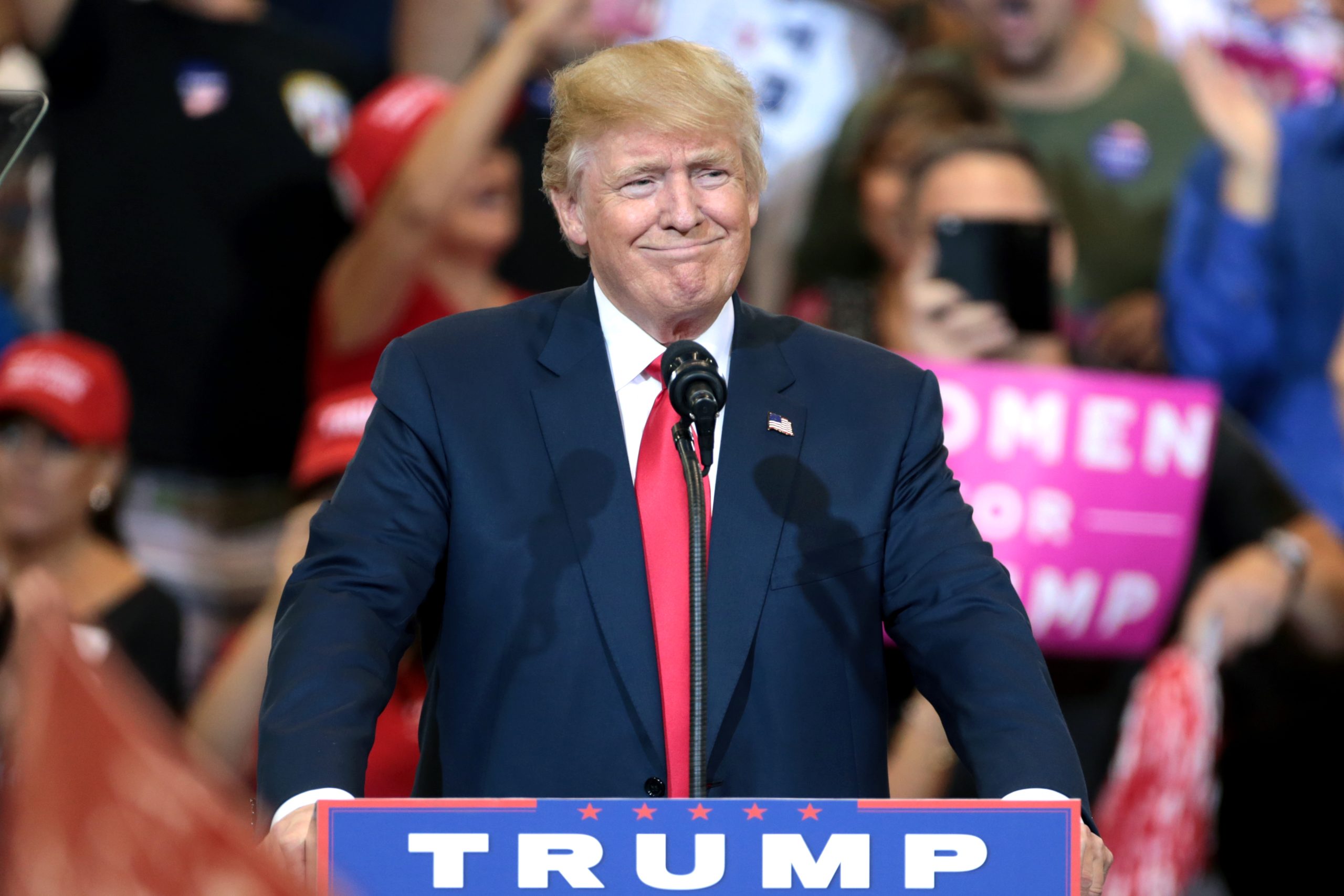
The new levy targets goods from wine and dairy to hockey sticks and cement, while carving out major exemptions. Canada says it has only matched U.S. trade actions, setting up another test of North America’s economic ties.
Donald Trump imposed a new 50% tariff on many imports from Canada in Washington on July 20, 2026, and the action was updated publicly July 21, 2026. The tariff was imposed in response to alleged discriminatory Canadian trade practices, and the move could escalate U.S.-Canada trade tensions.
The new tariff, according to administration officials cited by USA Today, is aimed at a wide range of Canadian goods and is scheduled to take effect Aug. 19. It lands in the middle of an already bruising trade fight between the U.S. government and Canadian government.
A 50% levy with carveouts
The tariff is broad, but it is not universal. Administration officials said it applies to many Canadian imports, including wine, dairy products, hockey sticks and cement.
Several categories are exempt, including energy, potash, fish and critical minerals. Those carveouts matter because Canada is deeply integrated into U.S. supply chains, and some excluded goods are strategically important to American industry and consumers.
The administration also said other Canadian exports would be subject to the tariff, including goods previously singled out as tariff-free under the United States-Mexico-Canada Agreement signed in 2019. That detail gives the action added weight: it suggests the White House is willing to override parts of the trade framework that has governed North American commerce for years.
For businesses, the practical question is immediate. Importers will want to know whether specific products fall inside the exemptions, whether contracts can absorb the added cost, and how quickly suppliers can adjust before the Aug. 19 start date.
Why Canada was targeted
Trump administration officials framed the tariffs as retaliation for what they called discriminatory Canadian trade practices in specific sectors. They pointed to Canadian policies affecting U.S. alcoholic beverages, automobiles and dairy exports.
Officials said that in the past year, all but two Canadian provinces had halted purchases of alcohol from the United States while continuing purchases from other countries. They also cited Canadian tariffs on U.S. automobiles and dairy tariff-rate quotas that they said were more restrictive for the United States than Canada’s treatment of the European Union.
U.S. Trade Representative Jamieson Greer described Canada as an outlier among partners and allies, saying Canada continued to retaliate against U.S. efforts to rebalance trade and protect industries tied to national security-sensitive sectors.
Canada rejects the premise that it started the escalation. Prime Minister Mark Carney said Canada had “merely matched” tariffs and trade policies imposed by the United States, while arguing that the dispute has raised costs for families, particularly in the U.S.
A workaround after court limits
The legal basis is one of the most consequential parts of the announcement. Trump signed three proclamations using Section 338 of the Tariff Act of 1930, a law associated with the Smoot-Hawley era.
That choice follows a Supreme Court setback earlier this year. In February, the court blocked Trump’s use of emergency powers under the International Emergency Economic Powers Act of 1977 to impose reciprocal tariffs, forcing the White House to look for another path.
By invoking a different statute, the administration is testing how much unilateral tariff authority remains available to the president. Supporters of the move will likely see it as a necessary tool to answer unfair trade barriers. Critics will see it as another attempt to impose sweeping economic policy without Congress taking the lead.
What remains unclear is how durable this legal route will be if challenged. The announcement opens a new front not only in the trade fight with Canada, but also in the larger debate over presidential power in tariff policy.
The wildfire smoke flashpoint
The tariff action also came after Trump threatened Canada over wildfire smoke that drifted into the United States from fires burning north of the border. An administration official said Trump was exploring other unspecified tariff options tied to the wildfire response.
The smoke issue gives the dispute a more unusual and volatile dimension. Trade sanctions are usually justified through market access, subsidies, dumping claims or national security arguments. Here, Trump has also connected tariffs to cross-border environmental harm.
Trump and Carney crossed paths at the World Cup final in East Rutherford, New Jersey, one day before the tariff announcement. Trump later said he spoke with Carney about the fires during the match and suggested Canada might need to pay damages or face tariffs.
That does not mean the new 50% tariff is formally based on wildfire smoke. Administration officials described the July 20 action as a response to trade practices, while separately saying other tariff options related to wildfires were under review.
Why the stakes are larger
The United States and Canada are not distant trading partners. Their economies are tied through auto manufacturing, agriculture, energy, construction materials and consumer goods. A sudden 50% tariff can ripple through companies that depend on predictable cross-border supply chains.
Consumers may not see the word “tariff” on a receipt, but the cost can show up in higher prices, narrower product choices or delayed projects. Businesses importing affected Canadian goods may absorb some costs, pass them along or look for alternate suppliers.
The political argument is sharper. Trump’s team says the tariffs are defensive measures designed to force fairer treatment for U.S. industries. Carney’s government says Canada has been responding to U.S. moves and remains ready to negotiate outstanding issues for the benefit of both countries.
That disagreement is the heart of the escalation risk. Each side can describe its own tariffs as defensive and the other side’s tariffs as retaliation. Once that cycle takes hold, rolling back the dispute becomes harder than announcing the next round.
What to watch before Aug. 19
The next key date is Aug. 19, when the tariffs are set to take effect. Before then, companies will be watching for implementation guidance, product lists and any clarification of exemptions.
Canada’s response is also unresolved. Carney’s statement left the door open to intensive engagement with Washington, but it did not signal that Canada accepts the U.S. rationale. If Ottawa answers with new countermeasures, the dispute could expand quickly.
There are also legal and diplomatic questions. The use of Section 338 could invite scrutiny, and any move that sweeps in goods tied to the 2019 North American trade agreement could raise broader concerns about the reliability of U.S. commitments.
For now, the takeaway is simple: Trump’s new 50% tariff on many imports from Canada is both a trade penalty and a test of leverage. It targets specific Canadian practices, sidesteps a recent court-imposed limitation on tariff authority, and puts the U.S.-Canada economic relationship under fresh strain.







Leave a Reply