
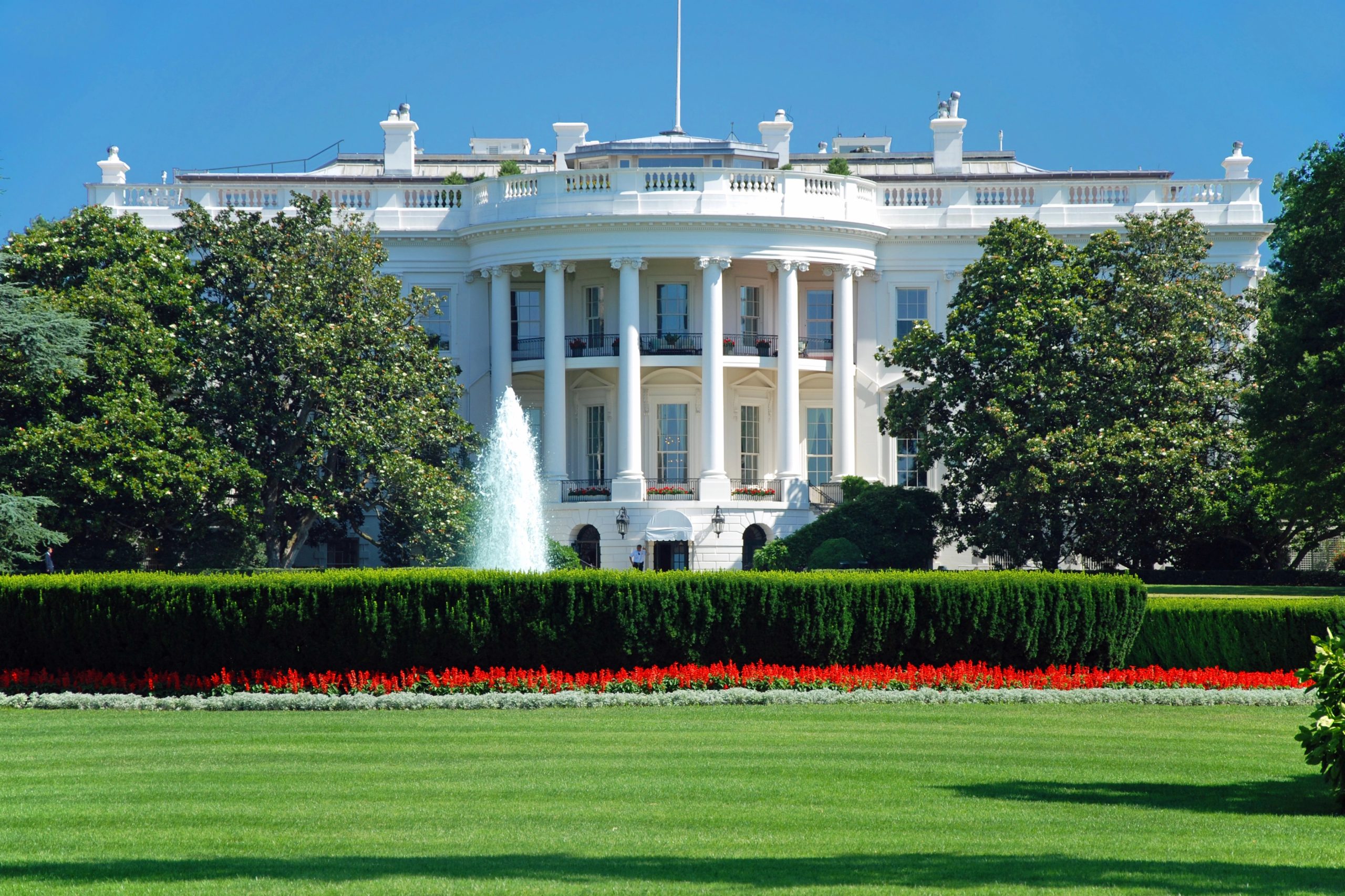
The possible move is about more than decor. Where presidential objects end up can shape how administrations are remembered by the public.
A White House sculpture may be transferred to a future Trump presidential library, according to a USA TODAY report published Tuesday. The White House sculpture may go from a current display tied to Donald Trump’s presidency to a future presidential library, where it could be presented as part of the public record and the political story Trump wants visitors to see first.
The possible transfer of the sculpture matters because White House art is never just decoration. Presidential libraries, the White House Collection and temporary loans all tell different versions of history, and where an object lands can shape how the public encounters a presidency long after the administration ends.
A display becomes a record
The immediate question is simple: whether the latest White House sculpture will eventually be displayed at a Trump presidential library. The available public summary identifies the work as a White House sculpture under consideration for that destination, but does not provide enough detail to confirm the title, artist, ownership status or transfer timetable.
That missing information is not a small footnote. A sculpture owned by the White House Collection, a gift to the president, a temporary loan or an item commissioned by an outside group can all follow different paths once an administration ends.
That is why the destination matters. A presidential library is not just storage. It is part archive, part museum and part civic stage, where objects are selected and arranged to help explain a presidency to future visitors.
White House art carries status
The National Archives’ White House materials describe the executive mansion’s collection of fine and decorative arts as including historic objects associated with the White House and the presidency. That framing is important: the value of an object is not only aesthetic. Its meaning often comes from who used it, where it was displayed and what moment it came to represent.
Presidents have long used art to project identity. The Reagan Library’s own National Archives blog puts it plainly in a discussion of Ronald Reagan’s Oval Office: each president decorates the Oval Office, and those choices reflect values, tastes and inspiration.
That history helps explain why a Trump-linked sculpture would attract attention. Once an object is seen inside or around the White House, it can become part of the visual vocabulary of an administration. Moving it later to a presidential library can cement that association.
It can also raise a question that museums and archives deal with constantly: is the object being preserved as evidence, displayed as tribute or used to advance a preferred narrative?
Loans can move, gifts can stay
White House art does not all have the same legal or institutional status. Some pieces are part of the White House Collection. Some are borrowed. Some are gifts. Some are personal possessions. Those categories matter before anyone can say where a sculpture may properly end up.
The Reagan Library blog offers useful examples. A Sanford R. Gifford painting displayed during multiple administrations was returned in January 1989. A Charles Willson Peale portrait of George Washington was loaned to the White House in 1971 and later donated to the White House Collection. Other works, including sculptures associated with Reagan’s Oval Office, came through loans or gifts.
Those precedents do not decide the Trump sculpture question, but they show why the details are essential. If the work is a loan, the lender may control its next stop. If it is donated to the White House Collection, it may belong to the public collection rather than to any president’s future museum. If it is a personal gift, different rules may apply.
Until the ownership and terms are clear, the phrase may go to a Trump library should be read as a possibility, not a completed transfer.
Libraries shape presidential memory
A future Trump presidential library would likely become the most prominent museum setting for objects associated with his time in office. Presidential libraries are where papers, photographs, videos, campaign artifacts and ceremonial objects become a public-facing story.
That makes curation powerful. Visitors may not read thousands of pages of records, but they will notice what objects are placed at the entrance, what moments get emphasized and which themes are repeated from room to room.
Supporters of sending the sculpture to a Trump library could argue that the object belongs with other material from his presidency. If it was created for, displayed during or closely identified with the Trump White House, a library exhibit could give it context and preserve it for public viewing.
Critics may see a different risk: that a White House-associated object could be folded into a highly controlled political narrative rather than a broader institutional history. The tension is familiar in presidential museums, where commemoration and historical accountability often share the same floor space.
The unanswered questions matter
The most important unknowns are practical. Who owns the sculpture? Was it purchased, donated, borrowed or commissioned? Is it part of the White House Collection? Has any formal transfer request been made? Would the future Trump library be run through the federal presidential library system, a private foundation or some combination of institutions?
Those answers would determine whether the move is routine, symbolic or controversial. A routine loan return is one thing. A transfer from a public collection to a president-branded museum would invite closer scrutiny. A personal item heading to a future exhibit would be less surprising.
There is also a timing issue. A future Trump library is not the same as an existing, fully open institution with a final exhibit plan. Until there is a confirmed site, governing structure and curatorial process, the sculpture’s proposed destination remains more a signal of intent than a settled display.
For now, the reported possibility is a reminder that presidential history is built object by object. A sculpture placed at the White House can start as decor or commemoration. Years later, in a library gallery, it can become evidence of how a president wanted to be seen.
The takeaway for readers
The possible transfer is not just a Trump-world curiosity. It sits at the intersection of public property, political image-making and historical preservation.
If the sculpture eventually lands in a Trump presidential library, the key question will be what story surrounds it. A responsible exhibit would identify who made it, who paid for it, where it was displayed, who approved the move and how it fits into the larger record of the presidency.
Without that context, even a single sculpture can do more than decorate a room. It can become a carefully lit argument about legacy.




Leave a Reply