
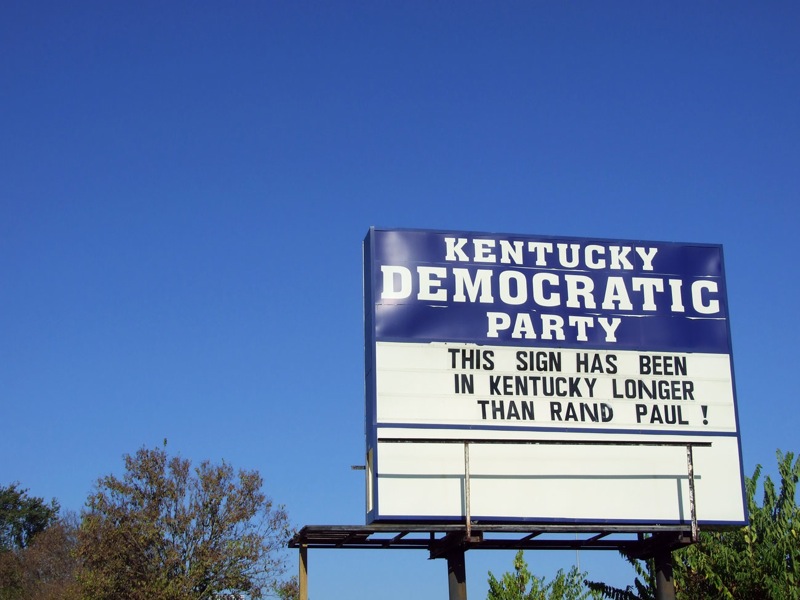
The Democratic Party’s coalition has always been broad. The harder question now is whether its factions still believe they are negotiating inside the same project.
The Democratic Party is facing internal divisions, and the Democrats big tent coalition is under strain. This article explores whether the party could collapse—or, more realistically, whether its identity crisis could damage Democratic unity enough to cost elections. The conflict is not one argument but several: Gaza and Israel policy, immigration, economic populism, generational frustration, union politics, suburban moderation and activist pressure.
That is why the “big tent” question keeps returning. A broad coalition can be a strength when factions feel heard. It becomes a liability when voters believe they are being asked only to fear the other side, not buy into a shared Democratic agenda.
The tent is still standing
Political parties in the United States rarely collapse in the literal sense. The two-party system, ballot-access rules, donor networks, congressional caucuses and presidential elections all push voters and politicians back into two major camps. That structure gives Democrats a cushion that multiparty systems do not.
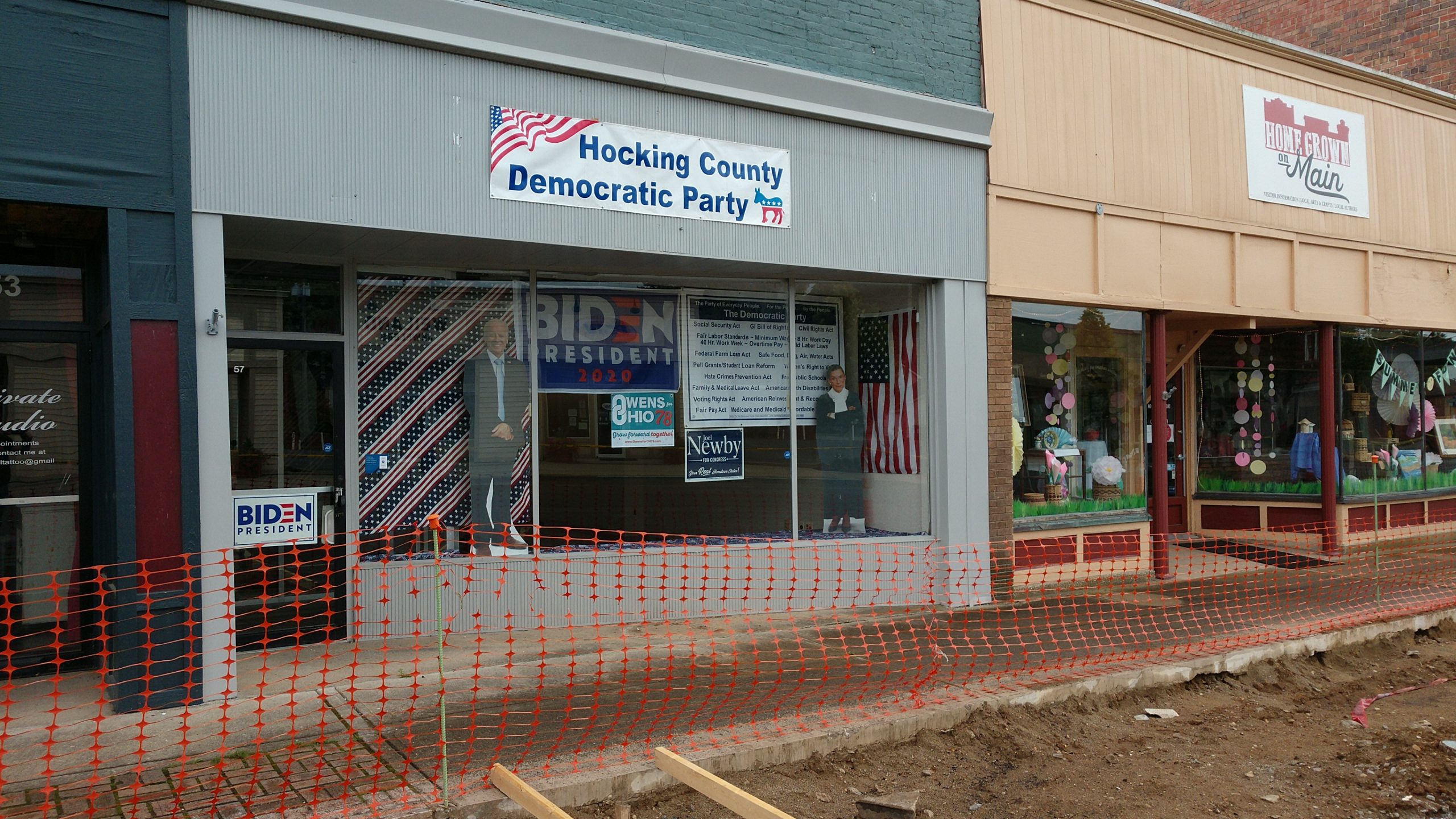
So the sharper question is not whether the Democratic Party disappears. It is whether the coalition loses enough trust, enthusiasm or turnout discipline to stop functioning when elections are decided on the edge.
That distinction matters. A party can remain institutionally intact while still failing at the thing voters notice most: winning power and using it in a way that satisfies enough of its own supporters.
Democrats have long described themselves as a big-tent party because their voters include progressives, moderates, Black voters, Latino voters, younger climate-focused activists, college-educated suburbanites, labor households, secular liberals and religious voters. Those groups often agree on opposing Republicans. They do not always agree on what Democrats should do once they govern.
Gaza exposed a deeper rift
The Israel-Hamas war became one of the clearest stress tests. In a March 2024 NPR interview, Michel Martin framed the issue around Democratic “pain points,” including Gaza and immigration, and asked whether the party’s big tent had holes in it.
The immediate context was the “uncommitted” protest vote against President Joe Biden in Democratic primaries. NPR noted that in Minnesota, about 46,000 Democratic primary voters, or 19%, chose uncommitted after activists urged voters to pressure Biden over a cease-fire in Gaza.
Faiz Shakir, a political adviser to Sen. Bernie Sanders, told NPR that Democrats had to separate politics from policy. Politically, he argued, even small defections could matter in battleground states such as Michigan, Pennsylvania, Wisconsin, Nevada, Georgia and Arizona, where margins can be extremely narrow.
His point was not that every protest voter would abandon Democrats forever. It was that a coalition party cannot assume moral disagreement will automatically be overridden by fear of Republicans. If voters feel ignored on policy, inclusion rhetoric may not be enough.
Margins make dissent expensive
Big-tent politics is supposed to absorb disagreement. The problem is that modern presidential elections often leave little room for absorption. A few thousand votes in the wrong places can turn a governing coalition into an opposition coalition.
That is why Democratic leaders tend to speak two languages at once. To progressives, they promise movement on labor, climate, corporate power, abortion rights and voting access. To moderates and swing voters, they emphasize stability, pragmatism and a contrast with the Republican Party.
Those messages can coexist, but not always comfortably. A left-leaning voter may hear caution as timidity. A centrist voter may hear activist pressure as political overreach. Party officials are left trying to avoid alienating either side while convincing both sides that compromise is not betrayal.
The tension becomes sharper when the dispute is about conscience, not just spending levels. Tax rates and regulatory details can be negotiated. War, immigration enforcement, policing and rights questions are harder to package as ordinary give-and-take.
The identity problem is real
Democrats are not only arguing over policies. They are arguing over what kind of party they are. Are they a pro-institution party defending democracy and norms? A working-class economic party taking on corporate power? A social-justice party centered on rights and inclusion? A pragmatic anti-Trump coalition? The answer is often yes to all of it, which is both the party’s opportunity and its headache.
Shakir told NPR that Biden’s challenge was to show strength and values alignment, not merely win a “fact-check contest” against Donald Trump. He also pointed to corporate power fights—such as scrutiny of major companies and mergers—as examples of economic arguments Democrats could elevate.
That diagnosis reflects a broader concern inside the party: opposition to Republicans may unify Democrats temporarily, but it does not fully answer what the party is for. Voters who are worried about rent, wages, war, immigration or climate want more than a warning about the alternative.
At the same time, Democrats cannot simply run as a movement party without consequences. Many of the voters who helped Democrats compete in suburbs and swing districts are not looking for maximal ideological confrontation. They want competence, rights protections and economic stability, not permanent intraparty warfare.
Why collapse is unlikely
For all the strain, talk of collapse can overstate the case. Democrats still benefit from a powerful unifying force: the Republican Party. On abortion rights, the courts, democratic institutions, climate policy, labor rules and social issues, Democratic factions often see Republicans as a far worse option.
That negative partisanship is not pretty, but it is politically potent. Many voters who are frustrated with Democratic leaders still return in general elections because the alternative is unacceptable to them.
There is also no obvious replacement vehicle. Third parties face enormous barriers in U.S. elections. Primary challenges can shift party debate, but they usually happen inside the Democratic structure rather than outside it. Activist groups can pressure leaders, but most still depend on Democratic victories to achieve policy goals.
That means the Democratic Party is more likely to bend, stall or disappoint than to collapse. The danger is subtler: a party that survives structurally while losing emotional loyalty among key groups.
Unity now has to be earned
The next phase of Democratic politics will test whether the party can make disagreement feel productive rather than dismissive. That requires more than inviting every faction under the tent. It requires showing which disputes are being taken seriously and what voters get for staying.
Progressives will keep pressing for stronger action on war, climate, labor and inequality. Moderates will keep warning that unpopular positions can cost winnable races. Younger voters may be less responsive to appeals based on party loyalty. Union households and working-class voters may judge Democrats less by cultural messaging than by wages, prices and power at work.
None of those pressures automatically breaks the party. But together they make the old big-tent formula harder: assemble everyone, emphasize the Republican threat, promise incremental progress and hope the factions show up.
The Democratic Party’s survival is not really the mystery. The institution is durable. The question is whether Democrats can rebuild a sense of common purpose before internal strain turns into resignation, abstention or open rebellion at the ballot box. A big tent can have holes and still stand. It cannot work if too many people inside stop believing repairs are coming.






Leave a Reply