
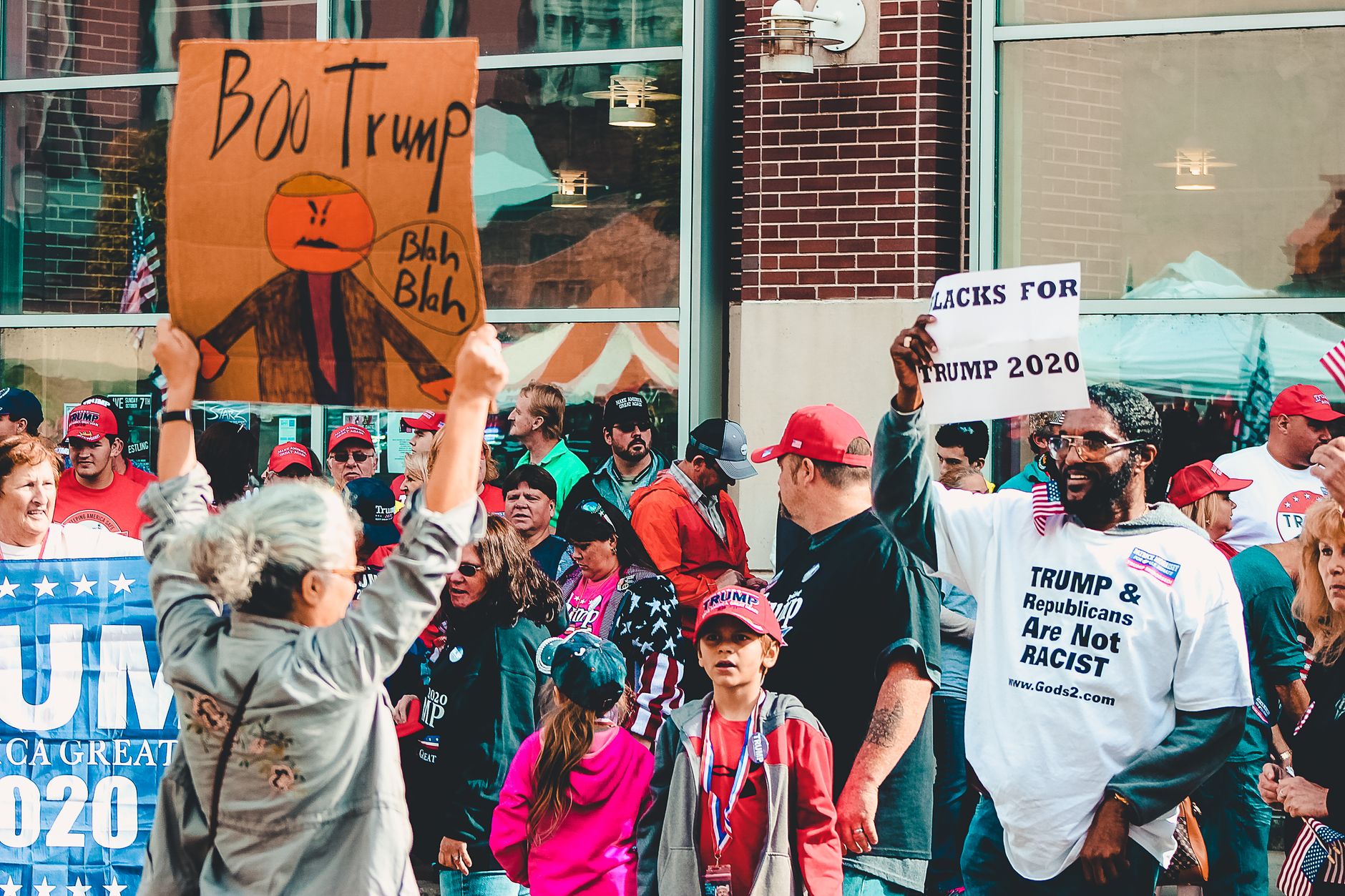
The shift does not mean Trump’s coalition is collapsing. But even a small drop in enthusiasm among core supporters could matter in the 2026 midterms.
Donald Trump’s political brand has long depended on a simple promise to working-class voters: life would get cheaper, jobs would get stronger and Washington would stop ignoring them.
Now, several polls cited by USA Today suggest that promise is under strain among some of the voters who helped return him to the White House — especially white voters without four-year college degrees and rural voters who remain central to Republican hopes in 2026.
A crack in Trump’s core coalition
The warning sign is not that white working-class voters have suddenly become Democrats. They have not. The warning sign is that disapproval of Trump has climbed sharply in groups that have been among his most dependable supporters.
According to USA Today, a CBS News-YouGov poll in May found 54% of white noncollege voters disapproved of Trump’s performance. That was up from 32% in February 2025.
Other surveys showed similar pressure. USA Today cited a June NPR/PBS/Marist poll that put disapproval among white noncollege voters at 49%, and an April Fox News poll that found it at 51%. Among rural voters, a June Reuters/Ipsos poll found 48% disapproved of Trump, up from 34% shortly after he returned to office.
Those numbers matter because Trump’s coalition was built, in large part, on these voters. PRRI’s post-election survey found that 2 in 3 white working-class voters backed him in 2024, while Pew Research Center exit polling found he won 69% of the rural vote.
The economy is the pressure point
The frustration described in USA Today’s reporting is focused less on ideology than on household math. Food, gas, insurance and job security are the issues voters can measure every week.
USA Today reported that experts pointed to higher prices for necessities, pushed up by the Iran war and tariffs, as the main driver of discontent. For voters who backed Trump because they believed he would bring down inflation, the gap between expectation and lived reality is politically dangerous.
One voter featured by USA Today, 22-year-old Ashton Reed of Jackson, Missouri, said economics were a major reason he voted for Trump in 2024. Since then, he told the outlet, he has watched prices rise, grown uneasy about aggressive immigration enforcement tactics, priced health insurance that felt out of reach and lost an HVAC job.
Reed’s quote captured the political problem in plain language: “A huge chunk of why I voted for him in 2024 was because of economics,” he said. “Obviously not happy with him at all.”
Tariffs and war complicate the pitch
Trump has argued for years that tariffs can protect American workers and revive manufacturing. That message resonated in many factory towns, rural counties and postindustrial communities that felt abandoned by both parties.
But tariffs can also raise costs, and voters often feel those costs faster than they see any promised factory revival. USA Today noted that while there have been new investments in some industries, those projects can take a long time to produce visible benefits for workers.
The outlet also reported that manufacturing jobs have seen a slight decline since Trump took office, while some auto companies have scaled back or shelved electric vehicle projects as the administration rolled back Biden-era support and environmental regulations.
The White House has pushed back on the economic gloom. USA Today reported that spokesman Kush Desai said gas prices and inflation would drop once the Iran conflict resolves, while the Treasury Department has sought to highlight tax-cut benefits for families.
Health care is adding to the squeeze
The cost-of-living problem is not limited to groceries and gas. Health care is also showing up as a source of anger, especially in places where many working families sit just above or below eligibility lines for assistance.
USA Today reported that Reed priced an Affordable Care Act plan for his wife after Trump and congressional Republicans allowed pandemic-era subsidies to expire, and found it too expensive. Another Trump voter quoted by the outlet, Denver Feltner of Hazard, Kentucky, said his health insurance premiums rose four-fold after enhanced ACA premium tax credits expired.
Feltner, a father of five who works two jobs, told USA Today he believed Trump could restore the economic conditions he associated with the president’s first term. By July, he said he no longer felt that way, citing grocery bills and insurance costs.
Medicaid is another vulnerability. USA Today reported that Feltner lives in a region of Eastern Kentucky with high poverty and chronic disease rates, and cited the Kentucky Center for Economic Policy saying about 44% of residents in the congressional district relied on Medicaid in 2024. The outlet also noted that Trump’s “Big Beautiful Bill” is projected to cut nearly $1 trillion from Medicaid and a related children’s health program, leaving millions nationally without coverage.
This is a turnout problem first
The key political question is not whether large numbers of white working-class voters will switch parties overnight. Political identities tend to be sticky, and many conservative voters who are frustrated with Trump may still reject Democratic candidates.
That is why the bigger risk for Republicans may be enthusiasm. Vanderbilt University political scientist Noam Lupu told USA Today that growing disapproval could hurt the GOP by dampening turnout, even if relatively few voters fully change sides.
Midterm elections are often decided by motivation, not just persuasion. If a slice of Trump’s 2024 supporters stays home, votes third party or shows up without the same energy for Republican congressional candidates, close House and Senate races could shift.
That is especially true because Trump himself will not be on the November ballot. Republican candidates may need his voters without being able to reproduce his personal draw.
Why the warning sign matters
The political irony is that Trump’s strongest bond with many working-class voters was never only cultural. It was also transactional: he promised to fight for them, lower costs, protect jobs and punish the elites they believed had failed them.
If those voters feel squeezed by the same prices, premiums and layoffs they thought Trump would fix, the emotional connection can weaken even if party loyalty remains. That does not make them automatic Democratic voters. It does make them less predictable.
For Democrats, the opening is obvious but not guaranteed. They still have to win trust in communities where the party has lost ground for decades. For Republicans, the challenge is more immediate: keep core voters convinced that pain now will lead to payoff later.
The polling does not show a collapse of Trump’s support. It shows something subtler and potentially more consequential: a base that is still largely Republican, but increasingly impatient with the cost of waiting.






Leave a Reply