
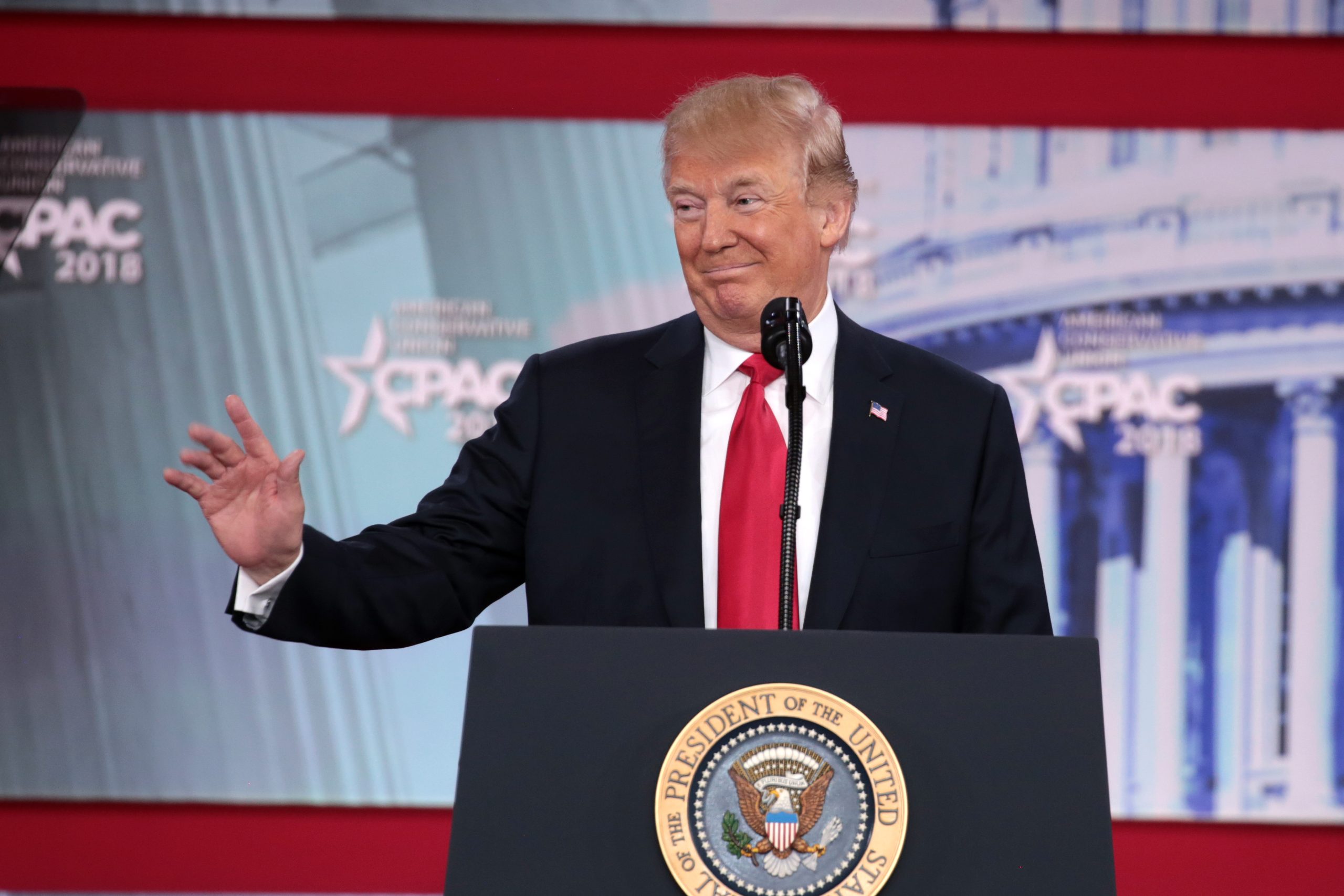
The latest flare-up is not just about one social media post. It shows how Trump’s bluntest foreign-policy threats can become campaign material for opponents who want to frame him as reckless and self-interested.
Donald Trump was criticized — Raw Story’s headline said taunted — by a former official after a Wednesday Truth Social post threatening Iran. Trump’s action was described as corrupt by opponents, and the move was framed as a gift to Democrats because it gives them a vivid argument that his foreign-policy style is legally dangerous and politically self-defeating.
The flashpoint was Trump’s vow that if Iran shoots at ships in the Strait of Hormuz, the United States would “bomb and destroy ONE BRIDGE OR POWER PLANT,” including targets “next to, or in, the Capital City of Tehran.” Raw Story characterized the threat as one that raised the possibility of war crimes.
A threat built for attack ads
The political problem for Trump is not only that the statement was aggressive. It was specific. Bridges, power plants and a capital city are not abstractions, and any presidential threat to destroy them immediately invites questions about civilian harm, military necessity and the laws of war.

That is why critics saw an opening for Democrats. A broad charge that Trump is chaotic or corrupt can sound familiar after years of partisan combat. A direct quote about bombing infrastructure in Tehran is easier to put in a speech, a hearing question or a campaign ad.
According to the Raw Story excerpt, Trump posted the warning on Truth Social on Wednesday and tied it to possible Iranian attacks on ships in the Strait of Hormuz, a strategically crucial waterway for global oil shipments. His message promised a U.S. response against “ONE BRIDGE OR POWER PLANT” for each Iranian strike on a ship.
The former official’s taunt, as framed by Raw Story’s headline, treated the post less as a show of strength than as an unforced political error. The argument: Trump handed Democrats a “gift” by making their case for them in his own words.
Why the wording matters
Presidents often use forceful language toward adversaries. The legal and political issue here is the category of targets Trump named.
Under the laws of armed conflict, attacks must distinguish between military objectives and civilian objects. Civilian infrastructure can become a lawful target in some circumstances if it is being used for military purposes, but a blanket threat against bridges or power plants is exactly the kind of language that alarms legal experts and former national security officials.
Raw Story’s summary said the threat involved the “possibility of war crimes.” That does not mean a crime occurred. A social media post is not the same as an order carried out by commanders. But a public presidential threat can still matter: it signals intent, shapes expectations inside government and gives opponents a record to cite.
The Strait of Hormuz reference also raises the stakes. The waterway is a recurring flashpoint between Iran and the West, and any U.S. military response there would carry economic, diplomatic and security risks well beyond one exchange of fire.
The corruption frame is broader
The word “corrupt” in this controversy should be read as a political accusation unless and until there is a formal finding tied to this incident. Critics use it to argue that Trump’s decisions serve his power, image or political needs rather than a disciplined public-interest process.
That broader frame has been building for years. A House Judiciary document published by Reuters in a prior context said Trump engaged in a “scheme or course of conduct for corrupt purposes in pursuit of personal political benefit.” That document was not about the Iran post, but it shows the language Democrats and Trump critics have long used to describe his conduct.
House Oversight Democrats made a similar case in April 2025, releasing a “100 Days of Corruption” list that accused the Trump administration of conflicts of interest and of “selling access and influence.” The committee’s Democrats cited issues including Trump’s continued financial ties, crypto activity and actions involving allies and donors.
Those claims are contested by Trump and his supporters, who have long argued that Democratic investigations and corruption accusations are partisan efforts to weaken him. That disagreement is central to why a fresh, concrete statement can matter: it gives both sides a new object to fight over.
Democrats get a simpler message
For Democrats, the strategic value is clarity. Instead of asking voters to follow a complicated ethics timeline, they can point to one sentence: Trump threatened to bomb bridges and power plants if Iran shoots at ships.
That makes the issue portable. It can be used by lawmakers focused on war powers, by national security voices warning about escalation, and by campaign strategists trying to portray Trump as undisciplined. It also lets Democrats connect foreign policy to domestic concerns: if a president is careless with war threats, they can argue, he may be careless with power elsewhere.
There is a risk for Democrats, too. If they overstate the legal case or imply that a social media threat is the same as a completed act, they could invite pushback. Voters who favor a hard line on Iran may also hear Trump’s post as deterrence rather than recklessness.
That is the competing view Trump allies are likely to emphasize: Iran should be warned clearly, U.S. ships should be protected, and adversaries respond to strength. The unanswered question is whether Trump’s language was a calculated deterrent, an impulsive flourish or a statement that officials would need to walk back privately.
What remains unclear
The available source material does not identify the former official by name in the extracted text, though Raw Story’s headline described the person as a former official and said Trump was taunted over the episode. It is also unclear from the available material whether the White House, the Pentagon or other national security officials clarified the policy behind Trump’s post.
That matters because the U.S. military does not lawfully select targets simply because a president names a category on social media. Targeting decisions normally go through legal review, intelligence assessment and command channels. If the statement was rhetorical, officials may try to contain it. If it reflected policy, the legal scrutiny becomes more serious.
The political impact may arrive faster than any official clarification. Trump’s opponents now have a compact example that fits a larger critique: he says things that create legal risk, global uncertainty and domestic political ammunition. His supporters will counter that blunt threats prevent conflict by making consequences unmistakable.
For now, the “gift” to Democrats is not a guaranteed advantage. It is a usable moment — a quote, a target list and a foreign-policy dispute rolled into one. In a polarized campaign environment, that may be enough to keep the controversy alive well beyond the original post.




Leave a Reply