
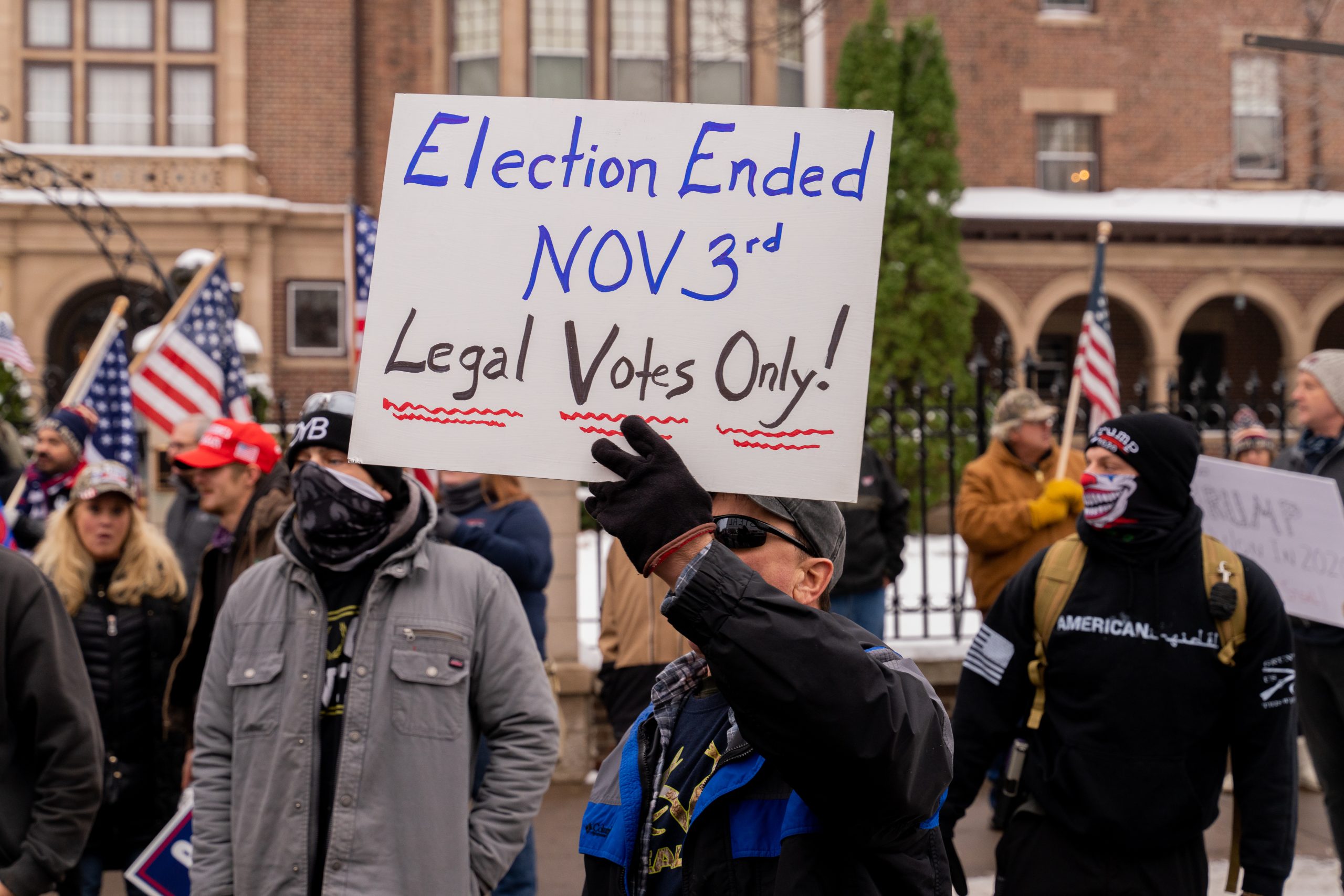
The network’s posture is less a clean break with Trump than a boundary around one of the most legally dangerous parts of his politics. That distinction matters as election claims again become campaign content.
Fox News is distancing itself from Donald Trump’s election-denial claims — in the shorthand now circulating, Fox News snubs Trump’s election fantasy — after the costly lesson Fox News learned from its earlier coverage. The shift matters now because Trump’s false claims about elections remain politically useful to him, while Fox still has unusual influence with Republican voters.
The lesson was not abstract. Dominion Voting Systems sued Fox News for $1.6 billion over 2020 election claims, Reuters and the Associated Press reported, and Fox later settled for $787.5 million. That history helps explain why the network may embrace Trump on many issues while treating election-fraud narratives as a much more dangerous product.
The snub has limits
Calling this a break between Fox News and Donald Trump would overstate the case. Fox remains a central platform for conservative politics, and Trump remains the dominant figure in the Republican Party. The more precise story is narrower: election denial is the place where the network has the strongest incentive to draw a line.
That line is not only editorial. It is legal, financial and reputational. The 2020 aftermath showed how quickly cable commentary, guest claims and social-media amplification could become evidence in a defamation fight.
For viewers, the distinction can feel confusing. A network can be broadly sympathetic to Trump’s agenda, skeptical of Democrats and hostile to liberal institutions, while still deciding that some claims about voting machines, rigged ballots or stolen elections are too expensive to repeat as fact.
Dominion changed the calculation
Dominion’s lawsuit accused Fox News of spreading false claims that the voting-technology company helped rig the 2020 presidential election. The Associated Press reported in 2021 that Dominion argued Fox had promoted those claims to serve its commercial interests after Trump’s loss to Joe Biden.
Fox denied wrongdoing and defended its coverage. In the AP account of the lawsuit filing, Fox News Media said it was proud of its 2020 election coverage and would vigorously defend itself. The case, though, did not end in a triumphant courtroom vindication for the network.
In April 2023, Fox agreed to pay Dominion $787.5 million to settle the defamation case shortly before opening statements were expected. The settlement did not require Fox to issue an on-air apology, but the price tag became a lasting warning to every newsroom and opinion shop covering claims of election fraud.
The broader point is simple: political rhetoric may be protected, but knowingly or recklessly broadcasting false factual claims about identifiable companies or people can create real exposure.
Trump still benefits from conflict
Trump has long used tension with media allies as part of his political performance. Even when he attacks Fox, he benefits from the argument because it keeps him at the center of conservative attention. A complaint about Fox can function as a loyalty test for viewers, hosts and rival Republican figures.
That dynamic was visible after the 2020 election. The Washington Post noted at the time that Trump’s public anger at Fox did not mean the network had fully rejected his election-denial narrative. Some Fox figures pressed officials to acknowledge Biden’s win, while other parts of the network continued to give oxygen to Trump-aligned claims and grievances.
The current tension sits in that same pattern, but with one major difference. Fox now knows the costs of letting unsupported election claims move from political theater into repeated factual assertions.
Trump’s incentives have not changed much. He can raise doubts, pressure allies and cast institutions as corrupt. Fox’s incentives have changed because it has already paid for what happens when those doubts are amplified without enough guardrails.
News side versus opinion side
One reason Fox coverage can look contradictory is that the network is not a single voice. Its news anchors, opinion hosts, guests and digital platforms can all handle Trump’s claims differently. That distinction matters, but it did not shield the company from scrutiny after 2020.
The Dominion fight put attention on what executives, producers and hosts understood about the claims being aired. It also highlighted a core problem for partisan media: the audience may reward repetition of a preferred narrative even when the evidence does not support it.
After 2020, many Trump allies claimed widespread fraud. Election officials, courts and Trump’s own attorney general at the time, William Barr, found no evidence of fraud sufficient to change the result. The AP reported that nearly all legal challenges from Trump and his allies were dismissed, including cases rejected by the Supreme Court.
That record makes future coverage more complicated. A host can discuss Trump’s claims as political news. A network can report that Trump said an election was stolen. The risk rises when the coverage treats unsupported allegations as established fact or gives guests room to name targets without evidence.
Why viewers should care
This is not just a media-industry story. Election denial affects trust in voting, public acceptance of results and the safety of election workers. When a major outlet changes how it handles those claims, it can alter what millions of people hear as plausible.
There is also a business lesson. Fox’s audience is valuable because it is loyal, but loyalty can create pressure. If viewers want validation of Trump’s claims, the network risks losing some of them by refusing to go along. If it indulges the claims too freely, it risks another legal and reputational blow.
That tension explains why the apparent snub is so notable. It suggests Fox may be willing to disappoint parts of its audience on election denial while continuing to serve them aggressive conservative coverage on immigration, crime, culture fights, inflation and Biden-era grievances.
Critics of Fox will see a belated correction driven by money rather than principle. Defenders will argue the network is allowed to cover Trump’s claims as news while avoiding legal traps. Both readings can be partly true.
The unanswered question
The real test will come when Trump’s claims collide with a live election cycle, close vote counts or delayed results. It is easier to be cautious in hindsight than during a chaotic week when campaigns are spinning, social media is flooded and viewers want certainty.
What remains unclear is whether Fox’s restraint will hold under pressure from Trump, competitors and its own audience. Conservative media is a crowded marketplace, and outlets that promise fewer filters can pull viewers away when Fox sounds too careful.
Still, the Dominion case changed the risk map. It put a dollar figure on the consequences of amplifying false election claims, and it showed that private doubts inside a media company can become public evidence.
So the Fox-Trump relationship is not ending. It is being renegotiated around a subject that has already proved costly. The network can keep courting Trump’s voters, but on election denial, it now has a powerful reason to keep at least one hand on the brake.









Leave a Reply