
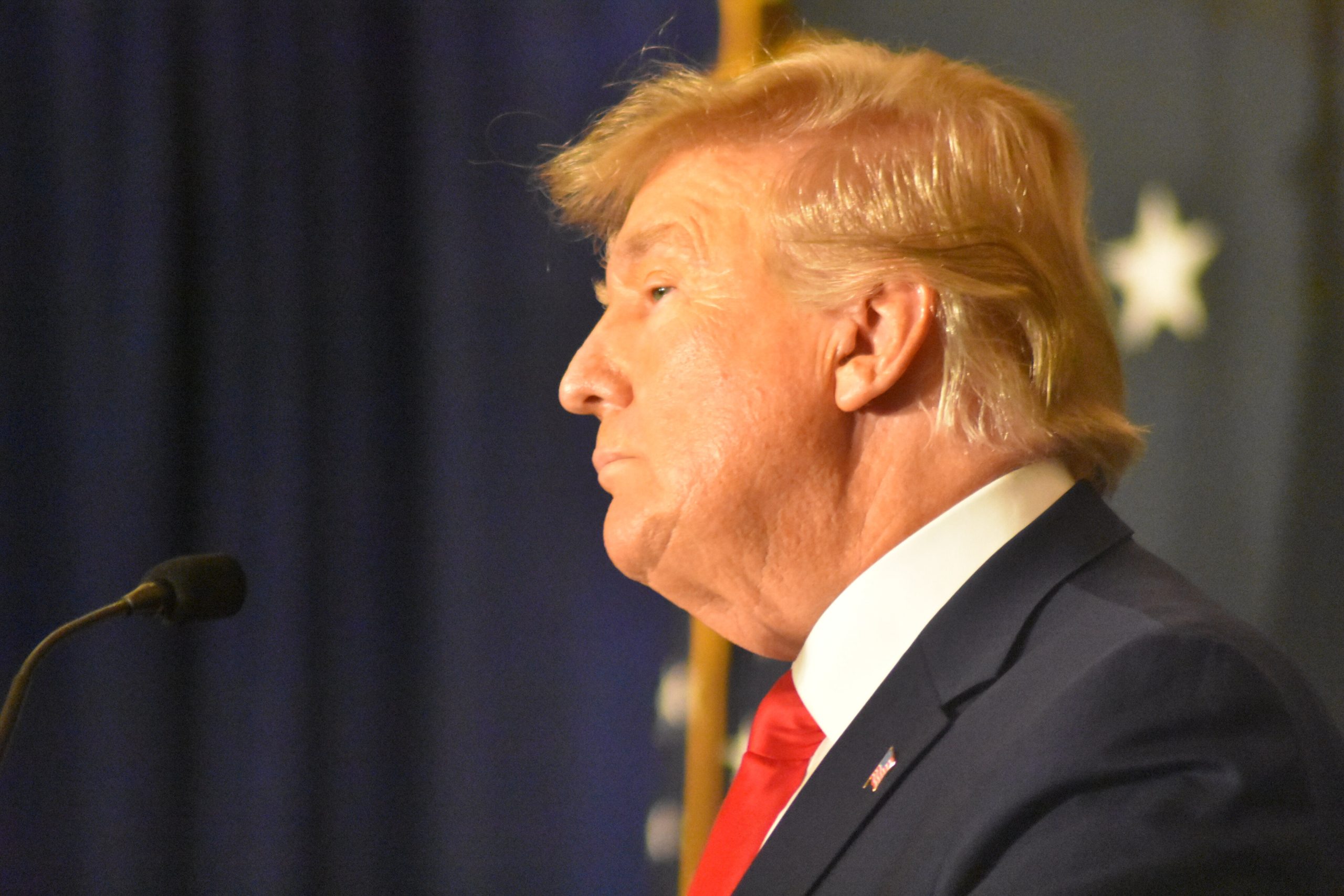
The exchange was brief, but it fit a familiar pattern in Trump’s encounters with the press. Communications experts say the insult can shift attention from the substance of a question to the reporter asking it.
Donald Trump insulted a female reporter again yesterday afternoon, calling CBS News reporter Jennifer Jacobs’ question “stupid” during an exchange that took place on Air Force One. Communications experts say it may be a strategy, not just a flash of irritation.
The moment matters because Trump yet again used a familiar attack against a woman asking about a difficult political issue: why he wanted the Senate to stay in Washington instead of campaigning for the midterm elections, with the SAVE Act still stalled.
The Air Force One exchange
According to HuffPost’s account of the exchange, Jacobs asked Trump why he wanted senators to remain in town when they would normally be expected to campaign ahead of the midterms. Her question referenced the Safeguard American Voter Eligibility Act, known as the SAVE Act, a Trump-backed voting bill that had recently failed again in the Senate.
Trump answered by attacking the question itself.
“Why the stupid question?” Trump asked, according to the report. “What a stupid question. For Jennifer to ask such a stupid — she’s a smart person.”
He then shifted into a backhanded compliment, saying he had known Jacobs since “the Iowa days” and recalling that she had said he would win. The pivot was notable because it softened the personal edge only after he had already labeled the question stupid several times.
Why experts see a tactic
Deborah Tannen, an author and Georgetown University linguistics professor, told HuffPost the move was “pretty straightforward”: if Trump does not want to answer something that makes him look bad, he can make the questioner look bad instead.
That is the core of the expert critique. Calling a question “stupid” does not answer it. It reframes the moment around the reporter’s judgment, intelligence or motives.
Karrin Anderson, a Colorado State University professor of communication studies, told HuffPost that Trump treats journalists’ questions less as tools for public accountability and more as openings to judge the journalists themselves while reinforcing his own image.
The strategy, as the experts described it, is not only to spar with the press. It is to turn a potentially damaging policy question into a performance in which the politician is the grader and the reporter is on trial.
The SAVE Act pressure point
Jacobs’ question landed on a subject Trump has been pushing hard. The SAVE Act would require proof of citizenship for people to register to vote, according to the source report. The bill has passed the House multiple times, including most recently on July 23, but has stalled in the Senate.
That context helps explain why the question may have been sensitive. If senators are kept in Washington instead of heading home to campaign, it signals that the administration wants pressure applied on unfinished legislative business.
Supporters of the SAVE Act argue it is a necessary election-integrity measure. Critics have warned that proof-of-citizenship requirements can create new barriers for eligible voters, especially people who do not have quick access to the required documents.
Trump did not use the Air Force One exchange to make a detailed public argument about the bill. Instead, the viral takeaway became his treatment of the reporter who asked about it.
A pattern with women reporters
The latest exchange stands out because it fits into a longer record of Trump using personal insults against journalists, particularly women. HuffPost noted recent examples involving CNN’s Kaitlan Collins and ABC News reporter Mary Bruce, as well as earlier attacks in which Trump used words such as “dumb,” “stupid,” “ugly,” “piggy” and “incapable.”
Bruce was criticized by Trump in the Oval Office after asking whether he had a plan to end the Iran war. “You don’t know anything,” he told her, according to the report.
Tannen told HuffPost that Trump’s language can become more personal when he is talking to women reporters than when he is dealing with male reporters. Anderson also suggested Trump appeared to recognize, mid-answer, that the Jacobs exchange could be read as another example of his treatment of women journalists, which may explain the quick turn to calling Jacobs “a smart person.”
There is a political audience for this style. Trump’s supporters often view his clashes with the press as proof that he is fighting hostile media institutions. But the expert concern is that the insult does more than criticize coverage. It can discourage accountability by making the person asking the question the target.
Not just anti-media politics
Attacking the press is not new in American politics. Anderson pointed to former Vice President Spiro Agnew, who served under Richard Nixon, as an earlier figure who aggressively criticized journalists and news networks.
The distinction experts draw is about where the attack lands. Agnew often aimed at the media as an institution. Trump frequently names or directly belittles individual reporters, turning routine Q&A moments into personalized confrontations.
That distinction matters because a press exchange is supposed to clarify what the government is doing. When the exchange becomes a fight over whether the reporter is smart enough to ask the question, the public may learn less about the policy at issue.
It also creates a chilling effect inside the room. Reporters know that asking a hard question could result in the president mocking them by name, with the clip then circulating far beyond the original setting.
What remains unanswered
The White House and CBS News did not respond to HuffPost’s requests for comment as of that article’s publication. That leaves the public record centered on the exchange itself and the experts’ interpretation of it.
What remains unclear is whether Trump’s insult was spontaneous, tactical or both. Political communication often works that way: a reflex can also serve a purpose if it reliably changes the subject and energizes supporters.
The practical takeaway is less about one sharp line on Air Force One than about the repeated structure of these encounters. A reporter asks about a contested policy. Trump attacks the premise, the question or the reporter. The policy issue risks being pushed to the side.
In this case, the issue was the SAVE Act and Senate pressure ahead of the midterms. The moment that traveled, though, was Trump calling a female reporter’s question “stupid” — and experts warning that the insult itself may be part of the point.






Leave a Reply