
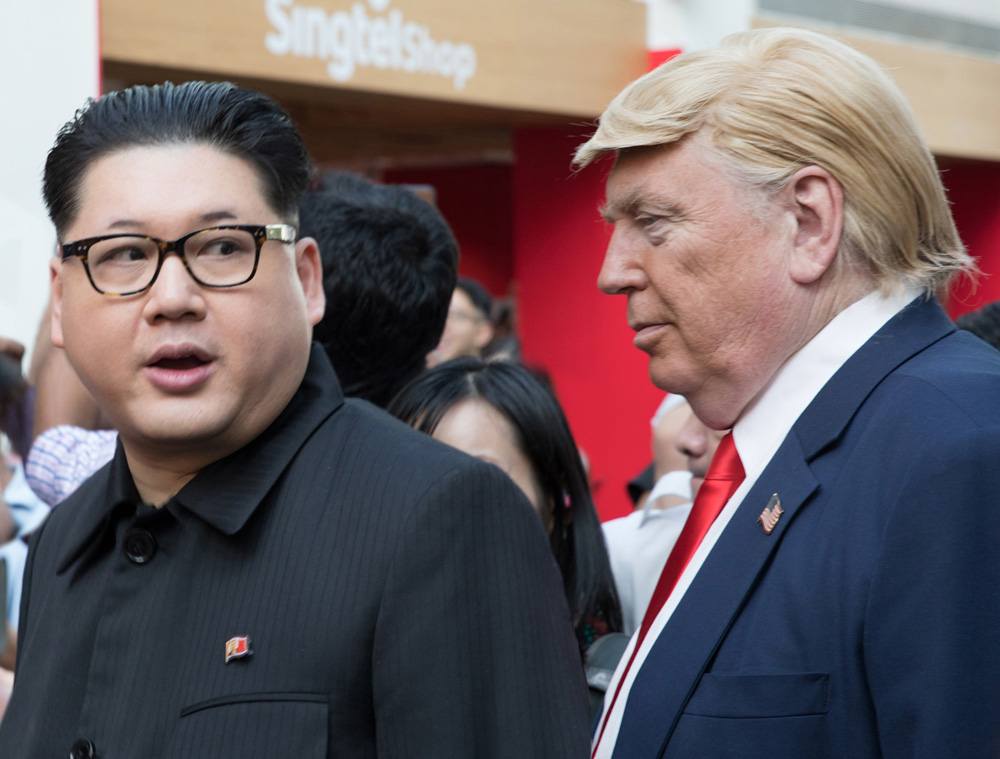
The fight is not just over what Trump says happened in 2020. It is over whether the paperwork he invokes actually proves it.
Donald Trump cites documents to support false claims of 2020 election fraud, but the public record behind those claims says something narrower and far less explosive: officials documented allegations, warnings and influence efforts, not proof that illegal voting changed the result. The question now is what the documents actually say — and whether they do anything to substantiate Trump’s election fraud claims.
That distinction matters because paperwork can look powerful in a political fight. A government report, court filing or intelligence assessment can be waved around as if it settles the case. In this fight, the documents are more complicated — and much less helpful to Trump’s central claim.
The claim needs more than paper
Trump’s argument has long been built around a simple idea: that the 2020 election was corrupted by fraud significant enough to deny him victory. That claim has been repeatedly rejected by courts, election officials, state certifications and investigations.

The documents now being pulled into the debate do not change that basic record. They show that claims were made, that officials examined threats, and that Trump and his allies pressed their case after the election. They do not show verified fraud on a scale that would have altered the outcome.
That is the key gap. A document mentioning voter fraud is not the same thing as a document proving voter fraud. An intelligence report describing foreign influence efforts is not the same thing as evidence that ballots were changed. A legal filing describing Trump’s post-election pressure campaign is not proof that his underlying claims were true.
For readers trying to sort through the noise, that is the central test: does the document establish facts, or does it merely record allegations?
What the records actually show
The public record includes several categories of documents that are relevant to the 2020 election debate: Justice Department materials from Special Counsel Jack Smith’s investigation, Trump’s federal election-interference indictment, intelligence assessments about foreign threats, and the January 6 committee’s final report.
The Justice Department’s January 2025 report from Smith, released after the federal case against Trump was dropped under department policy following his return to office, does not validate Trump’s fraud narrative. It describes prosecutors’ view that Trump advanced claims he had been told were false. Trump denied wrongdoing, and the case never went to trial.
The indictment filed in 2023 made a similar point in legal form. It alleged that Trump and co-conspirators used knowingly false claims of election fraud as part of an effort to obstruct the certification of the 2020 result. An indictment is an allegation, not a conviction, but its relevance here is plain: it treats the fraud claims as unsupported, not proven.
The intelligence record is also often misunderstood. The Office of the Director of National Intelligence’s March 2021 assessment on foreign threats to the 2020 federal elections discussed efforts by foreign actors to influence public opinion and amplify doubts. It did not establish that foreign actors changed votes or that domestic fraud overturned the legitimate result.
Allegations are not evidence
This is where the politics of documents gets slippery. If a record says officials received a fraud allegation, that can be presented as proof that fraud existed. But in election administration, allegations are common. They still have to be checked, verified and measured against vote totals.
The January 6 committee’s final report, available through GovInfo, directly confronted Trump’s post-election claims. It said he declared victory before all votes were counted, continued to claim fraud without a basis, and was told by advisers that the numbers did not support his position. Trump has rejected the committee’s work as partisan.
Even taking that criticism into account, the broader evidentiary picture is consistent across institutions that did not always share the same interests. Republican and Democratic state officials certified results. Courts dismissed or rejected major challenges. Trump’s own attorney general at the time, William Barr, said the Justice Department had not found fraud sufficient to change the outcome.
That does not mean every election process was perfect. Elections are administered by thousands of local jurisdictions, and mistakes can happen. But a mistake, a rumor, a procedural dispute or a foreign propaganda effort is not the same as proof that the presidential result was stolen.
Why the wording matters
Trump’s phrasing often turns on a powerful ambiguity: documents can be said to prove that concerns existed. They can prove that people complained. They can prove that officials discussed fraud allegations. None of that proves the allegations were true.
That distinction is not legal hair-splitting. It is the difference between documenting a controversy and establishing a fact. In a democracy, losing candidates are allowed to challenge results. They are not entitled to convert unproven claims into settled truth by pointing to the existence of paperwork.
The ODNI report is a good example. Foreign adversaries did try to exploit election tensions, according to U.S. intelligence. That is serious. But an influence operation designed to erode confidence is not evidence that fraudulent ballots changed the winner.
The Smith materials point in the opposite direction from Trump’s preferred reading. They emphasize what investigators said Trump was told: that his path was gone, that his claims lacked evidence, and that the lawful transfer process was moving forward. Trump’s allies argue those materials reflect prosecutors’ theories and political bias, but they still do not supply proof of election-changing fraud.
The unanswered political question
The legal cases and reports may not end the argument because Trump’s claim has never depended only on evidence. It has become a loyalty test inside Republican politics and a recurring theme in campaigns, fundraising and conservative media.
That creates a durable problem for voters. Official documents can be used selectively, stripped of context and repackaged as vindication. A phrase about fraud concerns becomes proof of fraud. A record of foreign meddling becomes proof of a stolen election. A filing about rejected claims becomes proof that the claims deserved more attention.
The unresolved question is not whether the 2020 result was certified. It was. Nor is it whether Trump has continued to dispute it. He has. The harder question is how much political power an unsupported claim can retain once it has been contradicted by the same paper trail invoked to defend it.
For now, the documents do not do what Trump says they do. They show a country flooded with allegations, pressure and suspicion after the 2020 election. They do not show evidence that fraud cost Trump the presidency.
The bottom line in the files
The strongest reading of the public record is also the least dramatic: the documents are evidence of a campaign to challenge and discredit the 2020 result, not evidence that the result was fraudulent.
That is why the current fight over the documents matters. It is not just a dispute about old paperwork. It is a preview of how future election claims may be sold — through fragments of official language presented as proof of something the documents, read carefully, do not actually say.


Leave a Reply