

A committee vote moved Todd Blanche closer to a Senate confirmation vote, but Republican opposition is now a central obstacle. Collins says her concerns center on the Justice Department’s independence.
Todd Blanche’s attorney general nomination lost another critical Republican vote when Sen. Susan Collins of Maine said on August 4, 2026, that she would vote against confirming him. The Senate Judiciary Committee advanced Acting Attorney General Blanche’s nomination that day by a 12-10 vote, but Republican opposition threatens Blanche’s confirmation when the full U.S. Senate takes it up.
Collins did not question Blanche’s legal ability. Her objection was more consequential: she said actions he approved had further eroded the Justice Department’s independence. That makes the coming vote a test of whether Senate Republicans will accept Blanche’s approach to a department meant to enforce federal law at arm’s length from political power.
Collins puts her reasons on record
In a statement released after the committee vote, Collins said she had reviewed Blanche’s qualifications, his written responses and his testimony during hearings. She called him a capable lawyer, then said the Justice Department had become “increasingly political.”
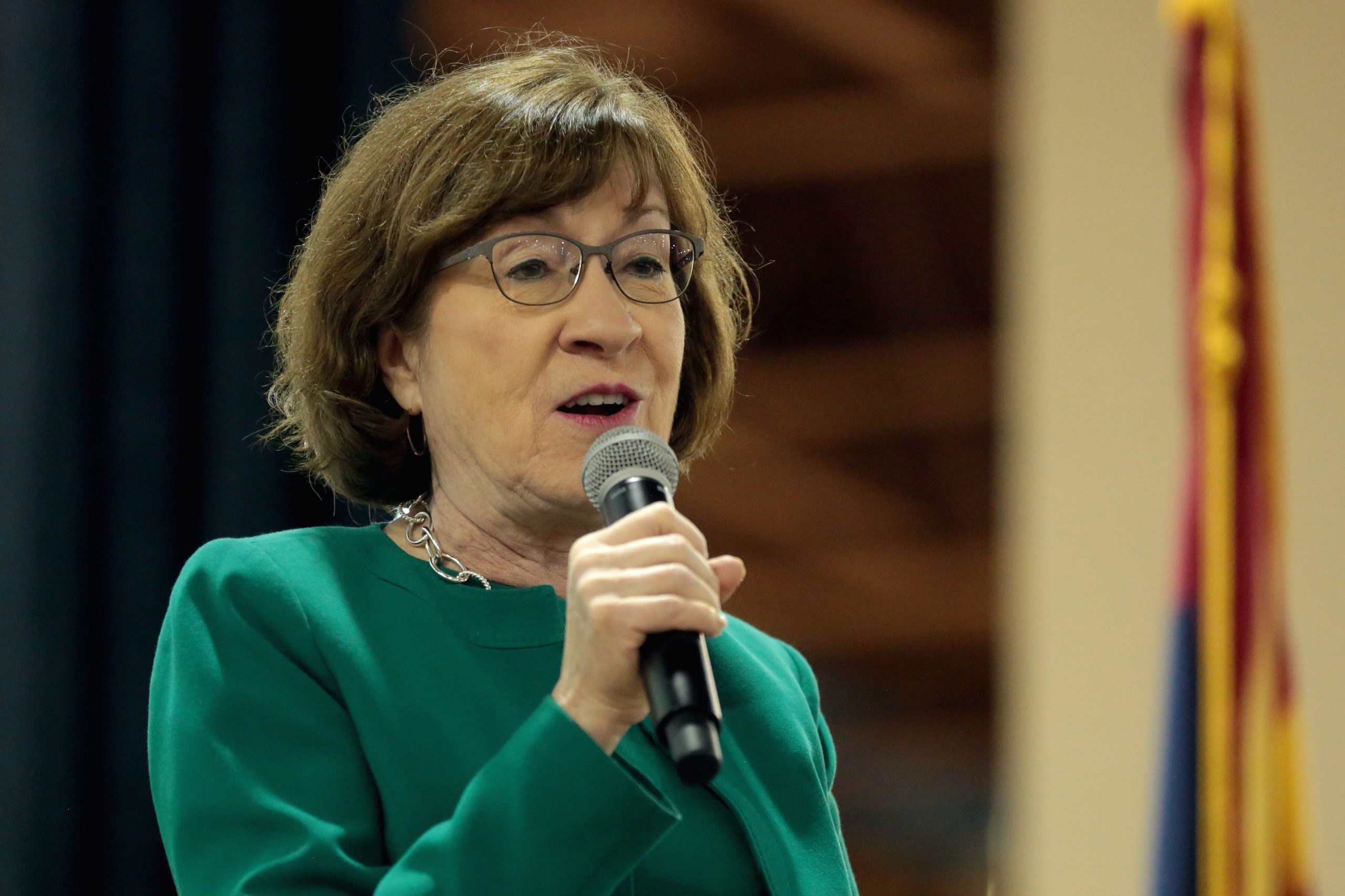
Her stated reason for opposing confirmation was that Blanche had taken actions that, in her view, weakened the department’s independence. Collins cited an order that shielded the president, his sons and the family business from Internal Revenue Service audits—protections she said were not available to other taxpayers.
She also pointed to Blanche’s approval of a $1.8 billion anti-weaponization fund and to his response to an anti-abortion organization regarding efforts to prohibit the mailing of abortion medication nationwide. Her statement frames the dispute as one about how prosecutorial power should be used, not merely a disagreement over a nominee’s résumé.
A committee win is not confirmation
The Senate Judiciary Committee’s 12-10 vote on August 4 moved Blanche’s nomination out of committee. It did not install him as attorney general, nor did it resolve how every senator will vote on the Senate floor.
Committee approval is an important procedural milestone because it allows a nomination to proceed. But it also creates a clearer political record: Blanche can advance with support from the committee majority while still facing public resistance from within the Republican Party.
That distinction matters in a closely divided chamber. A nominee’s path can depend not only on whether the president’s party controls the Senate, but on its margin, attendance and whether any senators break with party leadership. The available materials do not establish the precise final-vote timetable or the full count of senators who currently oppose Blanche.
Supporters stress Blanche’s public-safety record
Judiciary Committee Chairman Chuck Grassley, an Iowa Republican, argued that advancing Blanche was a vote for public safety. In the committee’s announcement, Grassley praised Blanche’s Justice Department for shifting priorities toward violent crime and border-related enforcement.
The committee release also said Blanche had backing from more than 670,000 law enforcement officers, 300 Angel Families and more than 100 current and former U.S. attorneys and Justice Department officials across eight administrations. Those are claims presented by committee Republicans and Blanche’s supporters as evidence of broad law-enforcement confidence in him.
Supporters have also tied Blanche to falling homicide and violent-crime figures. The debate, however, is not limited to outcomes in crime statistics. Collins’s opposition shows that institutional guardrails inside the department may carry as much weight for some senators as the administration’s public-safety agenda.
The fight centers on DOJ independence
The attorney general oversees the Justice Department, including federal prosecutors, the FBI and major civil-enforcement functions. That makes the office unusually sensitive to concerns about whether legal decisions are being made independently or in service of political interests.
Every administration faces arguments over where legitimate policy direction ends and improper political influence begins. Presidents appoint attorneys general in part because they want officials who will carry out their priorities. Critics counter that the department must preserve consistent rules, avoid selective treatment and remain insulated from personal or partisan interests.
Collins’s statement lands squarely in that longstanding tension. Her criticism does not allege that Blanche lacks legal experience; it argues that specific actions and commitments have damaged public confidence in equal enforcement of the law. Blanche’s supporters, by contrast, portray his tenure as a needed correction in Justice Department priorities.
Republican defections change the pressure
A public “no” from Collins carries weight beyond a single Senate vote because she explained it in detail. Her statement gives other senators a concrete set of concerns to address: IRS audit protections, the anti-weaponization fund, abortion-medication policy and the department’s broader independence.
It also raises the stakes for Blanche and the White House as they seek to hold together Republican support. If party leaders can show that Blanche’s actions were lawful, appropriately supervised and consistent with administration policy, they may limit further defections. If additional Republicans share Collins’s institutional concerns, the margin for confirmation could shrink quickly.
Democrats are likely to make the independence question central to their scrutiny as well. But the immediate complication is Republican, because Collins has made clear that the nominee’s vulnerability is not confined to opposition-party criticism.
What the Senate still must decide
Blanche has cleared the Senate Judiciary Committee, but he still needs a full Senate confirmation vote to become attorney general. The committee’s 12-10 result is a step forward; Collins’s announced opposition is a warning that the next step could be harder.
Several questions remain unanswered: when Senate leaders will schedule the vote, whether other Republicans will announce positions, and whether Blanche or the administration will respond directly to the concerns Collins outlined. Those answers will determine whether the committee victory becomes a confirmation—or only a temporary procedural success.
For now, the nomination has become a broader argument about the kind of Justice Department the Senate is willing to endorse: one supporters describe as more focused on public safety, or one critics fear is moving too close to political power.










Leave a Reply