

The court’s refusal to revisit the case closes Trump’s remaining path to challenge the 2023 verdict over Carroll’s claims. It does not resolve a separate, much larger defamation judgment that is still on appeal.
The Supreme Court denied Donald Trump’s petition seeking to overturn the E. Jean Carroll verdict, leaving the 2023 civil judgment against him in place. The July 6, 2026, docket activity and the Court’s later order denying rehearing mean Trump cannot use this case to undo the jury’s finding that he sexually abused and defamed Carroll.
For Trump, the practical outcome is that the $5 million verdict is no longer an active Supreme Court fight. For Carroll, it marks the end of a long appellate path in one case, even as a separate $83.3 million defamation judgment remains under appeal.
The court declined to reconsider
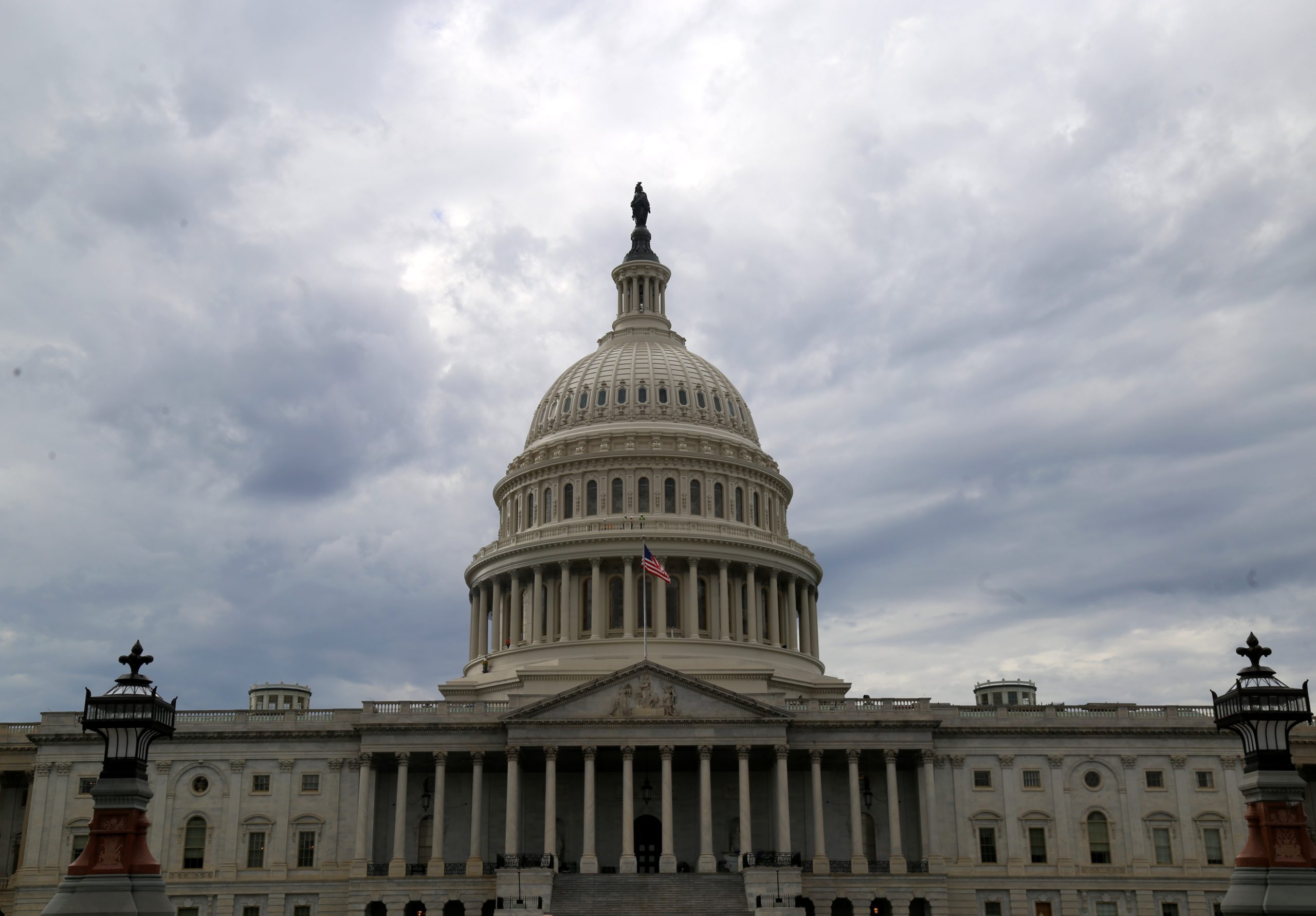
The Supreme Court’s action was brief and offered no explanation, which is typical when the justices deny a petition or a request for rehearing. The Court listed Trump’s matter among petitions for rehearing that were denied.
That matters because Trump had already sought Supreme Court review of the Carroll verdict. After the Court declined to take up the appeal, his legal team asked the justices to reconsider. The new denial shuts down that second effort.
A denial of rehearing does not mean the Court endorsed every conclusion reached by the lower courts. It means fewer than the required number of justices agreed to reopen the matter, leaving the existing rulings in force.
What the Carroll verdict decided
A federal jury in Manhattan returned its verdict in 2023 after Carroll sued Trump under New York’s Adult Survivors Act. The jury found Trump liable for sexually abusing Carroll and for defaming her after he publicly denied her allegation.
The jury awarded Carroll $5 million in damages. Trump has consistently denied Carroll’s allegation and has argued that the case and the award were wrong.
The legal wording is important. This was a civil case, not a criminal prosecution, and the jury’s finding was based on the civil standard of proof. Trump was not convicted of a crime in the Carroll matter.
Still, the verdict carried substantial consequences: a jury determined that Trump was legally responsible for the conduct at issue, and federal courts rejected his attempts to overturn that result.
Why the $5 million judgment stands
Before the Supreme Court’s latest move, a three-judge panel of the U.S. Court of Appeals for the Second Circuit had upheld the 2023 verdict. The Supreme Court’s refusal to disturb that decision leaves the lower-court judgment intact.
Trump had placed the $5 million award, plus interest, into a court-held account while his challenges continued. Following the Court’s earlier decision not to hear the appeal, a federal judge ordered the funds released.
Carroll’s legal team said the amount disbursed was about $5.6 million once interest was included. The Supreme Court’s denial means there is no remaining ordinary appeal route for Trump in that particular verdict.
Carroll attorney Roberta Kaplan said the Court’s decision makes the jury’s unanimous verdict final. Trump’s side had not immediately issued a public response to the latest order, according to reports following the decision.
A final result in one case
The significance of the denial is procedural but real. Supreme Court litigation can keep a case unsettled long after a jury reaches its decision; a rehearing request can extend that uncertainty further.
Here, the justices’ action signals that the 2023 case has reached its endpoint in the federal courts. The Court’s order did not create a new legal rule, reinterpret defamation law, or address Trump’s broader political role. It resolved a specific request to reopen a completed appeal.
That distinction is likely to shape competing reactions. Carroll’s supporters can point to a final, unreversed jury verdict. Trump’s supporters may continue to criticize the case and the underlying allegations, but the Supreme Court order leaves no judicial vehicle for revisiting this judgment.
The separate $83.3 million case
The latest Supreme Court action does not cover every legal dispute between Trump and Carroll. In a separate civil defamation case, another federal jury ordered Trump in 2024 to pay Carroll $83.3 million in damages.
That case centered on statements Trump made about Carroll in 2019. A federal appeals court later upheld that award, and Trump’s lawyers have pursued Supreme Court review there as well.
The $83.3 million matter is legally distinct from the $5 million verdict, even though both cases involve Carroll’s allegations and Trump’s public responses. The Court’s refusal to reconsider the first case does not automatically decide what it will do with the second.
That remaining appeal is the major unanswered legal question. The Court could decline to hear it, as it did in the earlier case, or take a different course. Until the justices act, the larger judgment remains contested.
What this order does not change
The denial does not amount to a Supreme Court opinion on the factual record. There was no oral argument, signed opinion, or explanation of the justices’ reasoning.
It also does not erase the public and political arguments surrounding the cases. Trump has repeatedly denied Carroll’s claims, while Carroll has maintained that the verdicts reflect accountability for conduct and statements she says harmed her.
What is settled is narrower and clearer: the Supreme Court will not reopen Trump’s challenge to the 2023 E. Jean Carroll verdict. The $5 million civil judgment remains in place, while attention now shifts to the separate appeal over the $83.3 million award.




Leave a Reply