
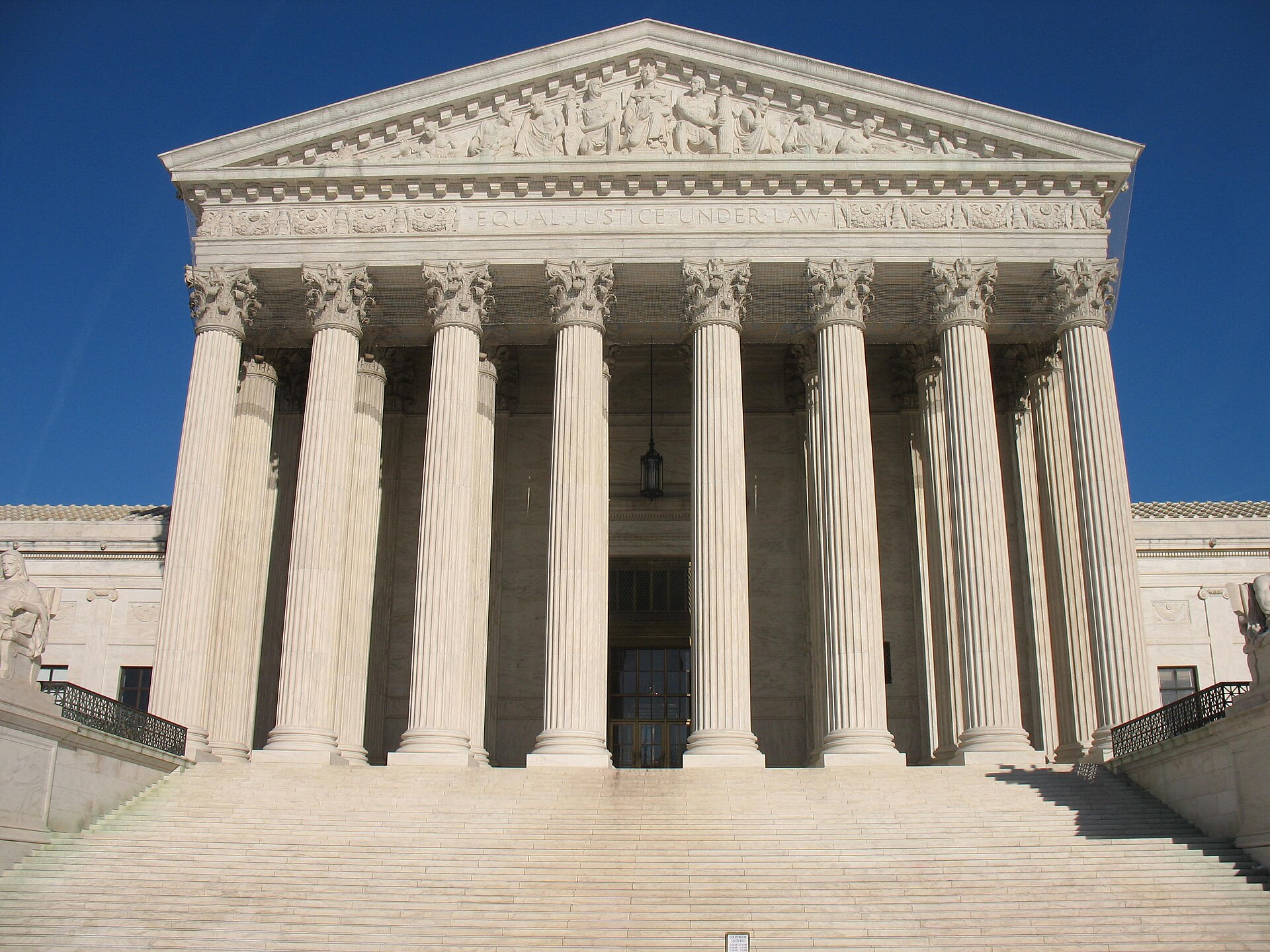
A viral framing suggests the Supreme Court is about to take up a novel voter-discrimination dispute. The available Court record instead shows that Tully v. Okeson was denied in 2021, underscoring how much depends on identifying any current case and its actual legal question.
The Supreme Court is reportedly about to confront a new type of voter discrimination: an age-based challenge to absentee or mail-voting rules, rather than a conventional claim involving race. But the case often cited for that theory, Tully v. Okeson, is not pending before the justices.
In Tully, Indiana voters asked whether state rules that made no-excuse absentee voting available based in part on age violated the 26th Amendment by giving younger voters less access to mail ballots. The novel legal question was whether an age-based difference in voting access can amount to unconstitutional discrimination.
The Supreme Court docket shows that it denied the petition on June 21, 2021. Tully therefore does not show that the Court is about to decide this issue. It shows why claims about a pending, first-of-its-kind voter-discrimination case require a current docket and a precise account of the legal question.
The docket tells a different story
Supreme Court docket No. 20-1244 is captioned Barbara Tully, et al. v. Paul Okeson, et al. The case reached the Court after proceedings in the U.S. Court of Appeals for the Seventh Circuit.
The docket says the petition was filed on March 9, 2021. It was distributed for conference, the Court requested a response from the respondents, and the petition was ultimately denied on June 21, 2021.
A denial of review is not a ruling that endorses every word of a lower-court decision. It usually means fewer than four justices voted to hear the case. Still, it is an outcome that matters: the Supreme Court did not take up Tully for full briefing, oral argument or a merits decision.
That procedural history is the firmest available fact in the research record. It also makes it risky to describe Tully itself as an upcoming Supreme Court showdown.
Why “new” needs legal specifics
Voter-discrimination claims can arise under different parts of the Constitution and federal law. A challenge may focus on race, age, disability, language access, partisan gerrymandering, election administration or unequal treatment among categories of voters.
Those distinctions are not technical side issues. They determine which precedent applies, what level of judicial scrutiny might be used and what evidence a plaintiff must provide.
The phrase “an entirely new kind of voter discrimination” therefore carries a large legal claim. To assess it, readers would need to know the exact government policy being challenged, who is alleged to be treated differently, the legal provision invoked and the remedy sought.
Without those details, “new” may describe a political argument, a fresh factual setting or a genuinely unsettled constitutional question. Those are very different things.
Tully remains relevant context
The fact that the Court denied review in Tully v. Okeson does not erase the case from voting-rights debates. Lower-court opinions, denied petitions and briefs can still shape how lawyers formulate later cases and how advocates frame legislative proposals.
The Supreme Court’s docket also identifies amici, or outside participants, including Twenty-Sixth Amendment Scholars and the Constitutional Accountability Center. Their participation signals that the litigation raised issues observers believed had broader constitutional significance.
But an amicus filing is not a grant of review, and a certiorari petition is not a Supreme Court case on the merits. That distinction is especially important in election law, where fast-moving disputes can produce headlines before courts decide whether to hear them.
The available materials also reference Tully in later legal advocacy. A Tennessee attorney general brief from 2026 cites the Seventh Circuit’s Tully decision in a discussion involving voting by mail. A citation in a later brief, however, is not evidence that the Supreme Court has revived Tully or agreed to revisit the question.
The court’s role is often misunderstood
The Supreme Court receives thousands of requests for review each term and accepts only a small share. When it grants a case, it typically identifies the question presented and schedules a sequence of briefs and argument.
That is why the procedural label matters. A petition may be pending, relisted for conference, dismissed, denied or granted. Each status tells the public something different about whether a national precedent may be coming.
In politically charged voting disputes, the temptation is to treat every petition as a potential landmark ruling. Supporters of a challenge may see a case as a needed opening for constitutional protection. State officials and other defenders of election rules may argue that legislatures need room to make administrative distinctions and that federal courts should not second-guess every election policy.
Neither position resolves a case by itself. Courts examine the text of the governing law, the record developed below and the doctrinal framework that applies to the specific claim.
What a real upcoming case requires
If a new voter-discrimination case is now before the Supreme Court, the essential evidence should be easy to identify: a docket number, parties, lower-court decision, question presented and a Court order showing its current status.
A grant of certiorari would be the clearest signal that the justices will decide the issue. A pending petition would show only that parties have asked them to do so. A prior denial, such as the one in Tully, establishes that the Court declined that earlier request.
There can be legitimate uncertainty in election litigation, particularly when similar disputes arise in different states or under different laws. But uncertainty is not a license to collapse separate cases into one supposed Supreme Court confrontation.
The practical takeaway is straightforward: voter discrimination remains a consequential legal issue, but the available Court record does not show that Tully v. Okeson is an upcoming Supreme Court case. Any claim of a new dispute should be judged by the current docket, not by a broad headline alone.
Why accuracy changes the debate
Election-law stories often carry immediate stakes because they touch access to the ballot and public confidence in results. That makes clear sourcing more important, not less.
Calling a question unprecedented can focus attention on an emerging concern. It can also obscure established legal context, overstate what the Supreme Court has agreed to do or leave readers unable to distinguish advocacy from a judicial development.
The verified record here supports a narrower conclusion. Tully brought a voting-related dispute to the Supreme Court; the Court denied the petition in 2021. Whether another, genuinely new voter-discrimination case will reach the justices depends on facts not established by the materials available here.








Leave a Reply