
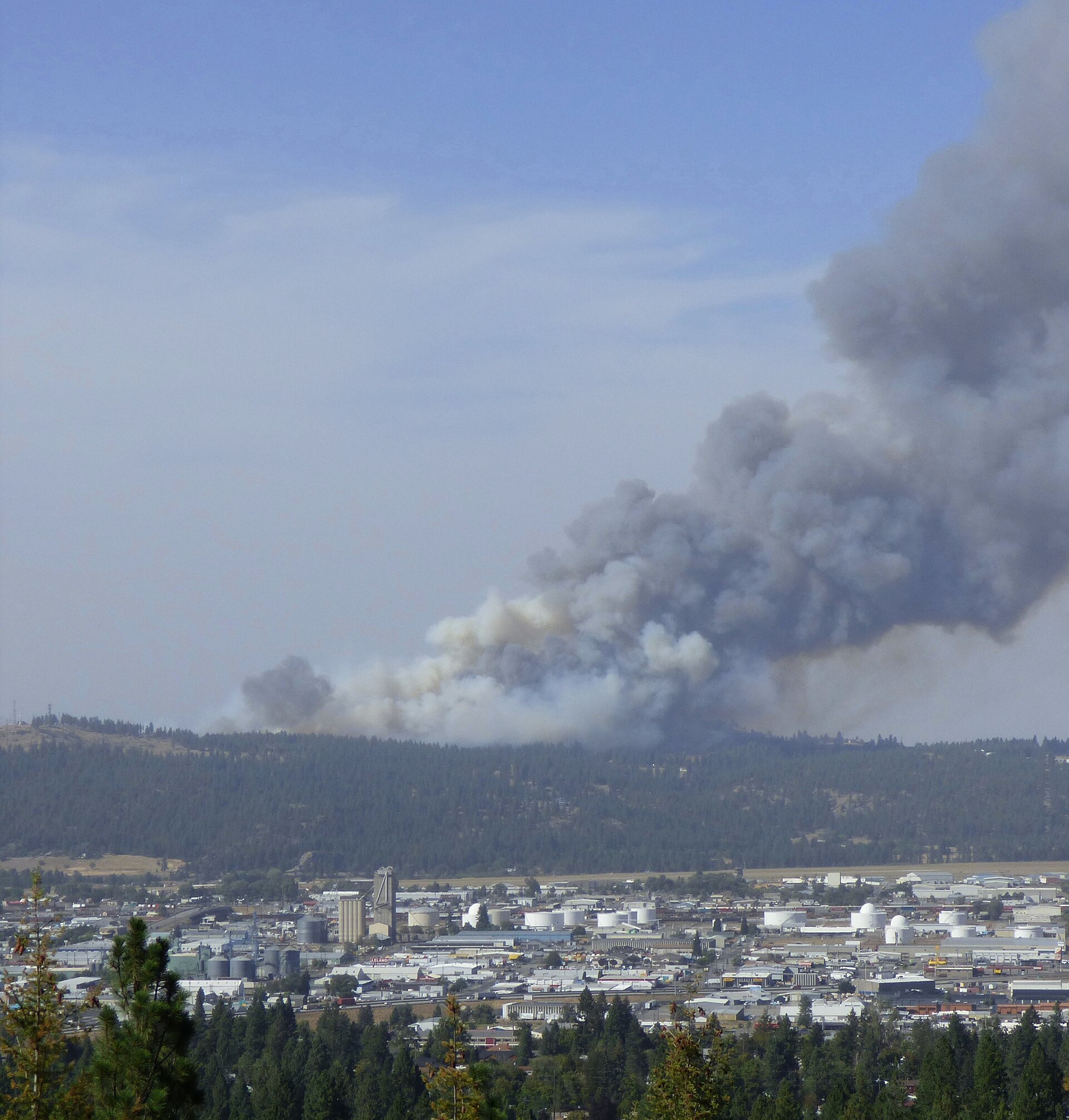
The containment numbers show progress, but they do not mean the danger is over. Evacuations, damaged homes and smoky air are still shaping daily life around Spokane.
Spokane-area wildfires are still burning around Spokane, Washington, with Washington state wildfire responders still fighting the Old Trails, Autumn Lane and Fairview fires. The latest update puts containment at 13% for Autumn Lane and 13% for Old Trails, while Fairview has moved off 0% and was listed at 5%. Reported fire sizes include 3,621 acres for Autumn Lane, 5,603 acres for Old Trails and 1,056 acres for Fairview.
Together, the three blazes are being managed as the Spokane Complex fires. As of Aug. 6, 2026, officials were still dealing with evacuation zones, damaged structures and smoke impacts even as crews reported no major fire movement the previous day.
The latest containment picture
The headline numbers are modest, but they matter. Containment is a measure of how much of a fire perimeter has been secured by crews, natural barriers or constructed lines that officials believe can hold.
According to updates cited by USA Today and fire officials, the three Spokane-area fires stood at these containment levels as of Aug. 6:
- Autumn Lane Fire: 13% contained, about 3,621 acres reported.
- Old Trails Fire: 13% contained, about 5,603 acres reported.
- Fairview Fire: 5% contained, about 1,056 acres reported.
Those percentages show that the fires are far from fully controlled. They also show that crews have started building defensible edges around each blaze, an important step before evacuation levels can be widely eased.
Low containment is not failure
For residents watching the numbers, 13% can look discouraging. Fire managers often caution that containment does not always capture the full tactical picture, especially during the first week of a fast-moving incident.
A fire can have low containment and still show signs of stabilization if it stops making major runs, stays inside its established footprint and crews can safely reinforce lines. That appears to be the tension in Spokane: the percentages remain low, but officials said the fires did not move on Aug. 5.
Crews also responded to a roughly 2-acre spot fire near the Autumn Lane Fire and contained it before it could spread, according to the update summarized by USA Today. Spot fires are one reason officials remain cautious; wind can carry embers beyond the main perimeter even when the main fire is not advancing.
Evacuations remain the pressure point
The Spokane Complex fires have forced large-scale evacuations across parts of the region. More than 60,000 people have been evacuated, and mandatory evacuation orders remained in place in some areas as crews worked around homes, roads and utility corridors.
The National Interagency Fire Center reported at least 846 structures damaged or destroyed. That figure includes homes and other buildings, and it helps explain why containment numbers are only one part of the public safety calculation.
For evacuees, the key question is not just whether flames are moving today. It is whether fire lines, roads, power systems and emergency access are stable enough for people to return safely. Officials have not given a single regionwide timeline for when all evacuation orders could lift.
A major response is in motion
The firefight has drawn resources from across Washington. More than 1,400 firefighting personnel have been assigned to the blazes, and more than 100 Washington National Guard members have been deployed to help with the response, according to officials cited in the latest reporting.
That level of staffing reflects both the size of the fires and the stakes around Spokane, Washington state’s second-largest city. Large suburban and rural interface fires can be especially difficult because crews are not just building line in forest or grassland. They are also trying to protect neighborhoods, outbuildings, roads and critical infrastructure.
The Autumn Lane Fire was described as the most active of the three as of Aug. 5. Even so, local officials said crews had been able to hold it within its known footprint while working to strengthen containment lines.
Smoke is widening the impact
The fires are also affecting people who are not directly in evacuation zones. Air quality within about 50 miles of the Spokane Complex fires ranged from unhealthy for sensitive groups to very unhealthy for everyone as of Aug. 6, according to the update.
Officials estimated that nearly 600,000 people in the surrounding area were affected by worsened air quality. Smoke impacts extended into northeast Washington and northwest Idaho, though some sensors showed improvement compared with earlier hazardous readings.
The Spokane fires are not the only source of smoke in the Pacific Northwest. Other fires in Washington and Oregon were also contributing to regional haze, and air quality trackers placed Seattle and Portland among cities with especially poor air readings on the morning of Aug. 6.
Public health guidance during wildfire smoke events is usually practical and immediate: limit outdoor exertion, keep indoor air cleaner when possible, use properly fitted respirators if exposure is unavoidable and pay close attention to children, older adults and people with heart or lung conditions.
Questions still under investigation
The causes of the three fires are not all settled. Authorities arrested Aaron F. Farinacci, a 37-year-old Spokane resident, on a first-degree arson charge in connection with the Old Trails Fire. He has been accused, not convicted, and court proceedings were still moving forward.
Officials have not identified the causes of the Autumn Lane and Fairview fires, which remain under investigation. That uncertainty matters because cause findings can shape criminal cases, insurance disputes, prevention efforts and public understanding of how the disaster began.
There are also operational unknowns. Weather, wind shifts, fuel conditions and available crews will affect how quickly containment improves. A quiet day can help firefighters make progress, but a single wind event can change priorities quickly.
For now, the clearest takeaway is that the Spokane-area wildfires are still burning, but the fight is not static. The containment percentages show early progress; the evacuations, smoke and damage show why officials are not treating the danger as over.










Leave a Reply