
The state’s latest executions were not an isolated event. They reflect a faster capital-punishment pipeline shaped by warrant decisions, failed appeals and a political climate more willing to use the death penalty.
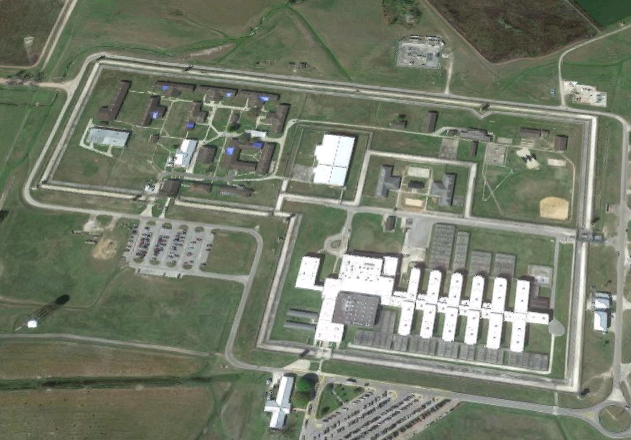
Florida is carrying out executions at a rapid pace in 2026, and the clearest sign came Tuesday, July 28, when the Florida Department of Corrections executed two death row prisoners within five hours at Florida State Prison in north-central Florida. The article explains why Florida’s execution pace has increased: Gov. Ron DeSantis has been setting death warrants, Florida courts and the U.S. Supreme Court have declined to halt executions, and a year that included March 31, May 1, May 26, June 2 and June 25 execution dates has pushed the state to the center of America’s death-penalty debate.
The two men executed July 28 were James Duckett, 68, and Dominick Occhicone Jr., 80, according to reporting by The New York Times. Their deaths were Florida’s 11th and 12th executions of the year, a level that has made the state the dominant driver of executions nationally.
A rare double execution
Florida’s back-to-back executions were unusual by any modern measure. The New York Times reported that Duckett was pronounced dead at 1:19 p.m. and Occhicone at 6:13 p.m., both by lethal injection at Florida State Prison.
Duckett, a former police officer, had been convicted in the 1987 murder of 11-year-old Teresa McAbee. Occhicone had been convicted of murdering his ex-girlfriend’s parents. Both cases were decades old, which is common in capital punishment: the legal process often lasts far longer than the political cycle that eventually brings a warrant.
The Death Penalty Information Center has tracked how rare same-day executions are in the modern era. Since the U.S. Supreme Court reinstated capital punishment in 1976, states have carried out multiple executions on the same day only a small number of times. Florida’s last same-day double execution before this year was in 1964, when the state used the electric chair.
That rarity is part of why the July 28 executions drew attention beyond Florida. The issue was not only that two men were put to death, but that the state compressed two final legal and medical procedures into a single afternoon.
Why the pace accelerated
The most direct reason Florida’s pace has increased is simple: death warrants are being signed and carried out. In Florida, the governor decides when to schedule an execution after the courts have affirmed a death sentence and ordinary appeals have run their course.
That gives Gov. Ron DeSantis a central role. The death sentences themselves were imposed by courts and juries years earlier, but the timing of executions depends heavily on the governor’s decision to activate dormant cases by signing warrants.
Once a warrant is signed, the process moves quickly. Prison officials prepare for the execution date. Defense lawyers file final challenges. Prosecutors and victims’ families argue that the sentence should be carried out. Courts then decide whether anything in the late-stage filings justifies a stay.
That machinery explains how old murder cases can suddenly become current news. The legal judgments may be decades old, but the execution dates are contemporary acts of state power.
Courts left little room
The U.S. Supreme Court declined to halt the executions of Duckett and Occhicone, The New York Times reported. The court gave no public explanation for the denials, and no separate writings or public dissents were noted.
That silence is not unusual in last-minute death penalty litigation. Emergency applications often reach the justices within days or hours of an execution. When the court denies relief without comment, the practical result is clear even if the legal reasoning is not: the state may proceed.
Florida courts also matter because state litigation shapes what remains available by the time a case reaches the final warrant stage. Claims about innocence, trial errors, mental competency, jury instructions or execution procedures can be raised over many years, but courts often reject late claims if they find the issues were already decided or could have been raised earlier.
Supporters of the death penalty view that finality as necessary. Opponents argue that the same finality can become dangerous when new evidence, aging prisoners, intellectual disability claims or questions about execution protocols emerge late.
Politics widened the runway
Florida’s surge is also political. DeSantis has backed a tougher death-penalty posture during his time as governor, and the state has changed parts of its capital punishment law in recent years.
In 2023, Florida lowered the jury threshold for recommending a death sentence, allowing a recommendation with an 8-4 vote rather than requiring unanimity. That change does not explain every execution now taking place, since the current prisoners were sentenced under earlier legal regimes, but it shows the state’s broader direction.
The Trump administration’s support for more aggressive use of the death penalty has added national context. The New York Times noted that Florida’s 2026 pace came as the administration encouraged states to pursue capital punishment more forcefully.
For death-penalty supporters, the argument is that decades of appeals should not erase jury verdicts or victims’ families’ interest in closure. For opponents, Florida’s pace raises a different concern: when the state accelerates executions, the margin for error narrows.
Victims’ families and opponents
The July 28 executions also showed the emotional divide that surrounds capital punishment. Teresa McAbee’s mother, Dorothy Tula, said in a statement released by prosecutors that her family was grateful the execution had taken place.
“My family and I are glad this day is finally here — because it’s about justice for my daughter and remembering her, not the man who stole her future,” Tula said, according to The New York Times.
Bill Gladson, the state attorney in Florida’s Fifth Judicial District, said many people had long awaited the conclusion of Duckett’s case. His statement framed the execution as part of the state’s duty to support victims and uphold the rule of law.
Groups opposing the death penalty saw the same schedule differently. Floridians for Alternatives to the Death Penalty criticized the back-to-back executions as risky and unnecessary, arguing that the state had offered no explanation for why two executions had to be carried out within hours.
Florida drives the national count
Florida has accounted for more than half of the executions in the United States this year, according to The New York Times. That is the statistic that turns a state story into a national one.
Executions in the United States remain far below their late-1990s peak. Many states with death penalty laws rarely use them, while others have paused executions because of litigation, drug-supply problems, political opposition or concerns about wrongful convictions.
Florida is moving in the opposite direction. Its pace shows how much capital punishment depends not only on statutes, but on the willingness of governors, prison systems and courts to keep the process moving.
What remains unclear is whether 2026 is a temporary surge or the new baseline. At least one more Florida execution was scheduled after July 28, and more warrants could follow. The state has made clear it is prepared to carry out death sentences quickly once the legal path is open.
The bigger takeaway
Florida did not reach this point because of one ruling, one governor or one case. The current surge is the result of old convictions reaching finality, a governor using warrant power, courts declining to intervene and a political environment more accepting of executions.
That combination matters because it can reshape the national death-penalty map. If Florida continues at this pace, the state will remain the country’s leading example of how capital punishment can move from rare event to regular government action.









Leave a Reply