
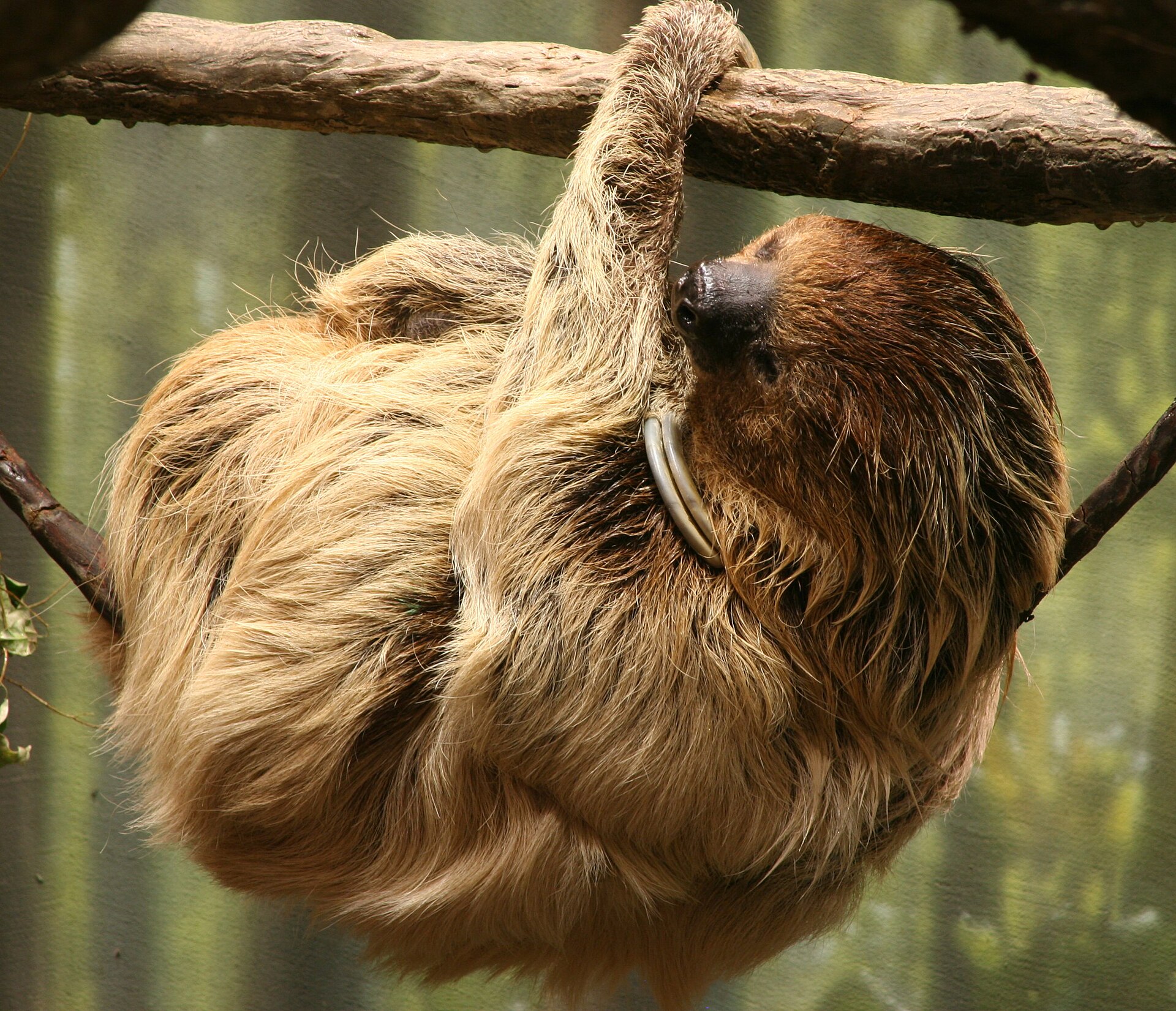
The appeal of a close wildlife photo can hide an animal’s stress signals. Sloths are especially easy to misread because their slow, quiet survival strategy does not look like the resistance people expect.
The sloth was not posing for a selfie; the sloth was trying to warn the person taking the photo. That is the central message behind the viral framing, which casts an apparently camera-ready wildlife encounter as a badly misread interaction. A sloth photographed during a selfie interaction may look still, relaxed or even cooperative, but that impression can conceal stress or a defensive response.
The bigger issue is not whether people can interpret one animal’s face from a distance. It is that sloths’ slow movement and quiet behavior can make discomfort hard for humans to recognize — and easy to mistake for consent to being held, touched or brought close for a picture.
Stillness is not a yes
People often expect a distressed animal to struggle, flee, growl or make a loud warning call. Sloths are poorly suited to that kind of display. Their biology is built around conserving energy, moving deliberately and avoiding detection in the canopy.
That means a sloth that remains quiet in someone’s hands is not automatically calm. It may be unable to get away quickly, using limited responses that a person with a phone may fail to notice.
The source material behind the trend does not identify the individual sloth, the location, or the precise behavior described as a warning. That absence matters. A single image or short clip cannot reliably establish an animal’s emotional state, and viewers should be wary of confident claims that assign a specific motive to an animal without expert observation.
Still, the broader premise is firmly grounded: passivity is not reliable evidence that close handling is welcome.
Why sloths are easily misread
Sloths have become a powerful symbol of unhurried living. Their slow movements, rounded faces and tendency to cling to branches translate neatly into shareable images. That cultural image can encourage people to see them as unusually tolerant of human contact.
Wild animals do not become domesticated because they appear calm on camera. A sloth’s normal posture, low activity level and limited vocal behavior can be misread through a human lens, especially when a person is seeking the perfect photo.
There is also a practical mismatch between a sloth and a selfie. The animal’s natural lifestyle centers on trees, camouflage and minimizing unnecessary exertion. Being transferred repeatedly between people, repositioned for a photo or held without proper support creates a situation far removed from that environment.
What looks like a charming pause for a camera may instead be an animal enduring an interaction it did not choose.
Research raises tourism concerns
A 2018 study published in the journal Animals examined the effects of “selfie tourism” on sloths used in tourist encounters. Researchers reported that sloths were repeatedly held by numerous visitors and were often handled without adequate support for their limbs or head.
The study’s finding is important because it shifts the question from whether an animal bites, scratches or visibly panics to what people are asking the animal to tolerate. Repeated handling can create welfare concerns even when an animal does not mount an obvious escape attempt.
The research does not mean every sighting of a sloth near people involves abuse, nor does it prove that every wildlife attraction operates the same way. Conditions vary, and trained rescue or veterinary professionals may sometimes need to handle animals for legitimate care.
But it does challenge a common tourism assumption: if an animal is available for a photo and does not visibly resist, the interaction must be harmless.
Stress does not always look dramatic
Another study, published in 2023, found that noise affected the behavior of Linnaeus’s two-toed sloths in walk-through zoo enclosures. Its authors called for better acoustic management in spaces where visitors move close to sloths.
That research is a useful reminder that disturbance is not limited to direct touching. Crowds, noise, flash photography, sudden movement and close proximity can all alter the conditions an animal has to navigate.
For humans, a wildlife photo may last seconds. For an animal repeatedly exposed to visitors, the pressure can be cumulative. This is why animal-welfare experts often focus on the whole setting — frequency of encounters, escape space, noise and handling practices — rather than judging welfare from a single cheerful-looking photograph.
The warning may not be theatrical. It may be a change in posture, a retreat attempt, defensive use of claws or teeth, or simply behavior that signals the animal should be left alone. Without species-specific expertise, people should avoid treating ambiguous behavior as an invitation.
The selfie changes the encounter
Wildlife photography is not inherently a problem. Long-lens images taken from a respectful distance can document animals without forcing them into human space. The problem begins when the photo becomes the purpose of the encounter.
A close selfie often requires a person to approach, restrain, reposition or crowd an animal. It also rewards attractions and social-media posts that promise intimacy rather than observation. The animal becomes a prop in a moment designed for the person.
- Keep distance: Let the animal control how close it comes.
- Do not touch or hold wild animals: A handler’s permission is not, by itself, proof that an interaction is low-stress.
- Avoid flash and loud behavior: Quiet observation is less disruptive than turning an encounter into a performance.
- Choose credible facilities: Look for conservation, rescue, veterinary or welfare information rather than photo-package marketing.
- Do not feed wildlife for a picture: Food can alter behavior and draw animals into risky contact with people.
A better standard for wildlife photos
The enduring lesson in the sloth-selfie warning is simple: a cute image is not a welfare assessment. Slow animals, especially, can be placed at a disadvantage when people assume that silence equals comfort.
The most responsible wildlife photo may be less intimate than a selfie, but it tells a better story. It shows an animal acting on its own terms, in its own space, without having to perform calmness for a human audience.
What remains unclear in the specific viral case is exactly what the sloth did and what prompted the warning interpretation. What is clear from the wider research is that people should not use an animal’s apparent stillness as permission to move closer.






Leave a Reply