
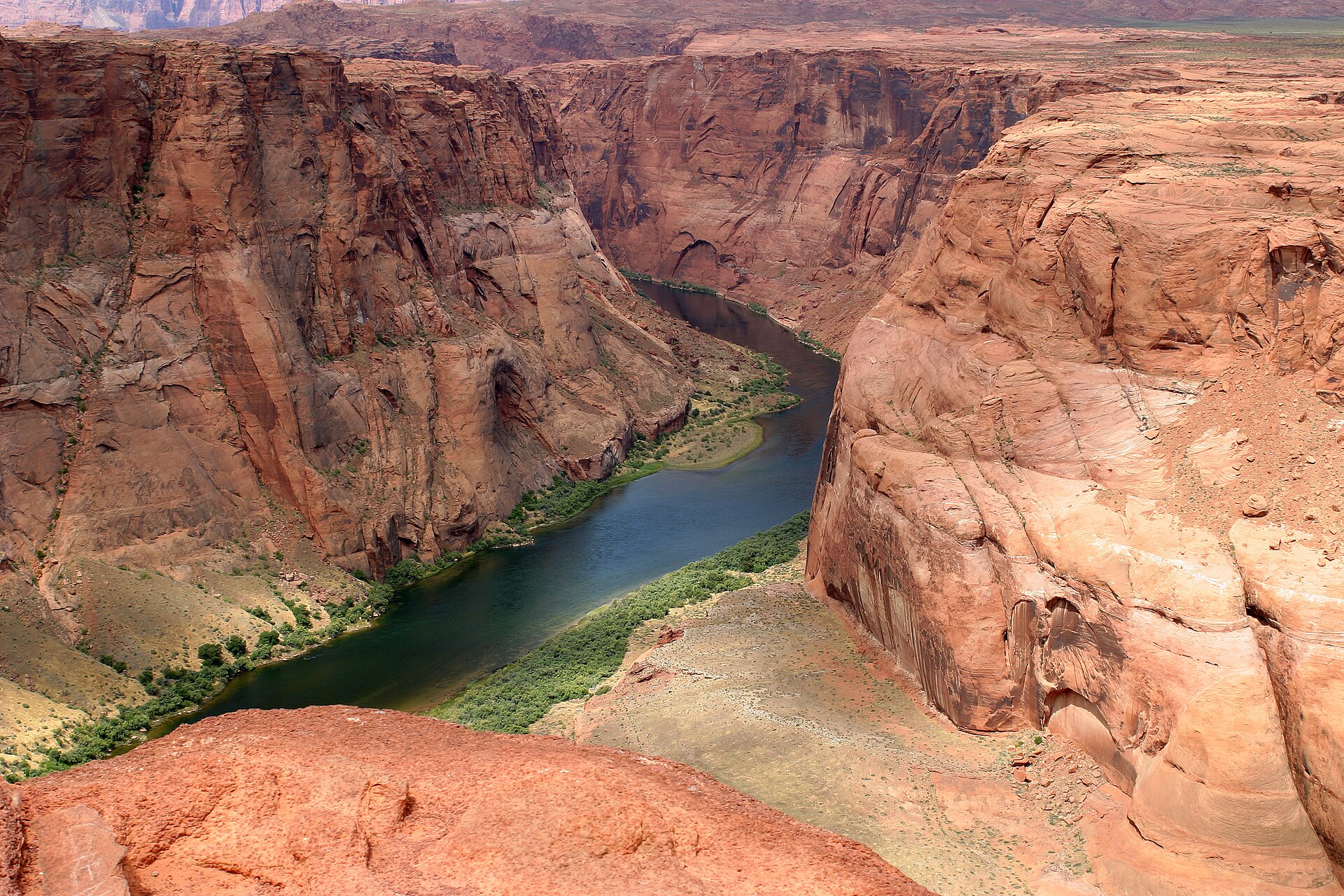
The Colorado River supports tens of millions of people, major farming regions and hydropower across the West. Record-low reservoir levels are forcing Arizona, California and Nevada to confront the immediate limits of a water system built for a wetter era.
Arizona, California and Nevada must take significant cuts to their Colorado River water use after federal officials sharply reduced the states’ allocations. The biggest US reservoirs have fallen to record-low levels, making the reductions a direct response to dwindling storage in the Colorado River Basin.
The three Colorado River states are not simply facing another dry-season warning. The new limits show how quickly declining reservoir levels can force choices about water for homes, farms, hydropower and the environment across the Southwest.
Record-low storage changes the equation
Reservoirs are the Colorado River system’s savings account. When water levels drop, managers have less flexibility to meet daily demand, protect power generation and avoid deeper shortages later.
Lake Mead, near Boulder City, Nevada, is the largest reservoir in the United States by water capacity. A receding shoreline there has become a visible sign of the long-term mismatch between the river’s supply and the demands placed on it.
The federal action affecting Arizona, California and Nevada follows those physical constraints. The reported cuts are tied to record-low levels at the system’s major reservoirs, rather than being a stand-alone conservation request.
Why these three states are first
Arizona, California and Nevada are in the Lower Colorado River Basin, downstream from the river’s main storage reservoirs. Their supplies are managed through a web of laws, agreements and operating rules that determine how shortages are handled.
That structure matters because a shortage is not shared evenly by default. Each state has different legal entitlements, delivery systems, water users and options for absorbing a reduction.
California’s river water helps sustain some of the country’s most productive agricultural areas as well as fast-growing urban regions. Arizona relies on Colorado River deliveries for cities, tribal communities and agriculture. Nevada has a smaller share of the river but depends heavily on it for the Las Vegas area.
Those differences help explain why water-cut negotiations can be so contentious. A shared supply does not automatically produce a shared view of what a fair reduction looks like.
A river serving far beyond its banks
The Bureau of Reclamation says seven basin states depend on the Colorado River: Arizona, California, Colorado, Nevada, New Mexico, Utah and Wyoming. The river also supports deliveries to Mexico under a 1944 treaty.
Between 35 million and 40 million people rely on the Colorado River for at least some municipal water needs, according to the agency. Its importance reaches beyond drinking water: the system supports hydropower, recreation, fish and wildlife habitat and industrial activity.
Agriculture is especially central to the debate. The Bureau of Reclamation says agricultural uses account for about 70% of Colorado River water. That means large-scale conservation often requires difficult decisions involving irrigation, crop production, compensation and rural economies.
For city residents, a state-level allocation cut does not necessarily mean an immediate household restriction. Water agencies can draw on local storage, groundwater, recycled water, conservation programs and other supplies. But those buffers vary widely, and they are not unlimited.
The cuts expose an old imbalance
The Colorado River’s governing system was shaped around water assumptions that no longer neatly fit today’s climate and demand. Long-term drought, hotter temperatures and reduced runoff have made that gap harder to ignore.
Federal officials face a difficult balancing act. Waiting too long to reduce deliveries could leave the reservoirs in a more precarious position. Moving aggressively, though, can shift economic pain onto farmers, cities and communities that argue they have already made major sacrifices.
There is also a dispute over responsibility. Some water users emphasize conservation investments already made in the Lower Basin. Others argue that the entire basin must adjust because the river’s supply problem is larger than any one state or sector.
The practical question is not whether conservation will be needed. It is how reductions are measured, who bears them, how temporary measures are funded and whether the system can maintain enough reserve for future dry years.
What the federal decision signals
The reported allocation reductions are a reminder that reservoir forecasts and operating rules can have real consequences well beyond Washington. A lower water number on a federal table can affect planting decisions, municipal budgets, development plans and regional power planning.
They also raise the pressure on negotiations over post-2026 Colorado River operations. The Bureau of Reclamation is reviewing the rules that will guide the river after current interim guidelines expire, and the states will need to work through competing proposals for a smaller and less predictable supply.
That process will not settle every question immediately. It remains unclear how lasting the newest reductions will be, how individual water providers will distribute the impact and whether weather conditions can meaningfully improve storage.
What is clear is that the Colorado River’s biggest reservoirs are no longer a distant backdrop to water policy. Their record-low levels are now driving mandatory choices for Arizona, California and Nevada—and setting the terms of a larger reckoning across the West.








Leave a Reply