
Four years out, the strongest teams are being judged by youth, depth, coaching stability and who can survive the post-Messi and post-Ronaldo reset. Spain’s case is obvious, but it is not airtight.
World Cup 2030 is already the subject of very early World Cup 2030 power rankings, and the No. 1 debate starts with Spain as a leading contender. The national teams chasing the top spot — France, England, Morocco, Argentina and others — are being judged less on today’s form than on who can carry elite cores into 2030.
FIFA’s 2030 tournament will be staged primarily in Spain, Portugal and Morocco, with centenary matches in South America. That unusual map makes the early favorite conversation more complicated: talent matters, but age curves, travel, pressure and home advantage may matter just as much.
Why Spain gets the first nod
Spain is the cleanest answer to the “who is No. 1?” question because its case does not depend on one fading superstar. A recent Guardian power ranking placed Spain first, ahead of France and England, and the logic is easy to follow: the core is young, technically secure and already built around players who should still be in or near their prime in 2030.
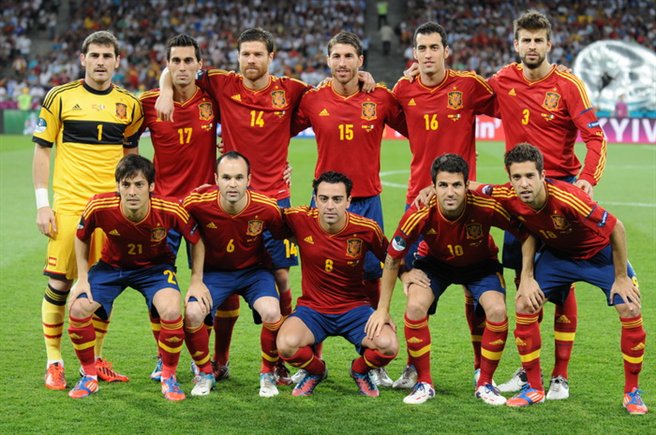
Lamine Yamal would be only 22 by the time the tournament arrives. Pedri and Gavi should still be in their peak years. Nico Williams, Pau Cubarsí and other rising pieces give Spain a foundation that looks more like the beginning of a cycle than the end of one.
The bigger point is stylistic. Spain’s advantage is not only who it can name on a team sheet. It is the way the national team’s identity travels from generation to generation: possession control, positional discipline and comfort under pressure. Those traits age better than systems built around a single explosive forward.
There are caveats. Rodri would be 33 in 2030, still a plausible elite midfielder but not a guaranteed four-year lock. Spain also has to solve the center-forward question if it wants to turn control into knockout-round ruthlessness. The favorite label is deserved, not bulletproof.
France and England are close
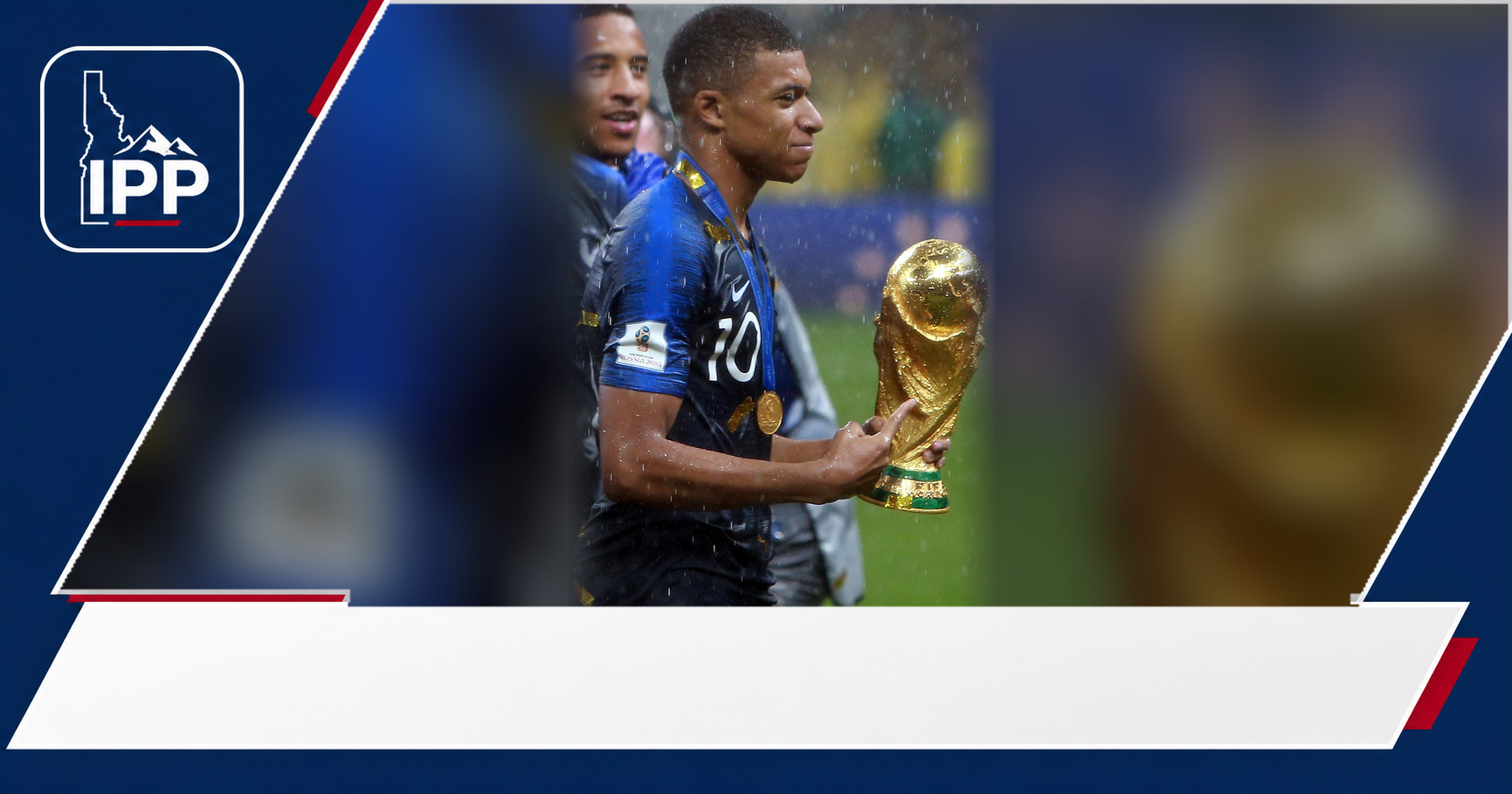
If Spain is No. 1, France is the obvious argument against making the gap too large. Kylian Mbappé would be 31 in 2030, an age that should still allow him to be decisive if his body holds up. Around him, France has the kind of defensive and midfield depth that keeps a national team near the top even when one tournament goes wrong.
The Guardian’s early list put France second and noted the transition from Didier Deschamps to Zinedine Zidane. That kind of coaching change can cut two ways. Zidane brings authority, aura and experience managing elite egos, but international tournaments often punish teams that have not nailed the small tactical details before the knockout rounds begin.
England’s case is different. The squad pool is deep enough to survive injuries and selection misses. Jude Bellingham, Declan Rice, Bukayo Saka, Kobbie Mainoo and others give England a 2030 spine that should still look formidable. The concern is familiar: turning talent into tournament control.
Harry Kane’s age will be central to that discussion. He would be 36 in 2030, which does not rule him out, but it does make succession planning unavoidable. England can produce creators and wide players in waves; finding the next reliable tournament striker is a harder problem.
Morocco has rare host upside
Morocco may be the most interesting early contender because its 2030 case combines performance, trajectory and geography. As one of the main host nations, Morocco will not simply be “dangerous.” It could be positioned to turn strong recent tournament credibility into something larger.
The national team already proved it could handle knockout pressure on the world stage, and its player pool is not built only around veterans. Achraf Hakimi would be 31 in 2030, still a reasonable age for a top fullback if his physical level remains high. Bilal El Khannouss, Ayyoub Bouaddi and other younger options suggest Morocco’s next version could be more balanced in possession than past editions.
Home advantage is real, but it is not magic. It can lift a team through tight moments, and it can also add suffocating expectation. Morocco’s path to a semifinal or final may depend on whether it can manage that emotional weight rather than merely ride it.
The broader lesson: early power rankings should not treat the 2030 hosts as a footnote. Spain, Portugal and Morocco will each face a different kind of pressure, and Morocco’s upside may be the one most likely to be underestimated by casual readers.
Argentina and Portugal face succession tests
Argentina and Portugal sit in a different category from Spain and France because their next four years are partly about letting go. Argentina’s recent era was defined by Lionel Messi’s genius and the emotional force he gave the group. No ranking can responsibly assume that replacing him is a normal personnel change.
Still, Argentina is not empty without him. Julián Álvarez, Lautaro Martínez, Enzo Fernández, Cristian Romero and others give the team enough structure to remain a serious contender. The question is whether Argentina can create the same attacking clarity when the ball no longer bends toward one all-time player.
Portugal’s version of that problem centers on Cristiano Ronaldo’s long shadow. The extracted Guardian analysis noted that Ronaldo has said he will not play the 2030 tournament at age 45. That should allow Portugal to build more naturally around its next attacking core, but it also removes the gravitational figure who shaped the team for nearly two decades.
Portugal has enough talent to rise quickly if it gets the balance right. The risk is that the post-Ronaldo reset becomes less about liberation and more about uncertainty: who leads, who finishes, and who takes ownership when a quarterfinal turns tense?
The 2030 map changes everything
World Cup 2030 will not be a standard tournament. FIFA confirmed Morocco, Portugal and Spain as the primary co-hosts, with anniversary matches in Argentina, Paraguay and Uruguay to mark 100 years since the first World Cup. That creates a tournament with unusual symbolism and unusual logistics.
For the European and North African hosts, the setting could be a major boost. Familiar climates, supportive crowds and reduced travel for portions of the event may help. For other contenders, preparation will be about more than opponent scouting; it will include managing movement, recovery and adaptation across a complex tournament footprint.
That is why ranking teams four years out is useful only if the rankings are treated as a snapshot, not a prophecy. A team that looks loaded now can lose two key players to injury or decline. A team outside the top tier can produce one brilliant generation at exactly the right time.
Brazil, Germany and the Netherlands are the obvious reminders. Any early list that has them outside the top few is not saying they lack pedigree. It is saying their current runway looks less certain than Spain’s, France’s or England’s. That can change fast.
Why No. 1 can still flip
Spain deserves the early No. 1 label because it checks the most boxes at once: elite youth, a coherent identity, major tournament proof and a host-nation runway. If the question is who should sit atop World Cup 2030 power rankings today, Spain is the most defensible answer.
But the strongest counterargument is built into the phrase “way-too-early.” Four years is an eternity in international soccer. Coaches change. Teenagers become stars. Stars lose a step. A goalkeeper injury, a tactical shift or one elite striker emerging can reorder the whole field.
The best way to read these rankings is not as a prediction of the 2030 champion. Read them as a pressure map. Spain has the fewest obvious holes right now. France may have the highest ceiling. England has the depth to keep coming. Morocco has the host surge. Argentina and Portugal have enough talent, but must prove their next identities can stand on their own.
That is what makes the No. 1 debate worth having this early. It is not about pretending 2030 is already solved. It is about spotting which national teams have the foundations to survive everything that will happen before the first whistle.


Leave a Reply