
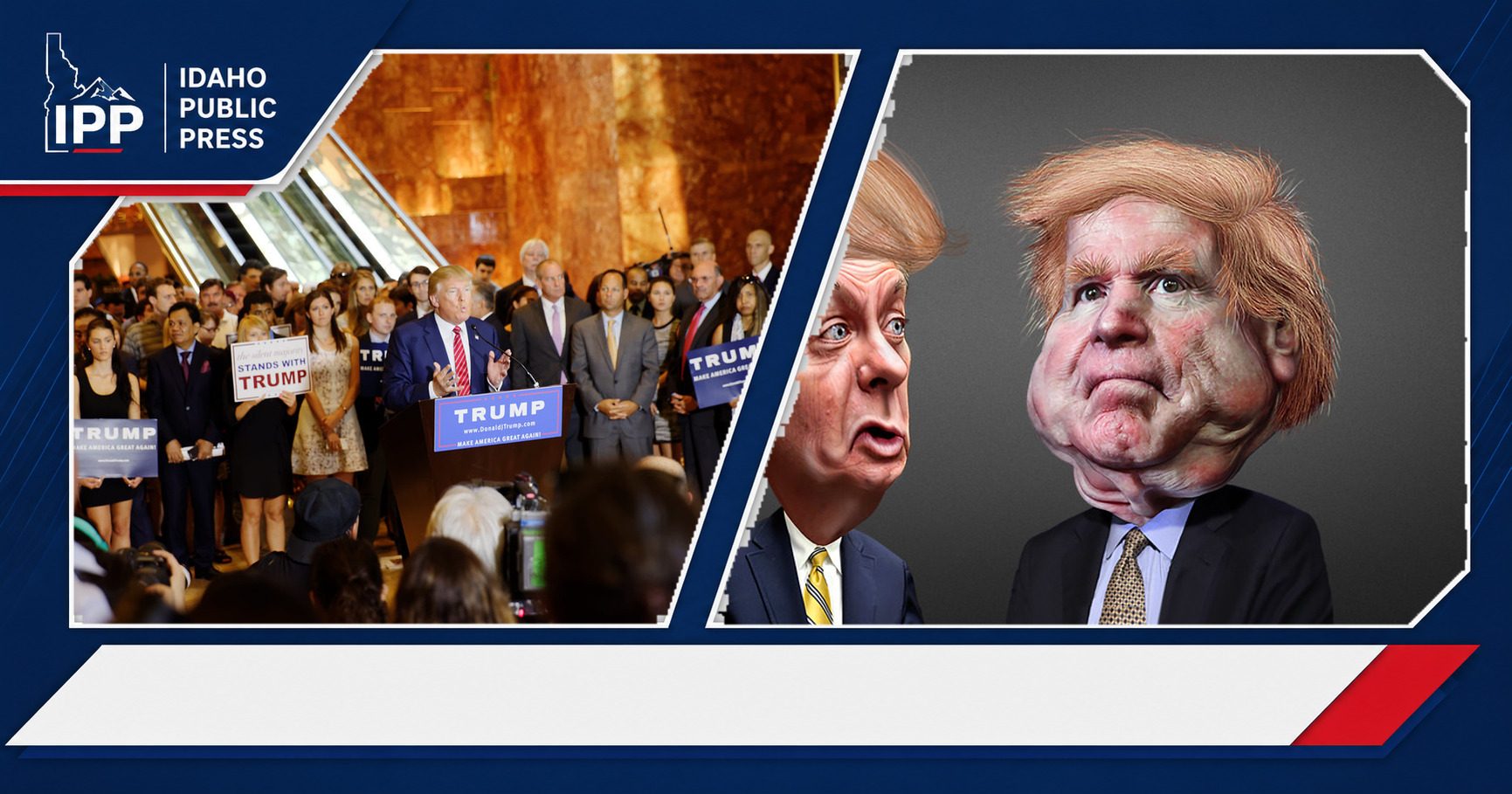
The backlash over Trump’s conduct has moved faster than the public record. Official funeral notices, media accounts and the “He’s out” reaction point to a political farewell loaded with symbolism.
Donald Trump was criticized for his behavior at Lindsey Graham’s funeral after attending the July 28, 2026 service at Washington National Cathedral and offering a tribute to the late Republican senator. The backlash, including the quoted reaction “He’s out,” centered on whether Trump’s presence and remarks fit a memorial service for a long-serving South Carolina senator whose political relationships had often been complicated and closely watched.
The reason Trump comes under fire now is not just one line from a funeral. It is the clash between a solemn public farewell, a former president’s political gravity, and a reaction that quickly turned into shorthand for discomfort with his role in the service.
The flashpoint was Trump’s tribute
The core act drawing attention was Trump’s appearance at Graham’s funeral and his tribute during the Washington service. A New York Times video entry described the moment as Trump paying tribute at Lindsey Graham’s funeral, while the White House video library listed footage of President Trump attending the funeral for Senator Lindsey Graham.
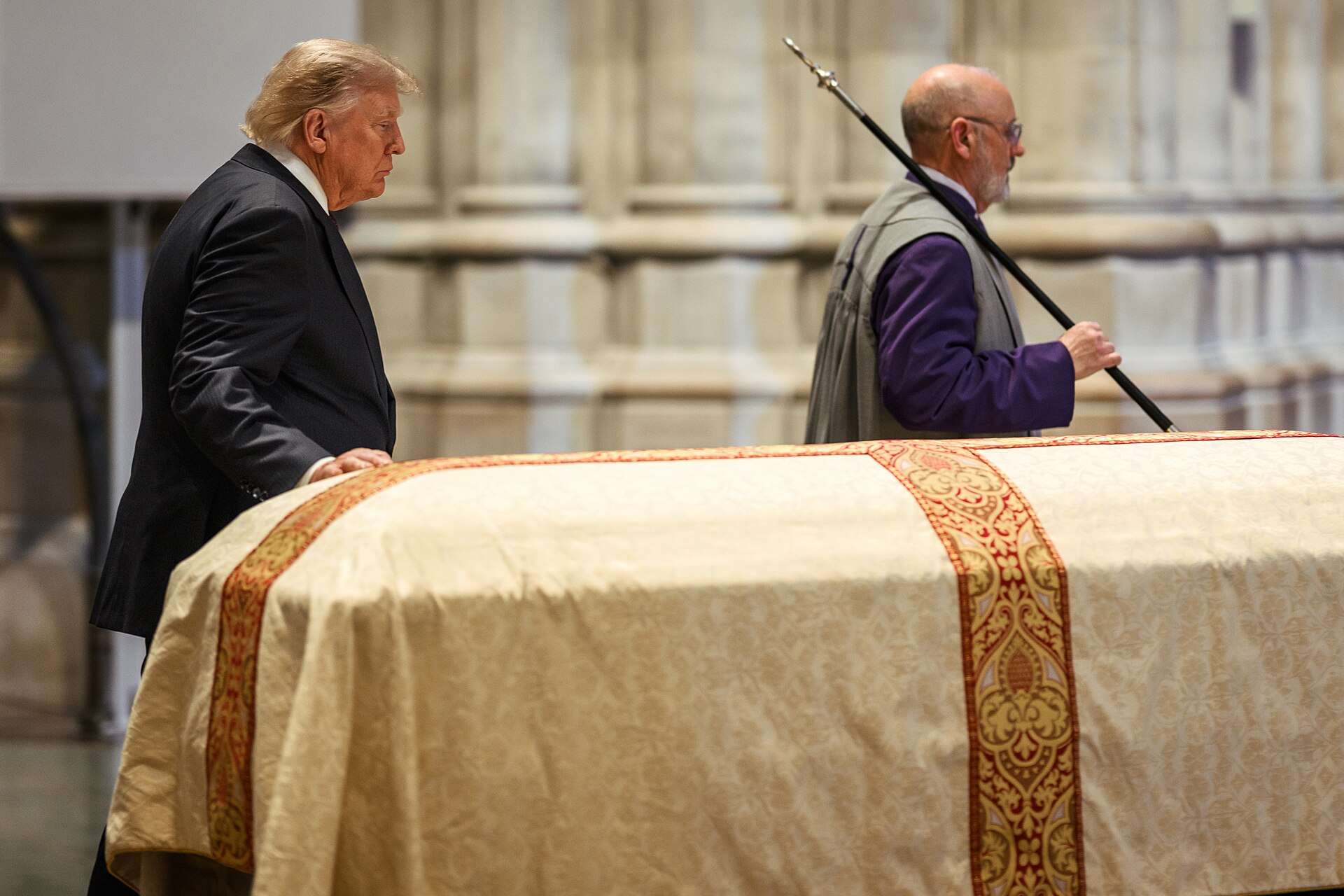
That matters because the controversy is not based on Trump merely being associated with the event from afar. He was part of the public-facing record of the service, and his presence became one of the most scrutinized elements of the day.
The remark “He’s out” has been circulated as part of the reaction to Trump’s conduct. The available source material does not establish the full context of who said it, where in the service it was said, or whether it referred to Trump leaving, being excluded from a moment, or a broader judgment of his political standing.
That lack of context is important. The phrase is memorable, but without the surrounding exchange, it functions more as a signal of disapproval than as a complete account of what happened.
Official materials complicate the story
The funeral schedule posted on Graham’s Senate website gives a different texture to the controversy. It said the July 28 Washington service at Washington National Cathedral would include “a tribute from President Donald J. Trump,” and described the service as invitation-only, with the public able to watch online.
The same notice thanked Trump and his team, along with Washington National Cathedral, Senate leadership, First Baptist Church of Columbia and the Senate Sergeant at Arms, for helping arrange tributes to Graham.
That official record makes the backlash more complicated than a simple story of Trump appearing at a place where he had no role. At least in the funeral materials released through Graham’s Senate office, Trump was listed as a participant.
At the same time, The New York Times characterized the farewell as carrying the feel of a repudiation of Trump in Washington’s political world. That tension — official inclusion versus visible unease — is why the episode traveled so quickly.
A farewell with political weight
Graham’s funeral was never going to be read only as a private family memorial. He spent decades in the U.S. Senate, represented South Carolina, served in the Air Force and became one of the most recognizable Republican figures in national politics.
The schedule described a Washington sequence that began with an arrival ceremony at the U.S. Capitol, where his remains were to be carried by an Armed Forces Body Bearer Team and later guarded by U.S. Capitol Police in recognition of his Senate service.
After the Capitol ceremony, Graham’s remains were to go to Washington National Cathedral for the funeral service. Later, the schedule called for his final journey back to South Carolina, with public opportunities to pay respects in Columbia and Pickens County.
That ceremonial path matters. It placed Graham’s death inside the rituals of Congress, the military, Washington religion and South Carolina politics. Any prominent speaker at such a service would have carried symbolic meaning; Trump carried more than most.
Why Trump’s role stood out
Trump and Graham had one of the most closely watched alliances in modern Republican politics. Their relationship shifted over time from sharp public criticism to close political alignment, making Trump’s presence at the funeral emotionally and politically charged.
Supporters could see Trump’s tribute as a fitting acknowledgment of Graham’s role in Republican politics and his years of service. The family-linked funeral notice, by thanking Trump and listing him among service participants, supports the view that his role was planned rather than improvised.
Critics saw a different picture. For them, Trump’s presence risked turning a memorial into another stage for the dominant figure in Republican politics, especially at a service where the focus was supposed to remain on Graham’s life and legacy.
That is the split beneath the outrage. The argument is less about whether Trump was physically present and more about whether his presence honored the moment or overwhelmed it.
The quote became the shorthand
“He’s out” is the kind of phrase that thrives online because it is brief, emotional and easy to detach from context. In coverage and social sharing, it has operated as a verdict before the underlying record has been fully explained.
There are several possible readings. It may have been a literal comment about Trump leaving a space. It may have been a judgment about his welcome at the funeral. It may also have been used more broadly to suggest that Trump’s conduct placed him outside the tone of the service.
Without a fuller transcript or confirmed account of the exchange, none of those readings can be treated as settled. What is clear is that the phrase captured the discomfort some observers felt with Trump’s role in a solemn event.
That is why the line matters even if its exact context remains unresolved. It turned a complex funeral appearance into a simple public reaction: Trump was there, people noticed, and some did not think he belonged in the way he appeared.
What remains unclear
The public record leaves several questions unanswered. The available materials confirm a scheduled funeral service, Trump’s listed tribute, White House video entries tied to his attendance, and media descriptions of the political atmosphere around the farewell.
They do not fully establish the precise conduct that triggered the strongest criticism, the identity and setting of the “He’s out” remark, or how Graham’s family and close colleagues privately viewed Trump’s role after the service.
That distinction matters in a high-temperature political story. A funeral can be both officially planned and socially uncomfortable. A tribute can be both invited and divisive. A quoted reaction can be real and still incomplete without context.
The clean takeaway is this: Trump’s tribute at Lindsey Graham’s funeral became a political flashpoint because it merged grief, ceremony and partisan memory. The backlash is real, but the official record shows a more layered story than the viral framing alone suggests.



Leave a Reply