
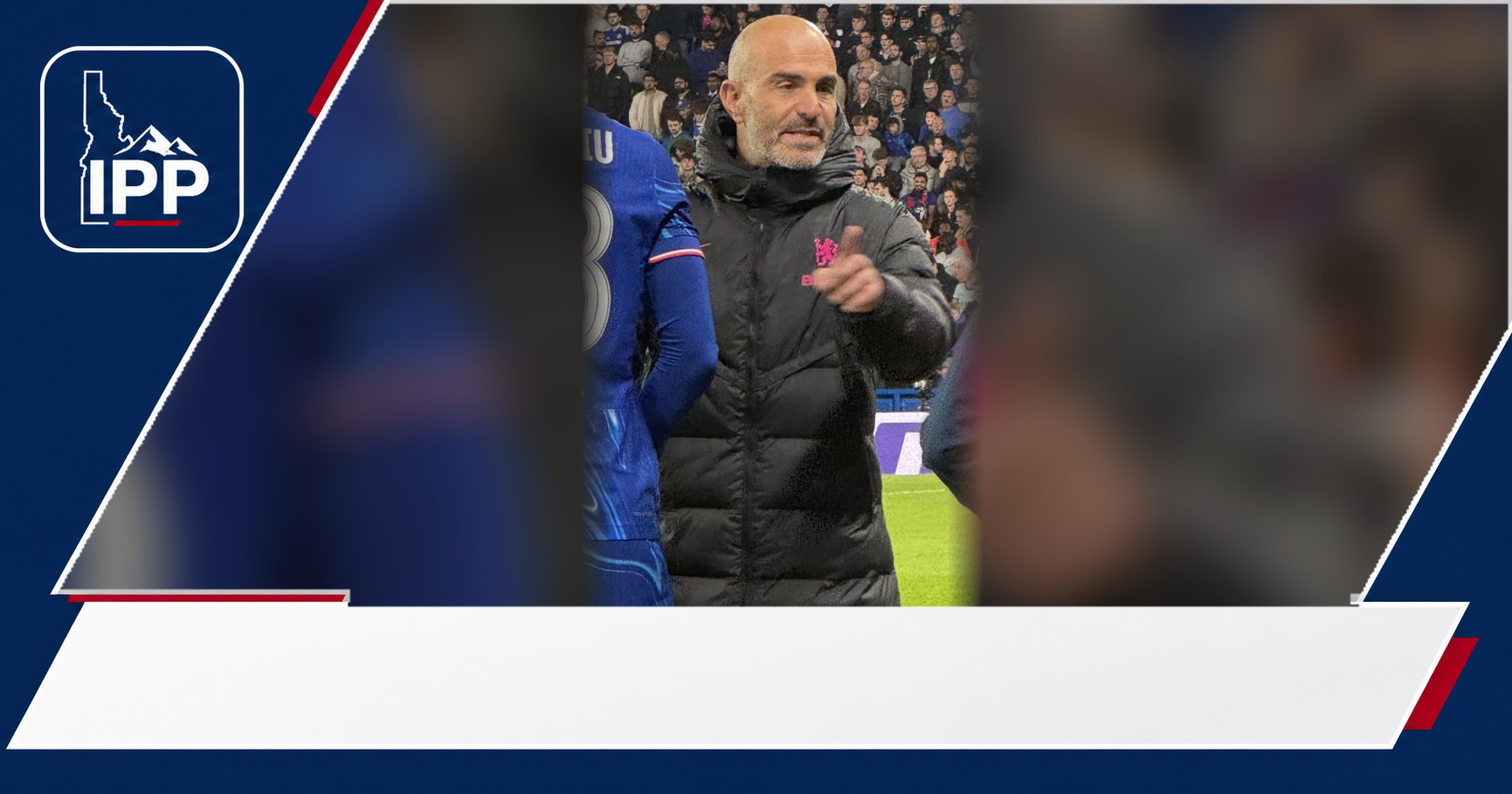
The new Manchester City manager’s wording matters because Grealish’s absence from the tour has turned a selection issue into a squad-status question. For now, City have a confirmation, not a commitment.
Enzo Maresca discussed Jack Grealish’s standing at Manchester City after Jack Grealish missed the preseason tour, and Maresca’s comments on Grealish’s future were cautious rather than definitive. Speaking in his first City news conference, Maresca addresses Jack Grealish’s Manchester City situation by saying, according to BBC coverage, “Jack at the moment is here. He is a Man City player.”
For City fans, the line matters because it confirms Grealish has not been publicly pushed out, but it also stops short of promising a central role. Under a new manager, that gap is where the real story sits.
Maresca offered confirmation, not clarity
The most important part of Maresca’s answer was also the most limited. He did not announce a departure, freeze Grealish out or suggest the winger had no place at Manchester City. He simply stated the present fact: Grealish is there, and he is a City player.

That may sound reassuring, but in football press-conference language it is careful. Managers often use that kind of phrasing when they do not want to inflame speculation, weaken a club’s transfer position or promise minutes they may not be ready to give.
BBC Sport’s live coverage of Maresca’s first news conference noted that he was asked about the futures of Grealish and goalkeeper James Trafford, but “did not give much of an indication” about where either player’s future lies. That is the key distinction. The door was not closed. It was not thrown open either.
Grealish missing the preseason tour has made the wording heavier. Preseason trips are not just fitness exercises. They are where managers test combinations, establish habits and send early signals about who is close to the main group.
Why the tour absence matters
A player missing preseason can mean many things: fitness management, injury precaution, personal reasons, transfer uncertainty or a decision by the coaching staff. Without a detailed club explanation, it would be unfair to treat Grealish’s absence as proof of one outcome.
Still, the timing creates scrutiny. City are beginning a new managerial chapter with Maresca, and every squad decision is being read as evidence of how he wants the team to look after Pep Guardiola’s era.
For Grealish, preseason is particularly important because his value has never been measured only in goals and assists. At his best for City, he controls tempo, protects the ball, draws fouls and helps the side manage territory. Those traits can be prized by a possession coach — but only if the player fits the exact rhythm the new manager wants.
Missing the tour means fewer public clues about where Grealish fits. Supporters have not seen whether Maresca plans to use him as a touchline winger, an inside forward, a rotation option or something more situational.
A new boss changes the hierarchy
Maresca’s arrival changes the calculation for every City player, not just Grealish. The BBC described the news conference as his first as Manchester City manager and reported that he called it a “privilege” to succeed Guardiola, whom he praised as the best coach in the world over the last 20 to 25 years.
That tribute matters because Maresca knows City’s environment. He previously worked under Guardiola during the club’s 2022-23 Treble season, when City won the Premier League, FA Cup and Champions League. He is not arriving as an outsider with no knowledge of the dressing room.
Even so, familiarity does not guarantee continuity. New managers often keep the broad principles of a successful club while changing the internal pecking order. A player who was trusted in one structure may have to prove himself again in another.
That is where Grealish’s case becomes complicated. He is not an academy hopeful waiting for a chance, and he is not a forgotten squad player. He is a high-profile senior international who has already contributed to City’s biggest modern achievements. That makes any uncertainty around him more visible.
Grealish still has useful tools
There is a strong football argument for keeping Grealish involved. City have often needed players who can slow a frantic match, keep possession under pressure and help the team defend with the ball. Grealish’s game is built for that kind of control.
He also offers a different profile from more direct wide players. When he is sharp, he can pin a fullback, invite contact and give City’s midfielders time to arrive around him. In tight Premier League matches, that can be more valuable than it looks on a highlights reel.
The counterargument is just as clear. City’s attacking positions are brutally competitive, and Maresca may want more vertical running, more pressing intensity or a different balance on the left side. If Grealish is not clearly first choice, his status becomes a question of minutes, not just registration.
That is why Maresca’s “he is a Man City player” answer lands in the middle. It protects Grealish publicly while leaving room for the manager to make hard decisions privately.
City have wider issues too
Grealish was not the only subject in Maresca’s first major media appearance. According to BBC coverage, the City manager also addressed Rodri’s future and said he was not worried about speculation around top players. The same coverage reported that Rodri would undergo back surgery and return after recovery.
That broader agenda is relevant. Maresca is taking over a squad built to win immediately, but he is also managing transition: injuries, contracts, selection questions and the emotional shift from Guardiola to a new voice.
One piece of good news for Maresca came with Phil Foden’s new four-year contract, which BBC coverage said keeps him at Manchester City until 2030. Foden’s own comment — that he “can’t wait” to work with Maresca again — gives the new manager a core attacking player firmly tied to the project.
Against that backdrop, Grealish’s future becomes part of a larger reshaping rather than an isolated subplot. City can keep elite players and still alter roles. They can value a player and still listen if circumstances change.
What remains unresolved
The unanswered questions are practical. Will Grealish be reintegrated quickly after missing the preseason tour? Is he viewed as a starter, a rotation option or a player whose future depends on the rest of the window? Will Maresca’s system create a natural role for him?
None of those questions were settled by the manager’s public comments. What was settled is narrower: Maresca did not distance himself from Grealish, and he did not confirm that the player is heading for the exit.
For now, Grealish’s Manchester City standing is best described as unresolved but intact. He remains a City player, in Maresca’s own framing, while the meaning of that status will be decided by training-ground choices, squad selection and whether his role becomes visible once the season approaches.
The next signal will not be another careful sentence. It will be whether Grealish is back in the matchday picture, and how Maresca uses him when the games start to matter.







Leave a Reply