
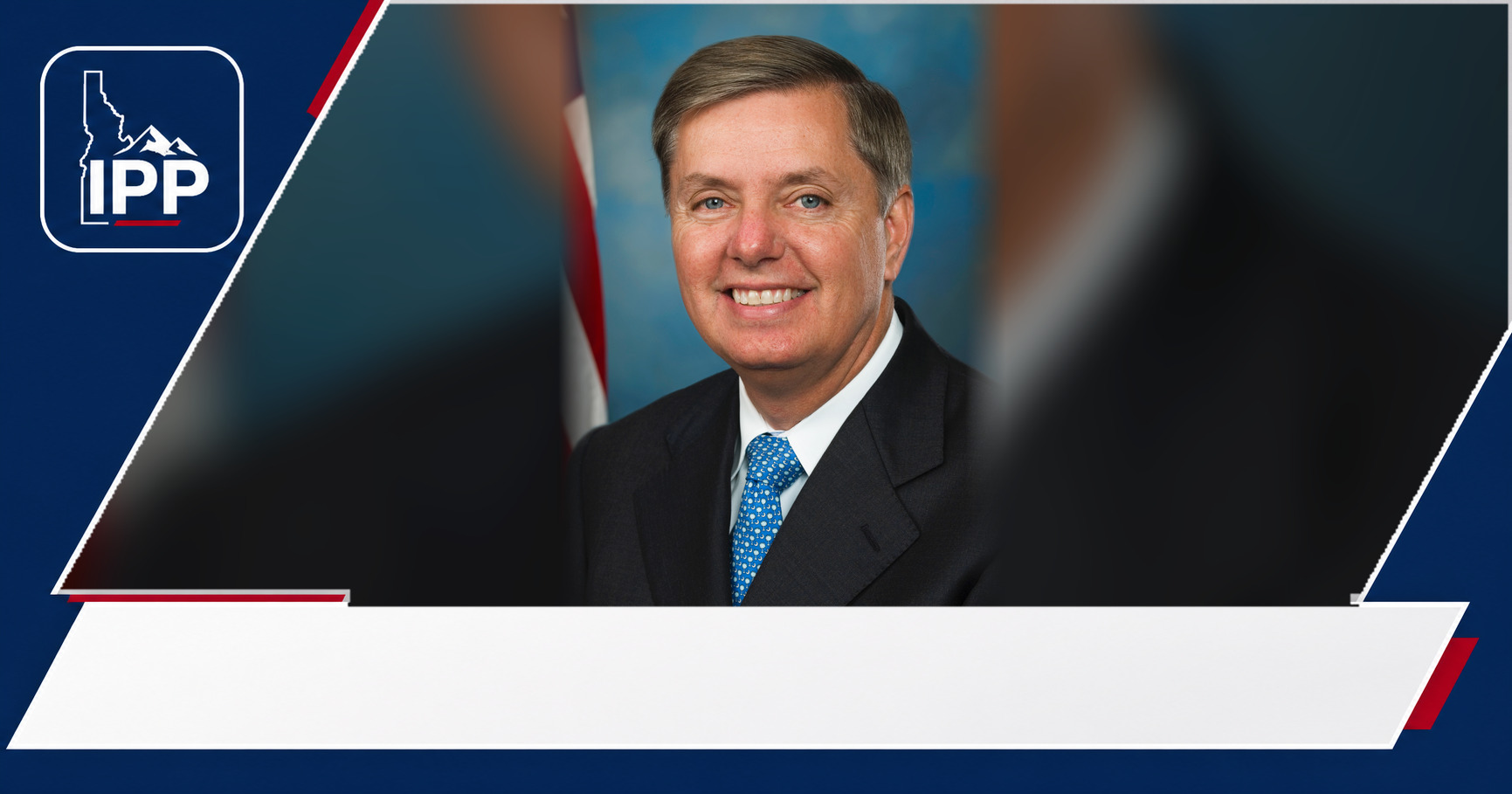
The service drew U.S. power players and foreign leaders, underscoring how Graham’s influence reached from Senate cloakrooms to war rooms abroad.
Donald Trump eulogized Lindsey Graham at a Washington funeral on Tuesday, July 28, 2026, saying farewell to the Republican senator at Washington National Cathedral. Trump described Graham as a war hawk and golfing buddy, and the funeral was held in Washington before prominent attendees including foreign leaders and top U.S. officials.
Trump mourns Lindsey Graham as more than a Senate fixture. His tribute captured the contradiction that defined Graham’s public life: a hard-edged foreign-policy interventionist who also built politics around phone calls, jokes, loyalty and personal access.
A funeral built for power
The memorial service at Washington National Cathedral followed a congressional tribute at the U.S. Capitol, where Graham’s flag-draped casket was brought into the Rotunda. The setting reflected the reach of a South Carolina Republican who spent more than three decades in Congress and became one of the Senate’s most recognizable voices on national security.
According to AP, Trump called Graham “a giant of the United States Senate” and “a true American original who left us much too soon.” Reuters reported that Trump eulogized Graham on Tuesday as a fixture of national politics.
The guest list carried its own message. Israel’s Benjamin Netanyahu and Ukraine’s Volodymyr Zelenskyy attended, AP reported, placing two wartime leaders in the pews for a senator known for urging an assertive U.S. role abroad.
Trump Cabinet officials, including Secretary of State Marco Rubio and Defense Secretary Pete Hegseth, were also present, along with Supreme Court Justice Brett Kavanaugh, current and former lawmakers, and Graham’s sister, Sen. Darline Graham, who was appointed to fill the remainder of her brother’s term.
Trump’s personal Graham story
Trump’s remarks leaned into the odd-couple friendship that became one of the more closely watched relationships in Republican politics. Graham began as a sharp Trump critic and 2016 presidential rival, then became one of his most visible allies.
At the cathedral, Trump recalled publicly disclosing Graham’s cellphone number during the 2016 campaign, AP reported. Trump joked that Graham had the last laugh because he “did not stop calling me for the next 10 years.”
That story worked because it sounded like Graham: persistent, talkative, and hard to shake off. Trump described him as someone who could make people laugh, but also as “one of the last people that you’ve really ever wanted to fight,” according to AP.
The golf bond mattered, too. Graham’s relationship with Trump was not only transactional or ideological; it was personal, sustained through repeated contact and time together away from Senate hearing rooms. That closeness helped explain why Trump’s eulogy mixed admiration, teasing and political memory.
The hawk in the pews
Graham’s foreign-policy legacy was impossible to separate from the service. He was widely known as one of the Senate’s leading advocates for U.S. military strength and intervention, often arguing that American power should be used to confront threats abroad before they reached home.
To supporters, that made Graham a clear-eyed defender of allies and a senator willing to keep attention on conflicts many voters found distant. His backing for Ukraine, his strong support for Israel and his close attention to NATO all fit that worldview.
To critics, “war hawk” was not a compliment. It described a politician too ready to see military force as a solution and too willing to place the United States at the center of overseas conflicts.
The presence of Netanyahu and Zelenskyy sharpened that debate rather than resolving it. Their attendance underscored Graham’s international importance, while also reminding Washington that his deepest convictions were among his most polarizing.
A South Carolina ascent
Graham’s path to that stage began far from the cathedral. AP described him as the son of pool hall owners who rose to become one of his generation’s more influential U.S. politicians at home and abroad.
He was first elected to Congress in 1994, part of the Republican wave that gave the party control of the House. In South Carolina, his rise also marked a historic Republican breakthrough in a state where Reconstruction-era history still shaped political identity.
Graham later gained national attention as a House manager during President Bill Clinton’s impeachment. He won election to the Senate in 2002 and built a reputation as a dealmaker, talker and sometimes irritant who could push colleagues toward action.
His alliance with the late Sen. John McCain became central to his Senate identity. Both men favored a muscular foreign policy, and Graham carried much of that outlook forward even as the Republican Party became more skeptical of overseas commitments under Trump.
Tributes beyond Trump
The day’s ceremonies were not limited to the former president’s relationship with Graham. Vice President JD Vance described Graham during the Capitol tribute as a “swashbuckling” figure, according to AP, using a word that matched Graham’s animated Senate style.
Senate Majority Leader John Thune, a South Dakota Republican, called Graham a “towering figure” and became emotional during his remarks, AP reported. That response reflected a Washington truth: Graham could be exasperating to colleagues, but he was rarely distant from them.
Fox News host Sean Hannity also spoke and said Graham would have been moved that both Netanyahu and Zelenskyy made the trip, according to AP. The comment connected Graham’s media presence, political friendships and foreign-policy work in one line.
The breadth of tributes suggested that Graham’s influence came not from one office or one committee alone. It came from stamina, access and a willingness to stay in the middle of fights long after others moved on.
What comes after Graham
Graham died suddenly on July 11 at his home in Washington, according to AP, which cited preliminary findings indicating a likely aortic tear. He was 71 and had recently returned from a trip that included a NATO summit in Turkey and a visit to Ukraine.
Services were set to continue with burial Wednesday in Graham’s home state of South Carolina. An Air Force official said Joint Base Charleston would be renamed in his honor, AP reported.
The immediate political question is how much of Graham’s lane still exists in the Republican Party. He bridged old-guard defense hawks, Trump-era personal politics and a Senate culture built on relationships. Few politicians occupy all three spaces at once.
His funeral showed why he mattered. It also showed why replacing him will be difficult: Graham’s power was not only in votes or titles, but in a style of politics that depended on relentless contact, personal risk and a belief that America’s arguments at home could not be separated from conflicts abroad.











Leave a Reply