
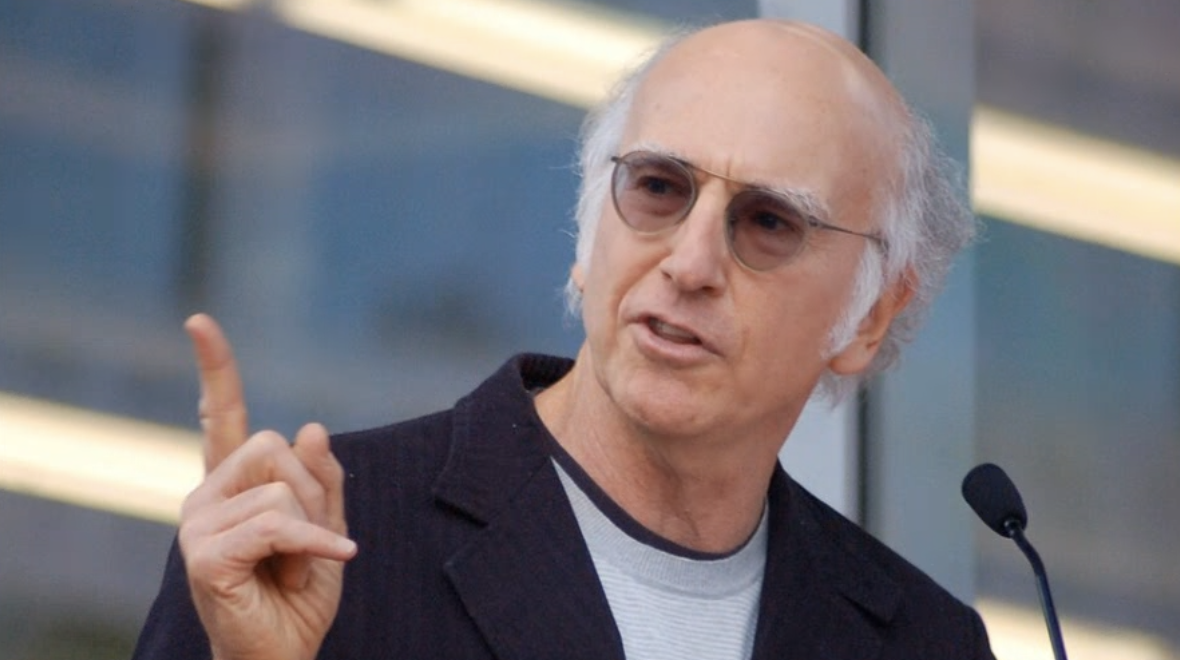
The long-running split between the comedian and the legal scholar has resurfaced with new comments about friendship, political loyalty and a moment neither man seems to have forgotten.
Larry David confronted Alan Dershowitz on Martha’s Vineyard in 2021, in a heated dispute tied to Dershowitz’s support for and legal defense of Donald Trump. Revisiting the clash, David said Dershowitz had “made a deal with the devil,” explaining why the former friends’ political break became so personal.
The confrontation reportedly happened outside a convenience store, where David yelled at the emeritus Harvard Law professor. Now, as Dershowitz discusses the friendship’s collapse publicly, David says he stands by the political anger behind the encounter—while conceding that he mishandled one painful moment in Dershowitz’s life.
A friendship that turned sour
Dershowitz has described a relationship that once looked nothing like their current public feud. He said he and David used to have dinners, trade jokes and spend time together socially. He also said he allowed David to use his gym and helped him on several occasions.
That history makes the dispute more than a passing celebrity argument. David is best known for turning social friction into comedy in Seinfeld and Curb Your Enthusiasm; Dershowitz is a longtime lawyer and public commentator whose work has placed him in some of the country’s most divisive legal and political debates.
Both men have now offered versions of the falling-out, but from very different vantage points. Dershowitz has framed the rupture as a friendship abandoned. David has framed it as a consequence of choices Dershowitz made in public.
The 2021 Vineyard encounter
The reported flashpoint came in 2021 on Martha’s Vineyard, where David and Dershowitz encountered each other outside a convenience store. Contemporary reporting described David as shouting at Dershowitz, with the exchange nearly turning physical.
David later acknowledged what he called the “Dershowitz dust-up,” though he put it in characteristically dry terms. He said he has plenty of confrontations in his television work but rarely has them in real life—and only when he believes he could handle himself in a fight.
That remark may sound like a Curb-style line, but David’s recent explanation leaves little doubt that the episode was rooted in a real political grievance. The issue, in his telling, was not a minor disagreement between acquaintances. It was Dershowitz’s decision to align himself with Trump.
Why Trump was the dividing line
Dershowitz served on Trump’s legal defense team during Trump’s first impeachment trial in 2020. Trump was impeached by the House over his dealings with Ukraine and acquitted by the Senate.
Dershowitz has said his arguments in the case were misunderstood, and he has long maintained that his legal work should not be confused with personal endorsement of every client. That distinction is central to how many defense lawyers explain controversial representation: lawyers may defend legal principles, due process or a client’s rights without adopting that client’s conduct or politics.
David plainly does not see Dershowitz’s role in such narrow terms. His “deal with the devil” remark was a moral judgment about Trump and about the cost, as David sees it, of associating with him. David also suggested that Dershowitz’s subsequent isolation was self-inflicted.
The disagreement exposes two competing ideas that often collide around high-profile lawyers. One is that legal representation is an essential professional duty, especially when a client is unpopular. The other is that famous advocates must be accountable for the political consequences of lending their credibility to powerful figures.
David’s one point of regret
For all the hostility, David did not reject every criticism from his former friend. Dershowitz said David failed to contact him after the death of his son, Elon, who died of a stroke at age 64.
David agreed that he should have reached out and said he regretted not doing so. He referenced a familiar Curb Your Enthusiasm sentiment: thinking of kind gestures is not the same as acting on them.
That concession is notable because it separates David’s personal remorse from his political position. He expressed sympathy for Dershowitz over his son’s death, but did not retract the criticism that triggered their rupture. In effect, David’s position is that compassion for a private loss does not require restoring a friendship or softening a political judgment.
A public split with no reset
Neither man’s comments point to reconciliation. Dershowitz has said David no longer speaks to him and yells when they meet. David, for his part, said he does not understand why Dershowitz continues to think about or discuss him.
There are unresolved questions beyond the accounts offered by the two men: precisely how the 2021 exchange unfolded, whether it came close to physical violence, and whether any private attempt at repair occurred after it. What is clear is that the story has endured because it combines two public figures whose careers are built around argument, only this time the dispute is not scripted.
David’s renewed comments also illustrate a broader reality of the Trump era: political affiliation has strained friendships that once seemed durable, particularly when the disagreement involves public advocacy rather than a private vote. For David, the boundary appears fixed. His regret concerns a failure of personal kindness, not the confrontation that followed the political break.


Leave a Reply