
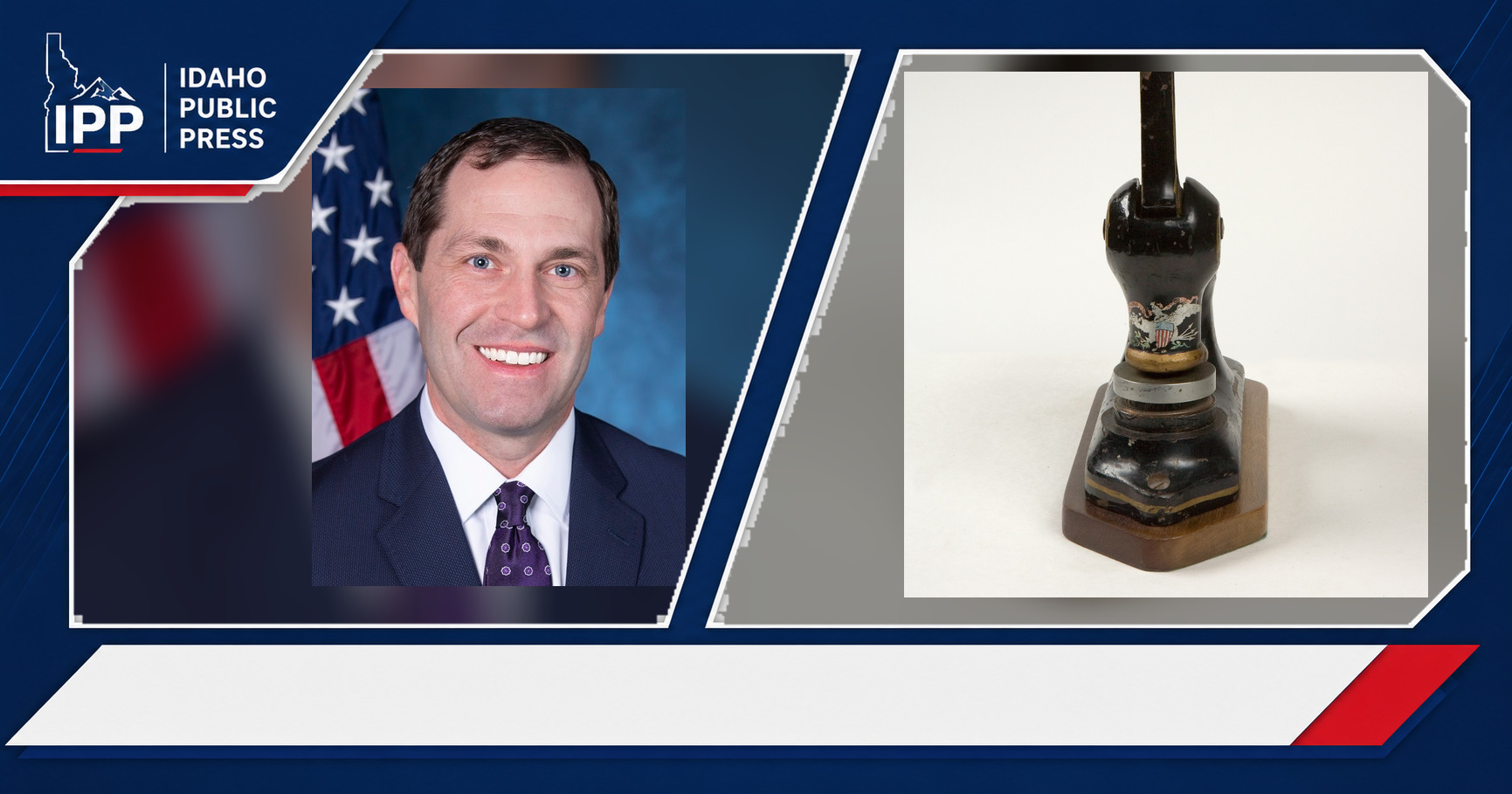
Jason Crow’s approach centers on winning competitive House districts, not simply sharpening partisan attacks. That makes his recruiting role a test of whether Democrats can turn frustration with Trump into congressional power.
Jason Crow is developing a strategy for the Democratic Party that is intended to rein in Donald Trump: win back the House with candidates who can reconnect with working-class and politically mixed communities. The Colorado congressman’s approach could shape the party’s opposition to Trump because a Democratic House majority would gain subpoena power, control of key committees and a stronger ability to investigate and challenge the administration.
Crow’s argument is not that Democrats should mute their criticism of Trump. It is that criticism alone will not produce the congressional leverage his party needs. His emerging playbook puts candidate recruitment, local credibility and direct appeals to voters who feel dismissed by Democrats at the center of the fight.
Crow’s theory starts with trust
In a March 2025 New York Times opinion profile, Crow described a basic cultural divide that he believes Democrats too often overlook: whether people feel the party sees and respects the realities of their lives.
He offered an unusually personal shorthand for that divide, pointing to communities where people structure their days around shift work and shower after work rather than before it. The point was not the routine itself. It was that voters with demanding jobs, tight budgets and little patience for political jargon may conclude Democrats are speaking about them without speaking to them.
Crow, who grew up in a working-class family, worked construction to help pay for college and later served in the Army, has made that disconnect central to his political diagnosis. In his view, the party cannot rebuild an electoral majority by treating voters in rural, red or working-class areas as unreachable—or by assuming disapproval of Trump automatically makes them Democratic voters.
That distinction matters. A message can be forceful toward Trump while still failing to persuade the voters who decide closely contested House seats.
The House is the pressure point
The practical goal behind Crow’s strategy is control of the House of Representatives. As the Times noted, Democrats’ clearest institutional route to constrain a president they oppose is winning the chamber in the midterms.
A House majority cannot unilaterally reverse presidential actions or guarantee that legislation becomes law. The Senate, the White House and the courts all remain powerful checks. But the House majority does choose committee chairs, set much of the chamber’s agenda, authorize investigations and wield significant influence over spending legislation.
That is the difference between political objection and institutional leverage. A minority party can hold hearings, make arguments and mobilize supporters. A majority party can decide which oversight priorities receive sustained committee attention and compel far more public accountability through its investigative powers.
Crow’s role in House candidate recruitment therefore is not a side assignment. It is closely tied to the larger question in the source headline: how Democrats might actually “rein in” Trump rather than merely register opposition to him.
Recruitment is more than a résumé test
Congressional recruitment often gets reduced to finding candidates with military service, fundraising networks or a compelling biography. Crow’s own profile contains several of those strengths: he is a former Army Ranger, served three combat tours and was awarded a Bronze Star. He also flipped a Republican-held Colorado seat in 2018.
But the political case for Crow is broader than biography. The Times reported that he has emphasized candidates who can meet skeptical voters where they are and communicate without seeming culturally distant from the places they hope to represent.
That may mean veterans, local officials, business owners, educators, health care workers or community figures with roots in a competitive district. There is no single model candidate, and treating authenticity as a casting exercise can backfire. The underlying test is whether a candidate has standing with voters who may not share every Democratic position.
For Democrats, that can create tension. A candidate calibrated for a swing district may use a different tone from activists or members in safely Democratic areas. Crow’s approach suggests that variation is not necessarily ideological weakness; it may be essential to building a majority large enough to govern.
His independence is part of the message
Crow has also built a reputation for resisting automatic party discipline. According to the Times profile, his first House vote in 2019 was against Nancy Pelosi for speaker, reflecting his view that a new generation of leadership was needed.
He later joined other moderate Democrats in raising concerns about President Joe Biden’s reelection campaign. The episode placed Crow among lawmakers willing to challenge his own party at a moment when many Democrats were reluctant to do so publicly.
Supporters see that independence as an asset in districts where voters dislike rigid partisanship. Former Speaker Pelosi praised Crow in the Times profile as an effective messenger on national security and governing from the center. Rep. Alexandria Ocasio-Cortez, from a very different part of the Democratic coalition, also argued that a stronger working-class focus is important for the party.
Those endorsements do not erase ideological divisions inside the Democratic Party. They do show why Crow has become useful to a coalition looking for candidates who can speak to moderates without abandoning every priority of the party’s base.
A sharper opposition still has limits
There is a case against putting too much faith in the recruitment-first model. Critics could argue that Democrats do not have a candidate-quality problem so much as a governing-message problem: voters may want clearer commitments on affordability, health care, wages, immigration or the limits of presidential power.
Others may believe that a period of intense conflict calls for more direct confrontation with Trump, not a softer or more localized message. Crow’s strategy does not necessarily reject that view. It argues that confrontation has to be connected to voters’ daily concerns if Democrats want it to translate into House seats.
There is also no guarantee that a House majority would produce a unified Democratic check on Trump. Members from competitive districts could resist aggressive oversight tactics, while progressives could press leaders to go further. Winning control would settle one question—who runs the chamber—but open another about how forcefully to use its powers.
And congressional authority has real boundaries. Investigations can expose information and apply political pressure, but they can be slowed by court fights, executive-branch resistance and partisan disagreement.
The test is winning competitive districts
Crow’s strategy ultimately rests on a blunt political reality: Democrats cannot check Trump through messaging alone. They need to win districts that are not naturally Democratic, recruit people trusted in those places and give voters a reason to see the party as attentive rather than dismissive.
That is a harder project than rallying an already committed base. It requires Democrats to hold together competing demands from progressives, moderates, independents and voters who have drifted toward Trump.
The approach also explains why Crow’s rise matters beyond Colorado. His value to Democrats is not simply that he can criticize Trump effectively. It is that he is helping define what a durable opposition might look like: one built around electoral gains first, then the congressional authority to turn those gains into oversight and restraint.











Leave a Reply