
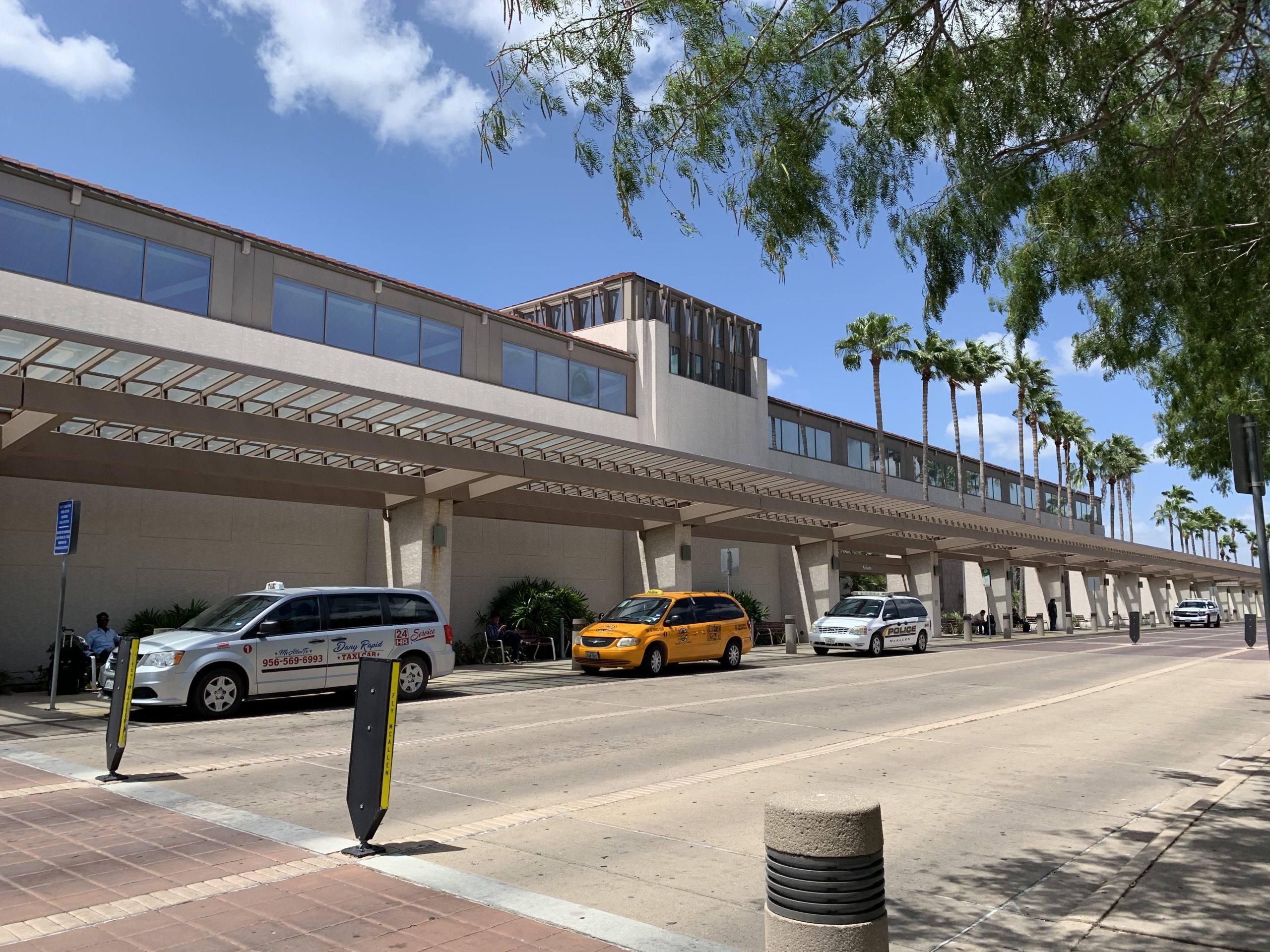
The McAllen airport arrests put a familiar immigration question in sharper focus: when should ICE detain visa overstayers, and when should discretion keep them out of custody?
ICE arrested two pastors who overstayed their religious visas at the McAllen airport in Texas, and Rep. Henry Cuellar says he had them released after intervening in the case. The pastors — Nepthali Zozaya Saucedo, 36, and Cinthia Sarai Cardona Otero, 34 — are married assistant pastors at Comunidad Cristiana Emanuel Church in Edinburg, Texas.
Their arrests matter because they show how routine immigration enforcement can quickly become a political fight over discretion, faith communities and who should be held in custody while a civil visa case moves forward.
The arrest at McAllen airport
According to reporting by the Washington Examiner, ICE officers arrested Saucedo and Otero late last week at the airport in McAllen, a South Texas border city. The pair had been trying to travel to North Carolina for a marriage conference connected to the late evangelist Billy Graham’s nonprofit organization.
The case did not involve an allegation of violence or a criminal charge in the reporting. The stated basis for the arrests was immigration status: the couple had remained in the United States beyond the end date of their religious visas.
That distinction is important. Visa overstay cases can lead to detention and deportation proceedings, but failing to depart by a visa deadline is generally a civil immigration violation, not a federal crime.
What DHS says happened
The Department of Homeland Security told the Washington Examiner that Saucedo and Otero entered the United States on visas on Feb. 27, 2022, and that those visas expired on July 7, 2022. DHS said they overstayed for four years after the visas expired.
Immigration law treats overstays seriously even when the original entry was lawful. A person who remains after a visa expires can become deportable, can have the visa automatically canceled and may face bars on returning to the United States, depending on the length of unlawful presence and other facts.
For religious workers, the optics can be especially combustible. Churches often rely on immigrant clergy and lay leaders, while immigration agencies are tasked with enforcing deadlines that do not disappear because a person holds a community role.
Cuellar frames it as discretion
Cuellar, a Texas Democrat, said he intervened and took credit for the pastors’ release, according to the report, which cited Border Report. His argument was not that ICE lacks authority to enforce visa rules. It was that the agency should use judgment in deciding who belongs in detention.
“Going after religious people, I don’t think that’s a work of God,” Cuellar told reporters, according to the Washington Examiner. “With all due respect, I think we got to have a little discretion here when people are in the process.”
Cuellar also said he does not support abolishing ICE, but believes there should be safeguards. That is a notable posture from a border-state Democrat: he is not rejecting immigration enforcement outright, but he is challenging how it is applied in a specific case.
The public reporting does not make clear what immigration filing, application or legal “process” Cuellar was referring to when discussing the couple. Cuellar did not respond to the Washington Examiner’s request for comment, the outlet reported.
Release is not a resolution
Saucedo and Otero are no longer in an ICE detention facility, but that does not mean their immigration problem is over. DHS said they were released through ICE’s Alternatives to Detention program.
Under those conditions, the couple must report virtually to ICE once a month and appear in person at the agency’s field office in Harlingen, Texas, in six months, according to DHS. In plain terms, they are out of custody while still under immigration supervision.
Alternatives to Detention can include regular check-ins and monitoring requirements. Supporters see those programs as a way to reduce detention for people who are not considered public-safety threats. Critics argue that release programs can weaken enforcement if people do not appear for future proceedings.
Both views are part of the larger fight around this case. The pastors’ supporters can point to their church roles, family ties and the civil nature of the violation. Enforcement advocates can point to a four-year overstay and the basic principle that visa deadlines must mean something.
Why this case drew attention
The location helped turn a local detention into a broader political story. McAllen sits in the Rio Grande Valley, where immigration enforcement is not abstract policy but a daily presence at airports, roads, workplaces and neighborhoods.
The people involved also sharpened the contrast. The case centers on two church workers detained while trying to attend a marriage conference, not on a border crossing or a criminal indictment. That makes it easier for critics of the arrest to argue that ICE picked the wrong target.
At the same time, the government’s position is straightforward: the couple entered legally, their visas expired in 2022, and they stayed for years after that. If ICE ignored such cases entirely, officials would face criticism that visa overstays are effectively unenforced.
Cuellar’s involvement adds another layer. Members of Congress often contact federal agencies about constituent cases or high-profile local matters, but those interventions raise questions about consistency. People with political access may get faster attention than others facing similar immigration problems.
The unresolved questions now
The next key question is whether Saucedo and Otero will be able to regularize their status, obtain relief from removal or ultimately be ordered to leave the United States. The available reporting does not answer that.
It is also unclear how ICE selected the couple for arrest at the airport. Airports can expose immigration issues because travelers encounter security checks and identity systems, but the report does not specify whether the pastors were targeted in advance or flagged during travel.
The case also comes after Cuellar was reportedly involved in securing the release of a nun arrested in McAllen in late June, according to the Washington Examiner. That pattern may fuel debate over whether religious workers are being swept up too aggressively, or whether public pressure is creating exceptions for sympathetic cases.
The clean takeaway is narrower than the politics around it: ICE can arrest visa overstayers, even when they are religious workers, and a congressional intervention can sometimes affect custody decisions. But release from detention is not legal status. For Saucedo and Otero, the public fight has eased the immediate pressure, not ended the case.










Leave a Reply