

The supplied trend headline says an appeals court barred the project without congressional approval, but the available AP report describes the opposite interim result. The dispute is still centered on whether a president can reshape the White House complex before obtaining required federal and congressional approvals.
Donald Trump’s proposed White House ballroom is moving ahead for now after a federal appeals court temporarily allowed construction to continue. That available ruling conflicts with a trend headline claiming an appeals court said Trump cannot build the White House ballroom without congressional approval. The underlying AP report says the U.S. Court of Appeals for the D.C. Circuit paused a lower-court restriction, leaving the approval fight unresolved.
The dispute matters because the project would replace the former East Wing site with a $400 million, 90,000-square-foot ballroom addition. It has become a test of how much power a president has to alter a historic federal complex before Congress and relevant federal agencies sign off.
The appeals ruling was temporary
According to the AP report published April 18, 2026, a three-judge panel of the U.S. Court of Appeals for the District of Columbia Circuit put a temporary hold on an order from U.S. District Judge Richard Leon.
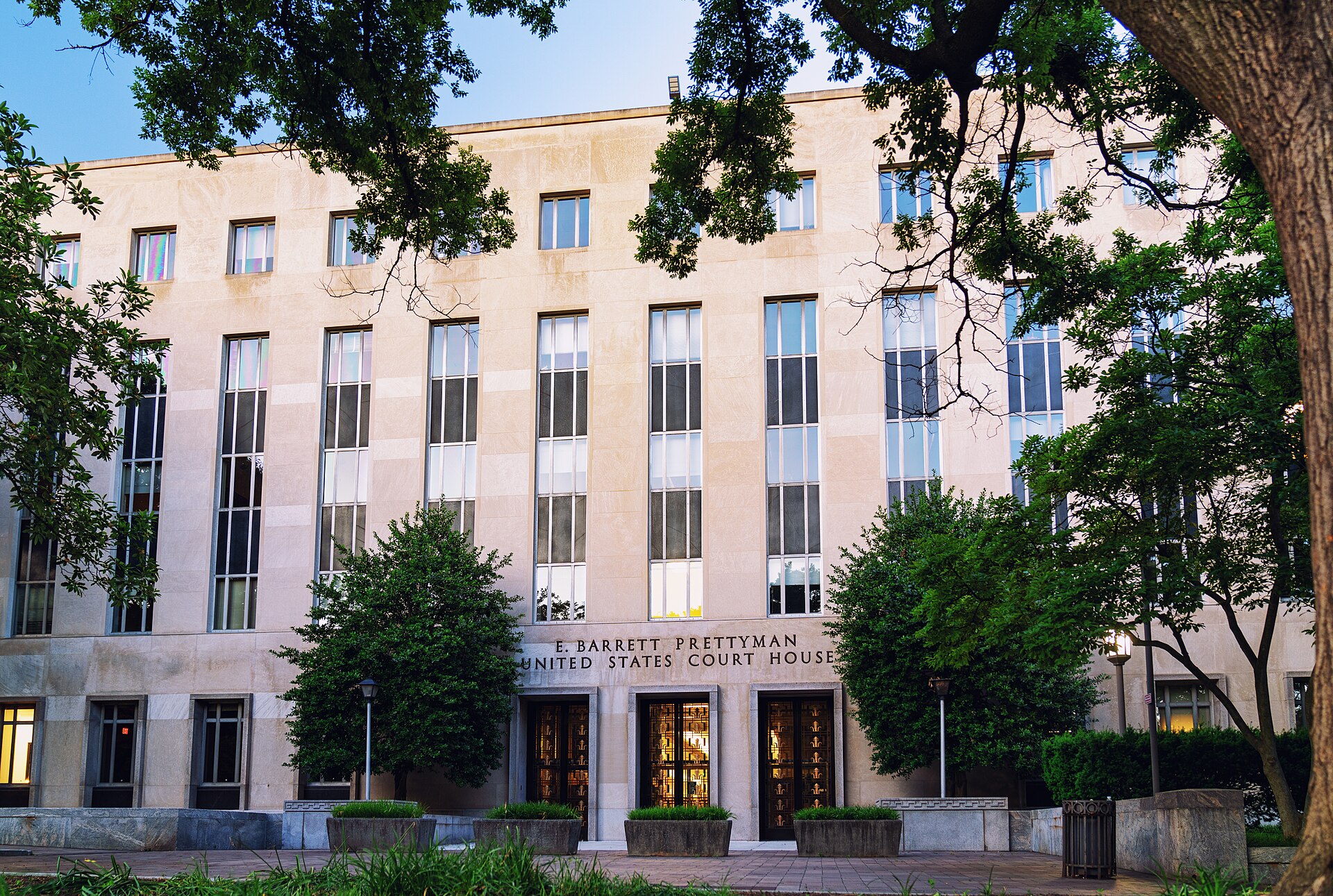
Leon had continued to block above-ground construction while allowing below-ground work involving a bunker and other facilities characterized as connected to national security. The appeals panel’s action allowed the administration to continue construction as the case moved forward.
The panel scheduled a June 5 hearing to consider the dispute more fully. A temporary administrative pause is not the same as a final ruling on whether Trump has legal authority to build the ballroom or whether particular approvals are mandatory.
Why the headlines do not match
The trend item supplied for this article says an appeals court ruled Trump could not build the ballroom without congressional approval. But the detailed, available AP source says the appeals court temporarily allowed the project to proceed after the lower court had restricted above-ground work.
That discrepancy is consequential. A court may ultimately conclude that congressional or agency approval is required, but the source material provided does not establish that an appeals court had already issued that final outcome.
The careful reading is that the legal challenge remains live. The appellate court’s interim move changed what could happen at the site in the short term; it did not settle the merits of the preservationists’ objections.
A contested remake of the East Wing
Trump tore down the East Wing the previous fall to make room for the ballroom, according to AP. The scale of the proposed addition is unusual: 90,000 square feet, or about 8,400 square meters, and an estimated price of $400 million.
The National Trust for Historic Preservation sued to stop the work. Its central contention is that the administration moved ahead without approval from key federal agencies and Congress.
That turns an argument over a building project into an argument over process. The White House is both the president’s workplace and a nationally significant historic site, so changes can trigger overlapping concerns involving executive authority, preservation review, security and public accountability.
Trump’s case for the ballroom
Trump has described the ballroom as a long-overdue improvement to the White House complex. He has argued that he can proceed because wealthy individuals and corporations would cover construction costs through donations.
That funding claim does not end the legal debate. AP reported that taxpayer dollars would still pay for security-related aspects of the project, while the lawsuit questions the authority and approvals behind the construction itself.
Supporters can view the ballroom as a functional addition paid for largely outside normal appropriations. Critics see a major, permanent alteration to public property that should not advance without the formal checks designed for historic federal sites.
Congress is part of a larger question
Congressional approval is a major issue in the challenge, but it is not the only one. The litigation also concerns approvals from federal agencies and the procedures that apply before significant work is done on a landmark government complex.
That distinction matters because public debate often compresses a complicated case into a single question: can a president build it or not? The courts must sort through narrower issues, including which approvals were required, whether they were obtained, and what remedy is appropriate if they were not.
For now, the available reporting does not support treating the appeals-court action as a definitive rejection of the project. It describes an interim decision that kept construction from being halted by the lower court’s order while the appeal proceeded.
What remains unsettled
The next meaningful legal development would be a merits decision after appellate review, or another court order clarifying the scope of work permitted at the White House site. The supplied AP account identified a June 5 hearing, but it does not provide a later final decision.
It also remains unclear from the supplied materials whether lawmakers will take any separate action on the project, whether agencies will complete or revisit reviews, and whether the parties could reach a resolution short of a final court judgment.
The immediate takeaway is straightforward: the proposed ballroom is still the subject of a legal fight over presidential construction power and required approvals. The available source says the appeals court temporarily allowed work to continue, not that it definitively resolved the congressional-approval question against Trump.










Leave a Reply