
The reversal is a rare public retreat for soccer’s governing body and a warning about how fiercely the World Cup’s ownership model is protected. The fight now shifts to how FIFA funds its global programs without selling off a piece of its crown jewel.
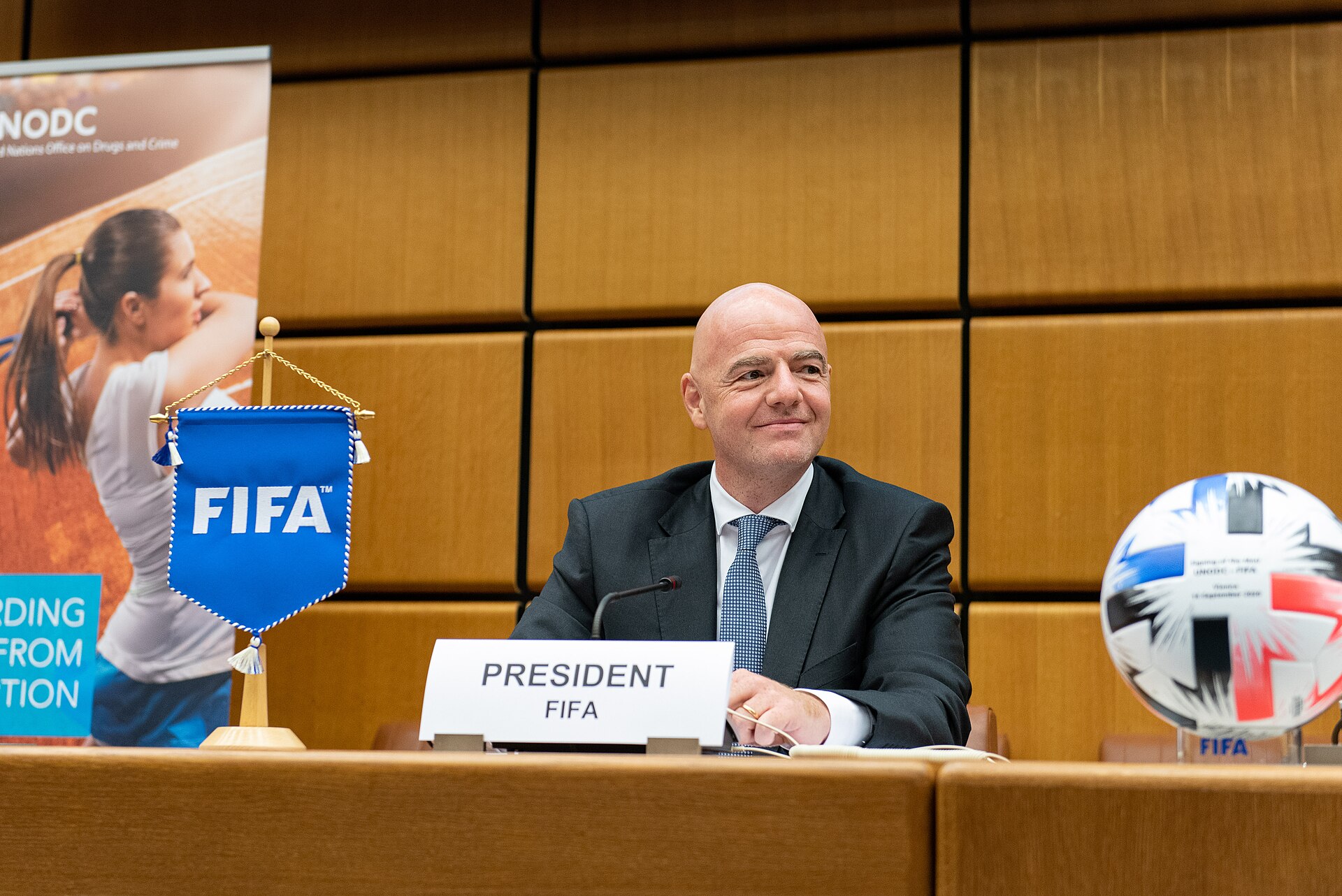
FIFA has scrapped a controversial $20 billion World Cup investment plan after Gianni Infantino’s proposal ran into backlash from fans and major soccer groups. FIFA had proposed selling private stakes in World Cup commercial rights through a new venture, with private investors taking 20%, and on Friday abandoned the plan after opposition intensified from Tuesday’s first reports of the scheme.
The reversal matters because it tests how far soccer’s governing body can go in turning its flagship tournament into a financial vehicle. The backlash that led FIFA to abandon the plan came not just from fans online, but from confederations capable of disrupting FIFA competitions.
A rare retreat by FIFA
FIFA’s decision to shelve the proposal came after days of pressure over a plan that critics framed as a sale of part of the World Cup’s future. CBS News reported that Infantino said FIFA had listened to the views raised and concluded the project had created divisions that were no longer in the interest of its original objective.
That language was careful, but the message was clear: the plan had become too toxic to carry forward. For an organization used to defending controversial decisions, the speed of the pullback was notable.
The proposal, known as FIFA Forward Enterprise, would have created a new commercial rights and event operations company. FIFA would have retained 80% ownership, while 20% would have been sold to private investors, according to reports from CBS News and CNN.
FIFA’s stated case was that the structure could raise money for its member associations and strengthen soccer development globally. Its opponents heard something else: an attempt to turn the World Cup, the sport’s most valuable collective asset, into a private investment product.
What FIFA wanted to sell
The central issue was not whether FIFA can make money from the World Cup. It already does, through broadcast rights, sponsorships, hospitality, licensing and other commercial deals. The question was whether outside investors should hold a stake in a new entity tied to those rights and operations.
According to CBS News, FIFA had given the proposed venture an initial valuation of $20 billion. The investor stake was expected to bring in about $4.2 billion, with FIFA saying long-term investors would be carefully selected.
The money was presented as a way to increase support to FIFA’s 211 member associations. CBS News reported that FIFA estimated its Forward Funding for member associations could rise from $8 million per four-year cycle to about $20 million.
That pitch likely appealed to smaller federations that rely heavily on FIFA funding. For them, a larger guaranteed stream of money can mean more coaching programs, fields, youth competitions and women’s soccer investment. But the proposal also raised a harder question: what influence, if any, would private capital gain over a tournament that billions of people see as belonging to the game itself?
Why the backlash spread
Opposition moved quickly because the World Cup is not an ordinary sports property. It is FIFA’s financial engine, but it is also soccer’s shared symbol, built by national teams, public broadcasters, host cities, volunteers and supporters across generations.
UEFA, Europe’s soccer confederation, issued one of the strongest rebukes. CBS News reported that UEFA’s 55 members agreed to boycott FIFA-organized competitions, including the World Cup, if the plan went ahead. UEFA called the proposal irresponsible and indefensible and said the World Cup could not be treated as an investment product.
CONCACAF, the governing body for North and Central America and the Caribbean, also rejected the proposal. It questioned the need for private equity investment after what it described as the most profitable World Cup in history, though it stopped short of threatening a boycott.
The Asian Football Confederation did not outright reject the plan in the same terms, but said it stood with UEFA and CONCACAF in expressing serious concerns about private investment in FIFA’s flagship competitions and the decision-making process around the project.
The investor politics problem
The controversy was sharpened by the identity of the expected lead investor group. FIFA confirmed, according to CBS News, that Thrive Eternal was expected to lead the proposed investor group. Thrive Eternal is tied to Thrive Capital, the investment firm owned by Joshua Kushner.
That detail pulled the plan into a broader political conversation because Joshua Kushner is the brother of Jared Kushner, President Donald Trump’s son-in-law. A source close to Thrive Capital told CBS News that criticism based on that connection was unfair and said Trump was not involved in FIFA Forward Enterprise.
Trump also said Friday that he had not spoken to FIFA officials or Infantino about the plan, according to CBS News. That denial did not erase the optics problem for FIFA, especially at a time when Infantino’s closeness to Trump had already drawn scrutiny.
Still, the strongest objections were not only about politics. They were about governance, transparency and whether FIFA’s leadership had moved too far, too fast, on a proposal with major consequences for the sport’s future revenue model.
Supporters had a real argument
The plan’s critics dominated the public conversation, but FIFA’s basic funding argument should not be dismissed out of hand. Global soccer is wildly unequal. Wealthy federations can build world-class infrastructure from domestic revenues, while smaller associations often depend on FIFA grants to keep programs alive.
If FIFA could genuinely raise billions while retaining control, supporters could argue that private investment might accelerate development in countries that need it most. Infantino’s statement framed the project as a way to strengthen member associations and the sport worldwide, especially where support is most needed.
The problem was trust. FIFA was asking the soccer world to believe that selling a minority stake in a commercial structure tied to its flagship competitions would not alter priorities, governance or access. Many stakeholders were not convinced.
Private investors typically seek growth, returns and influence over strategy. Even if FIFA retained 80%, critics feared that commercial logic would creep further into sporting decisions, from tournament formats to host selection to the fan experience.
What happens after the U-turn
FIFA has shelved the plan, but the pressure behind it has not disappeared. Member associations still want more money. The global calendar is still crowded. The World Cup remains the asset everyone wants to monetize without appearing to cheapen.
One immediate question is whether FIFA returns with a narrower version of the idea, perhaps focused on sponsorship packaging, digital rights or development funding rather than a formal investor stake. Another is whether confederations will demand stricter consultation before any future commercial restructuring.
The episode also strengthens UEFA and other regional bodies that pushed back. Their message was not subtle: FIFA may run the World Cup, but it cannot assume the rest of the soccer system will accept a major ownership-style change without a fight.
The clean takeaway is that FIFA found the limit of financial engineering around the World Cup. The tournament is a business, but this week’s reversal showed it is not only a business, and attempts to sell even a piece of its commercial future can trigger resistance from the people and institutions FIFA needs most.







Leave a Reply