

The clash shifted a long-running fight over Covid origins into a legal standoff over congressional questioning, perjury fears and political accountability.
Anthony Fauci invoked his Fifth Amendment rights during a U.S. Senate hearing in Washington, D.C., refusing to answer questions about his handling of the Covid-19 pandemic and its origins. Fauci accused Rand Paul of having what he called an “unhinged obsession with me,” escalating a years-long clash between the former top U.S. health official and the Kentucky Republican.
The confrontation matters because it moved a familiar political fight into a sharper legal frame: what Congress can demand, what Fauci says he fears, and how far Republican senators may go next.
Why Fauci would not answer
Fauci, the former director of the National Institute of Allergy and Infectious Diseases, declined to answer questions before a Republican-led Senate committee, according to the BBC’s account of the hearing. He said he was acting on the advice of his attorneys.
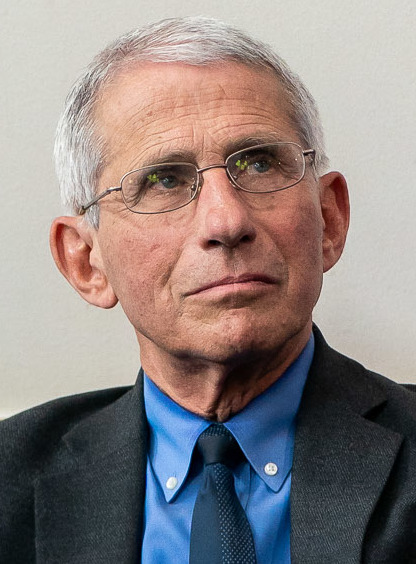
The Fifth Amendment protects people from being compelled in a criminal case to be witnesses against themselves. In plain terms, taking the Fifth is not an admission of guilt. It is a legal protection against compelled testimony that could later be used in a criminal case.
Fauci said the move was painful because he respected Congress, but argued that the questioning had become legally dangerous. He said he feared Republican lawmakers would try to use his testimony as the basis for a perjury case.
That claim is central to the dispute. Fauci has testified under oath about Covid before, but he argued this hearing was different because Paul and other critics had already made clear they wanted him prosecuted.
Paul’s case centers on diaries
Paul’s latest line of attack rests partly on more than 1,000 pages of Fauci’s pandemic-era diary, which the senator released days before the hearing. The entries reportedly included Fauci’s private thoughts about his sudden public fame and the scientific debate over where Covid-19 came from.
Paul argued that the diary entries contradicted what Fauci told the public about the origins of the virus. The senator has repeatedly promoted the lab-leak theory, which holds that Covid may have emerged from China’s Wuhan Institute of Virology.
Fauci’s diary, as described by the BBC, appears more complicated than either side’s simplest argument. Early entries showed openness to more than one possibility, including natural spillover and a lab leak. Later entries suggested Fauci became more persuaded that the virus evolved naturally, while still acknowledging that a lab leak remained possible.
That nuance did not defuse the hearing. For Paul and other Republican critics, the diary became evidence of a public-private gap. For Fauci’s defenders, it showed a scientist weighing uncertain evidence in real time during a chaotic emergency.
The clash got personal
Fauci’s most pointed statement was aimed directly at Paul. He accused the senator of pursuing him not for legitimate oversight, but because of a personal fixation.
Fauci said Paul had made repeated public statements suggesting he wanted to see Fauci “behind bars.” In Fauci’s telling, the hearing was designed to get him to say “something — anything” that could be used to support that outcome.
Paul continued questioning Fauci even after the former health official said he would not answer. The hearing grew tense enough that one of Fauci’s lawyers, seated beside him, tried to interject during Paul’s questioning. Paul then directed a security guard to remove the attorney from the room, according to the BBC.
The moment captured the deeper breakdown: one side presenting the hearing as accountability for pandemic-era decisions, the other describing it as a political trap built around a predetermined conclusion.
Covid origins remain disputed
The fight over Fauci is also a proxy war over a bigger unresolved question: how the pandemic began. More than six years after Covid-19 upended public life, the origins debate still carries scientific, diplomatic and political weight.
The World Health Organization said in 2025 that the natural-origins theory — a spillover from animals to humans — was the best-supported explanation based on available evidence. But the WHO also said the matter remained inconclusive until more information emerges.
That ambiguity gives both camps room to argue. Paul and other lab-leak advocates point to unanswered questions about the Wuhan Institute of Virology and early pandemic communications. Fauci and many scientific voices have emphasized evidence supporting a natural origin, while noting that certainty has been difficult because key data have not been fully available.
Fauci’s diary entries, if accurately characterized, do not neatly settle the issue. They show the kind of shifting assessment that can happen as scientists collect evidence, but they also give critics a document trail to scrutinize for inconsistency.
Senators split sharply
Republican senators reacted angrily to Fauci’s refusal to answer. Senator Josh Hawley accused him of showing contempt for Congress. Senator Ron Johnson said he planned to push for a subpoena in an effort to compel Fauci to answer lawmakers’ questions.
Democrats defended Fauci and attacked the premise of the hearing. Senator Maggie Hassan said the proceeding was “designed to entrap” him, according to the BBC. Democrats also tried to broaden the focus to current public health concerns, including measles and cyclosporiasis cases under Health Secretary Robert F. Kennedy Jr.
Kennedy, a longtime Fauci critic, told Fox News over the weekend that officials had spent months digging Fauci’s diary entries out of government computer systems. That detail added another layer to the partisan fight over whether the inquiry is legitimate oversight or a targeted campaign.
Fauci’s role in the pandemic has made him a uniquely polarizing figure. To supporters, he was a steady scientific voice during an emergency. To critics, he became a symbol of mandates, restrictions and official certainty that later came under scrutiny.
What remains unclear
The next major question is whether Republicans can force more testimony. A subpoena could escalate the standoff, but it would not automatically erase Fauci’s ability to assert constitutional protections.
There is also the unresolved issue of former President Joe Biden’s pre-emptive pardon for Fauci before leaving office. Biden said at the time that the pardon should not be read as an admission of wrongdoing. Fauci’s stated concern now appears focused on whether new testimony could be used to accuse him of perjury.
That distinction explains why the Fifth Amendment became the center of the hearing. Even a witness who denies wrongdoing may refuse to answer if lawyers believe the questioning creates criminal exposure.
The hearing did not resolve the origins of Covid-19, the meaning of Fauci’s diary entries or whether Republican investigators will succeed in compelling further answers. It did clarify one thing: the Fauci-Paul fight has moved beyond policy disagreement into a formal legal confrontation, with Congress, courts and constitutional rights potentially shaping what comes next.




Leave a Reply