
The newly released entries do not settle the COVID origins fight. They show how uncertainty, fame and political pressure collided around one of the pandemic’s most visible officials.
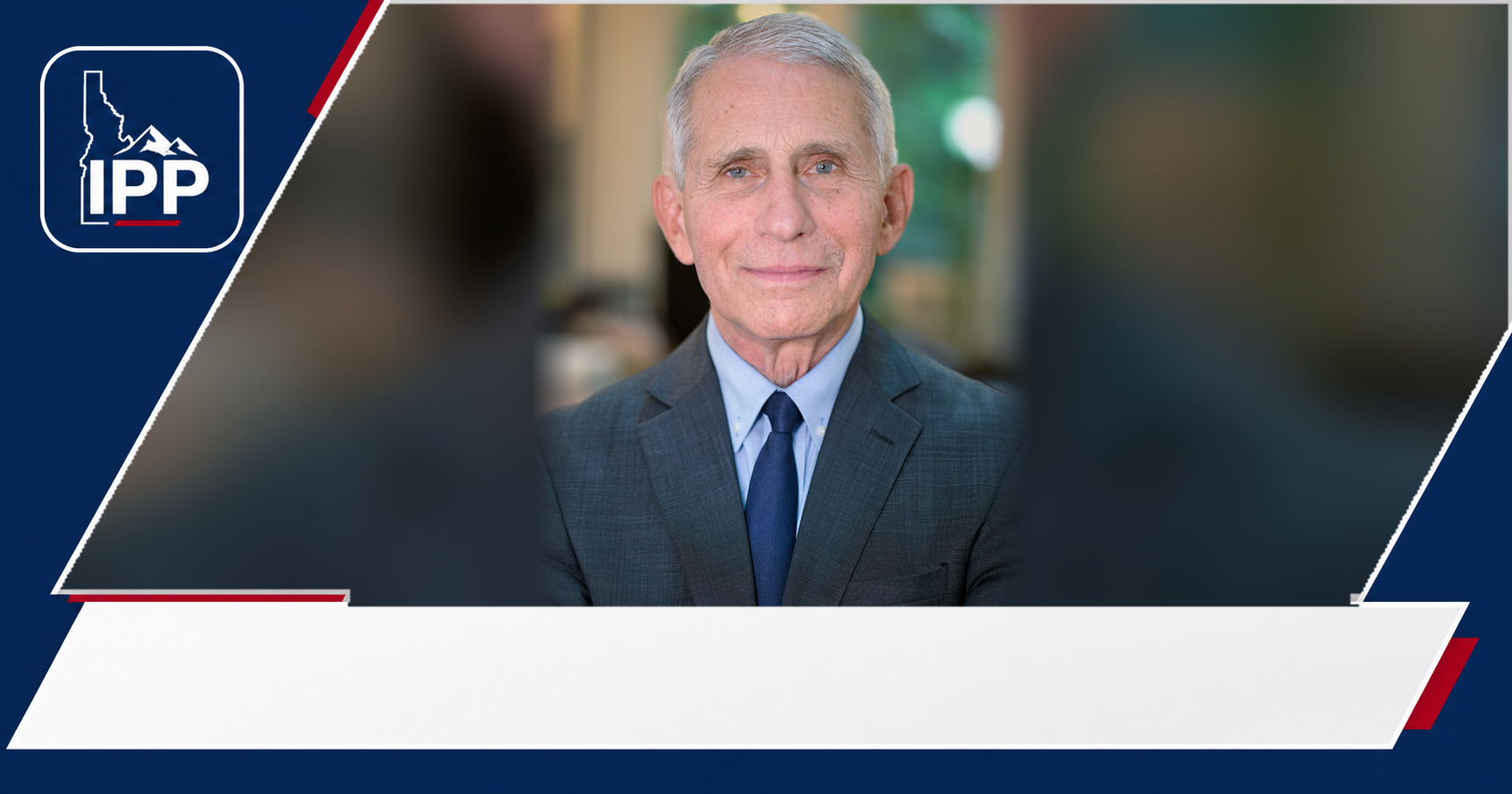
Anthony Fauci is testifying today, July 29, 2026, in the Senate Dirksen Building, SD-342, after Sen. Rand Paul released 1,141 pages of Fauci diary entries that have reopened fights over the COVID-19 origins debate and Fauci’s relationship with Donald Trump. This article summarizes what Fauci’s diaries reveal and why his testimony matters now: the entries show a public health adviser wrestling with early scientific uncertainty, sudden celebrity, and a president who alternated between praise and anger.
Reuters reported Wednesday that Fauci invoked the Fifth Amendment and declined to answer questions at the Senate hearing. That move will sharpen the politics around the diaries, but the documents themselves are not a tidy verdict. They are a messy contemporaneous record from December 2019 through December 2022, the period when Fauci was still leading the National Institute of Allergy and Infectious Diseases and becoming one of the most recognizable figures in American public life.
The hearing’s immediate flashpoint
Paul, the Kentucky Republican who heads the Senate Homeland Security Committee, subpoenaed Fauci as part of the panel’s investigation into the origins of COVID-19, CBS News reported. Paul has long argued that the virus may have emerged from a lab-related incident in Wuhan, China, and has accused Fauci and other officials of misleading Congress and the public.
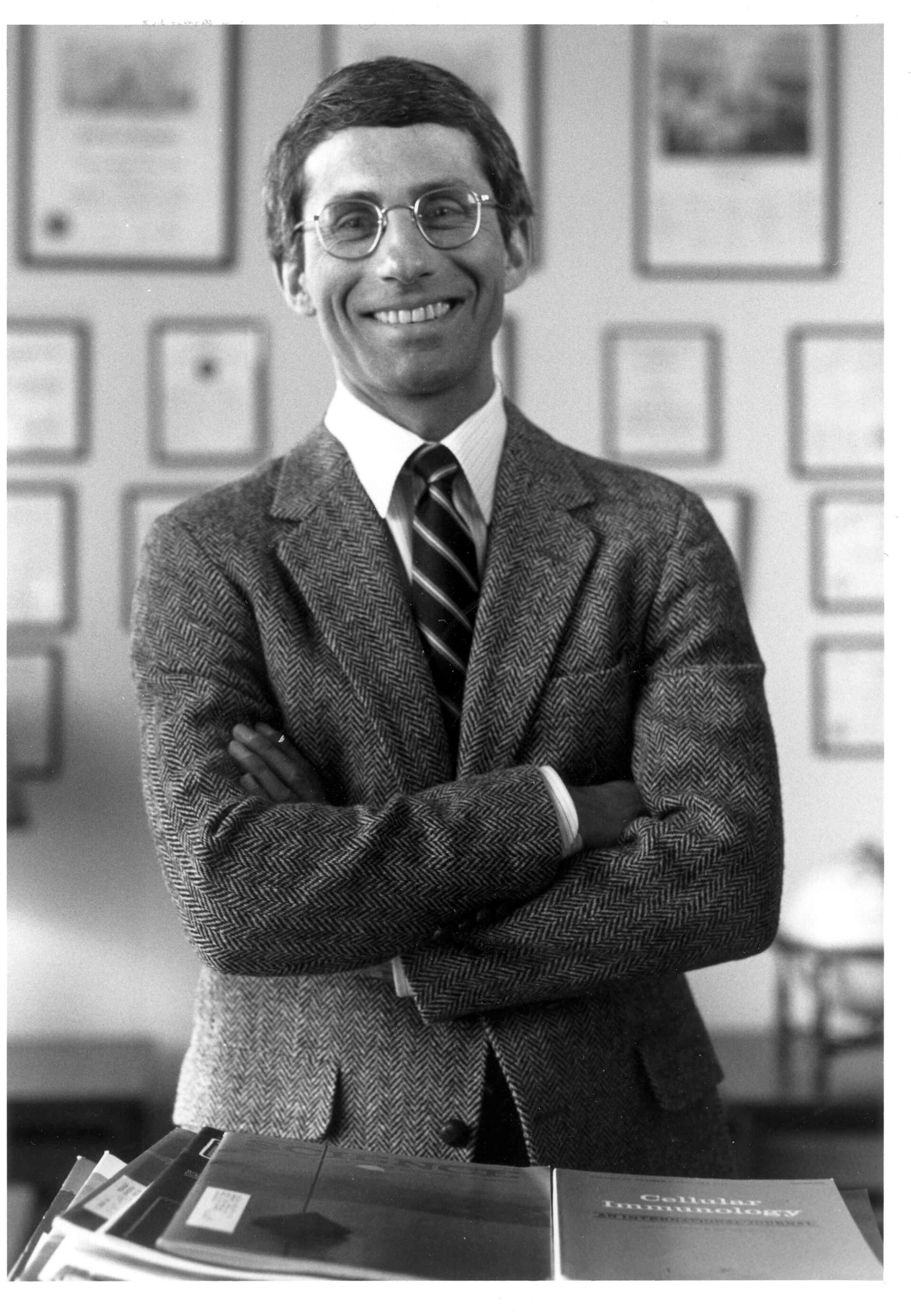
Fauci and Paul have clashed repeatedly since the pandemic, often in televised Senate exchanges that became political set pieces. This hearing arrives with a new accelerant: the publication of Fauci’s own diary entries, which Paul is using to challenge what Fauci said publicly as the pandemic unfolded.
The Fifth Amendment issue adds a separate layer. Invoking it is not an admission of wrongdoing; it is a constitutional protection against compelled self-incrimination. Politically, though, it gives Fauci’s critics a simple and powerful image: the former face of the federal pandemic response refusing to answer questions in a committee room.
That is why the diaries matter. They are being read not just as personal notes, but as evidence in a broader argument over whether public officials were candid about what they knew, what they suspected and what remained uncertain in the earliest stages of the crisis.
What the diary entries show
The entries, according to CBS News, begin in December 2019, in the days before the United States declared a public health emergency, and run through December 2022, when Fauci stepped down from NIAID after nearly four decades as director.
They capture a working official in real time, not a polished memoir. Some passages describe meetings, media requests and pressure inside the Trump administration. Others track the scientific debate over the virus’s origin, including early uncertainty about whether the outbreak was tied to a market, animals, a laboratory accident or some combination of unknown factors.
One January 2020 entry cited by CBS News has Fauci writing that “we know the market was not the source, it was the amplifier,” while also saying that “somewhere the virus jumped from animals to humans.” About a week later, he referred to a conference call in which several infectious disease experts thought the coronavirus might not have originated naturally.
Those lines are central to Paul’s argument. Paul said Monday, according to CBS News, that Fauci was saying one thing to “Dear Diary” while telling the public that a lab origin was implausible. Fauci declined to comment to CBS News about the diary release.
Origins debate remains unsettled
The diaries land in a COVID origins debate that has hardened rather than resolved. Many scientists still view a natural spillover from animals as the most likely explanation, with early human cases linked to Wuhan and markets where animals were sold. That view is not the same as certainty; it rests on available evidence and biological precedent.
U.S. intelligence agencies have not spoken with one voice. CBS News noted that the FBI assessed the virus “most likely” emerged from a lab incident in Wuhan. In January 2025, the CIA issued an assessment favoring the lab-leak hypothesis, but with “low confidence.”
That mix of scientific uncertainty and intelligence ambiguity is exactly where politics thrives. To Fauci’s critics, the diary entries are proof that he privately entertained possibilities he publicly minimized. To his defenders, the same entries show something less sinister: an expert trying to communicate evolving evidence during a crisis while avoiding claims that outran the data.
A May 26, 2021, entry quoted by CBS News illustrates the tension. Fauci wrote that press reports were accusing him of “flip flopping” on the origin theory, and he said he had always viewed natural origin as highly likely while also saying no one was “100% certain,” including him, and calling for a thorough investigation.
Trump passages cut both ways
The diaries also complicate the familiar story of Fauci versus Trump. They show moments of friction, but also moments when Fauci described a warmer or more functional relationship than the public narrative suggested.
In one May 2020 entry cited by CBS News, Fauci wrote that his national and international fame had become “explosive and really unimaginable.” He added that Trump seemed “enamored” of him even though Fauci was taking attention away from the president, calling their relationship “very unique and interesting.”
At other points, the tone shifted. Fauci described some Trump news conferences as “painfully rambling” and “laborious,” according to CBS News. He also wrote about arguments in which Trump accused him of undermining the administration.
One reported episode stands out because it captures the collision between public health and economic panic. Ahead of a May 2020 event announcing Operation Warp Speed, Fauci wrote that Trump pulled him aside and said, “Tony, you are losing me trillions of f***ing dollars,” before later telling him that “you and I are OK.”
Fame became another pressure point
One of the more revealing threads is not about virology at all. It is about fame. The diaries show Fauci tracking interviews, celebrity attention, impressions of media coverage and the strange cultural role he assumed in 2020.
According to CBS News, Fauci noted pop-culture moments including Brad Pitt playing him on “Saturday Night Live,” a Billy Crystal spoof, messages from prominent figures and images of Fauci masks, murals, portraits and bobbleheads. Some entries suggest bemusement. Others suggest discomfort.
That matters because Fauci’s public image became part of the political fight. Supporters saw him as a steady scientific voice amid chaos. Critics saw a media-savvy official whose celebrity insulated him from scrutiny. The diaries offer ammunition to both sides: they show awareness of fame, but they also show anxiety about what that fame meant for his safety and his work.
They also reveal the challenge of serving as a technical expert in a personality-driven presidency. Fauci was not just explaining public health guidance. He was managing access to the White House, intense press demand, public adoration, public hostility and a president highly sensitive to credit and blame.
What remains unanswered
Several important questions remain unresolved. CBS News reported that Paul’s office did not respond to a request for comment about how it obtained the diary. Health and Human Services Secretary Robert F. Kennedy Jr. told Fox News that the entries were retrieved from government computer servers in recent months.
That raises a basic issue beyond the politics of Fauci himself: what counts as an official record, who controls it and how personal journal-style material created by a public official should be handled when Congress demands it.
The diaries also do not settle the origin of COVID-19. They show what Fauci wrote, worried about and believed at different moments. They do not prove where the virus began. The strongest reading is that they document the uncertainty and institutional pressure surrounding a question that still has no universally accepted answer.
The clean takeaway is uncomfortable for both camps. Fauci’s defenders cannot pretend the entries will have no political force, because they show private nuance that critics will compare against public statements. Fauci’s critics cannot fairly treat every private uncertainty as proof of deception. The record is more complicated than a hearing sound bite, and that is why it is likely to stay at the center of the COVID origins fight long after today’s testimony ends.






Leave a Reply