
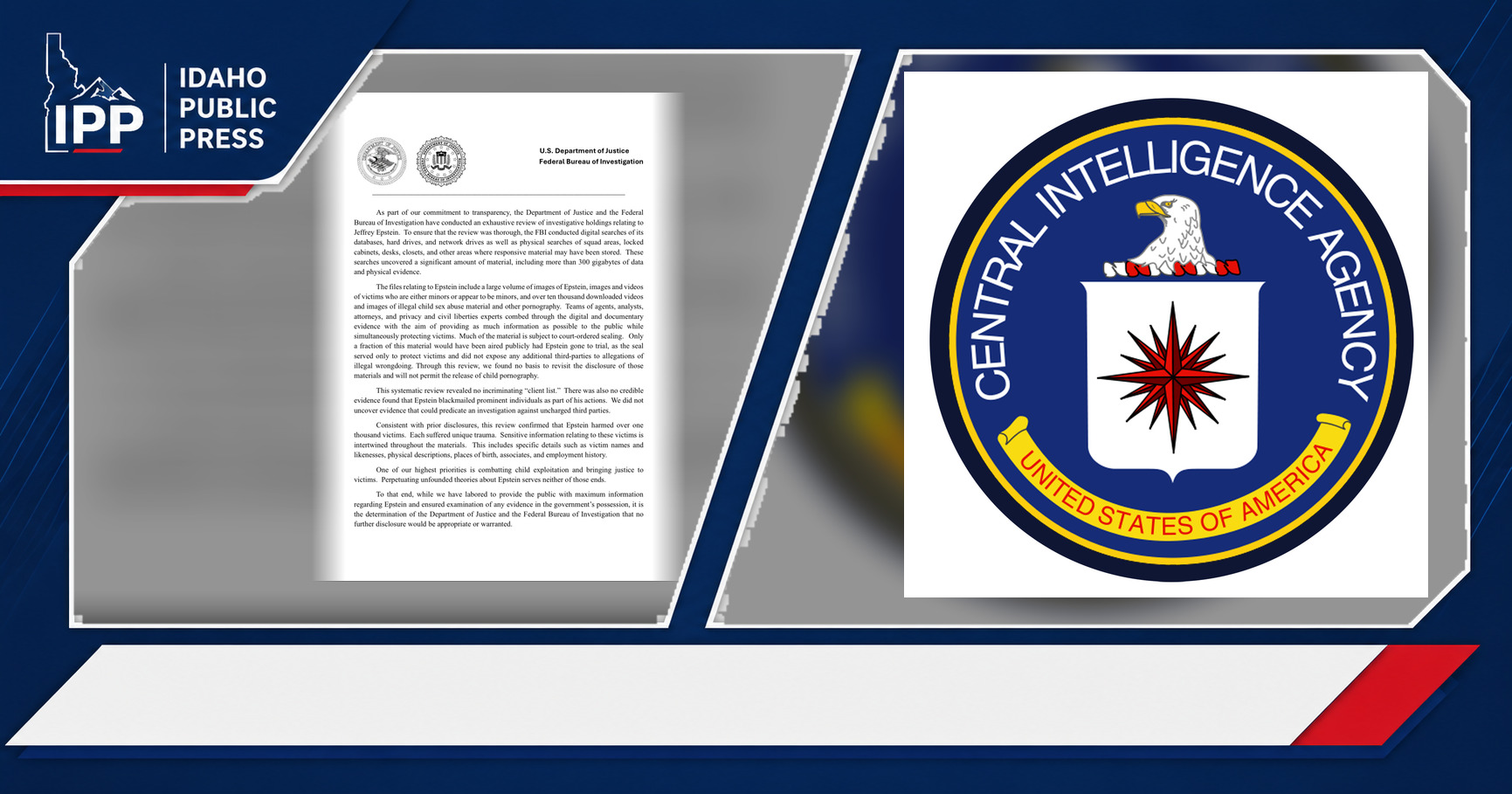
The newly released records illuminate a narrow but important dispute over what Epstein’s legal team wanted from U.S. intelligence agencies. They do not establish that Jeffrey Epstein worked for, informed for, or was connected to the CIA.
Jeffrey Epstein’s lawyers requested records from the CIA that could show whether Epstein had an affiliation with the agency, and the CIA refused to confirm or deny whether records about Epstein exist. The dispute, tied to a 2011 request and documents reported on February 8, 2026, with additional released material dated February 17, 2026, is now drawing fresh attention because the Department of Justice released records describing the requests.
The documents offer a glimpse of what Epstein’s legal team sought from the CIA and National Security Agency. They do not show that the CIA employed Epstein, used him as an informant, or held proof of an intelligence relationship.
What Epstein’s lawyers requested
According to documents described by The Washington Post, attorneys for Epstein filed requests with both the CIA and the National Security Agency. They sought records that could reflect an affiliation with the CIA and asked whether the NSA retained information concerning him.
That language matters. A request for records is not a finding that records exist. It is a legal effort to learn whether an agency has files, correspondence, operational reporting or other material that may be relevant to a person’s case.
Epstein’s lawyers had an obvious reason to cast a wide net. He was facing serious criminal allegations, and any government-held information that could affect his defense, credibility, contacts or prosecution would have been potentially significant to his legal strategy.
The CIA’s carefully limited answer
The CIA’s response was a refusal to confirm or deny whether responsive records existed, citing classification concerns. This type of answer is often called a “Glomar response,” after a long-running legal precedent that permits agencies to withhold even the fact that records exist when acknowledgment itself could reveal protected intelligence information.
It can sound dramatic because it leaves a blank space in the public record. But it is also a standardized national-security posture used in cases involving alleged intelligence relationships, covert activity, sources, methods or classified collection.
A neither-confirm-nor-deny response does not validate the underlying allegation. It means the CIA has chosen not to publicly describe whether it has responsive material under the terms of that request.
Why the NSA request matters too
The NSA request broadens the picture beyond the CIA. Epstein’s lawyers also sought to learn whether the NSA retained information about him, according to the released documents.
The two agencies have different roles. The CIA focuses principally on foreign intelligence, while the NSA is associated with signals intelligence and information assurance. A request sent to both agencies can reflect a defense team’s attempt to identify every possible federal record, rather than evidence that either agency had a special relationship with the subject.
That distinction is easy to lose in online discussion. Intelligence agencies may possess records for many routine reasons: a name can appear in public reporting, a tip, an investigative referral, a travel-related record, intercepted foreign communications, or material supplied by another government entity. The existence of a file, if one exists, would not by itself establish wrongdoing or cooperation.
Released documents answer only part
The Department of Justice’s release makes the requests themselves easier to evaluate. It shows that Epstein’s attorneys explored the possibility of records at major intelligence agencies and that the CIA took a classified-response position.
What remains unavailable is the substance behind that position. The public documents, as described in reporting, do not identify specific CIA records, disclose an agency relationship, or explain why any potential records would be classified.
That is the central limit of the story. There is a documented records dispute, but there is no disclosed documentary basis in these materials for the far larger claim that Epstein was connected to the CIA.
Why secrecy fuels bigger claims
Epstein’s crimes, his wealth and social connections, and years of public distrust around the handling of his cases have created an environment in which partial disclosures can quickly become expansive theories. His 2019 death while in federal custody intensified scrutiny and left many questions about his network and the government’s actions under a harsh public spotlight.
Secrecy can deepen that skepticism. Critics argue that agencies should provide as much transparency as law permits, particularly when a case has attracted sustained public attention. Civil-liberties advocates also warn that broad secrecy claims can be difficult for outsiders to test.
The competing view is that intelligence agencies cannot safely confirm or deny records case by case without revealing patterns about their holdings, methods or interests. Courts have repeatedly recognized that concern in disputes over national-security records.
Evidence still sets the boundary
The strongest conclusion supported by the released material is a modest one: Epstein’s lawyers pursued CIA and NSA records, and the CIA would not say publicly whether it had any responsive files. That is notable, but it is not the same as proof of an affiliation.
For a claim of a CIA-Epstein relationship to move beyond speculation, public evidence would need to identify a verifiable document, witness account, official finding or other corroborated record. None is established by the request letters and response described in the released documents.
The episode is a reminder that in high-profile cases, the most consequential question is often not what a document hints at, but what it can actually demonstrate.







Leave a Reply