
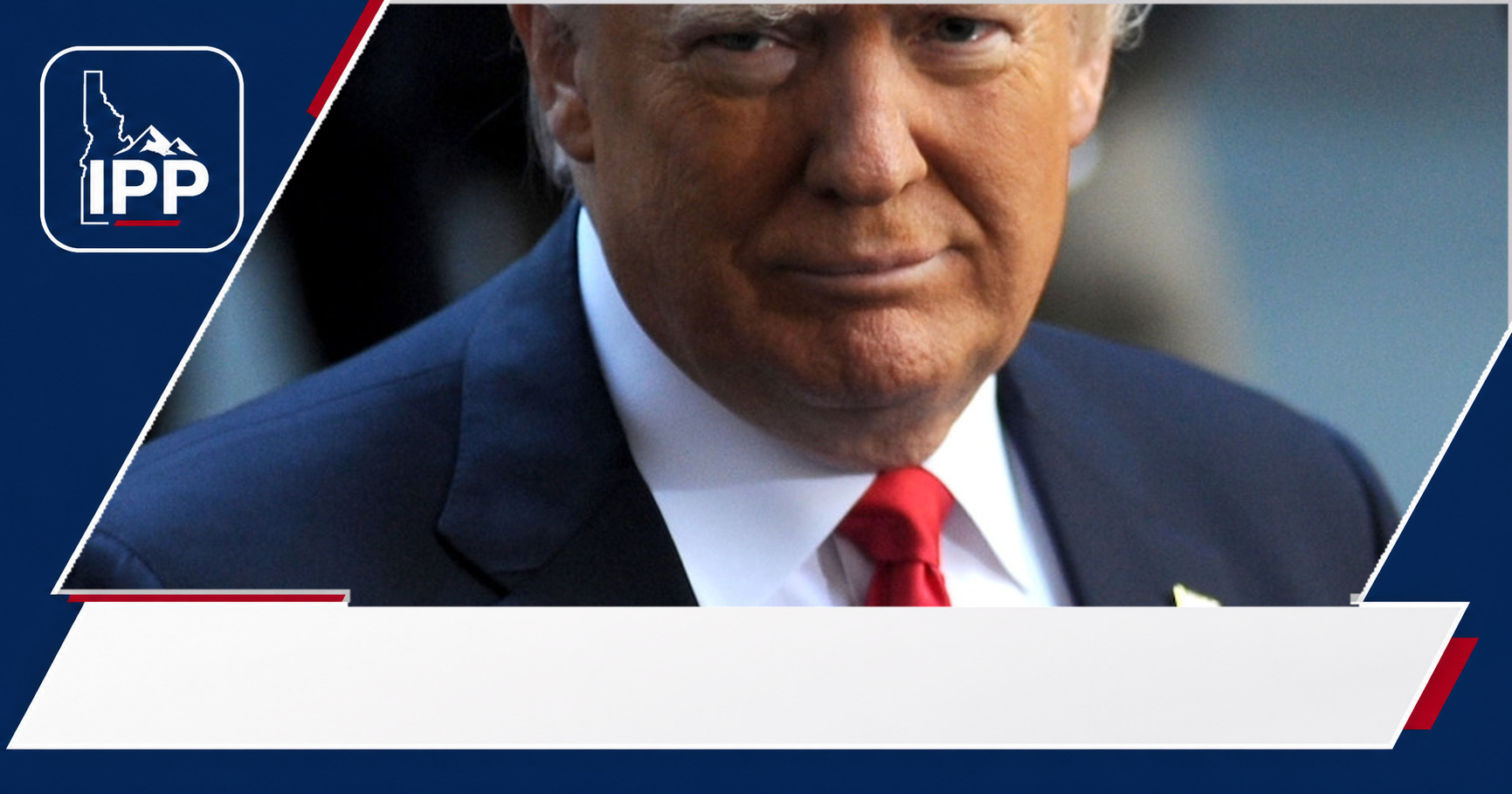
The deleted image became politically awkward not simply because it was provocative, but because it put Trump at odds with prominent voices in a faith-conscious part of his own coalition. His explanation that it showed him as a doctor did little to settle the dispute.
Donald Trump posted an AI-generated picture depicting himself as a Jesus-like figure, then deleted the controversial Truth Social post after backlash from Trump supporters and Trump critics. The image, which showed Trump appearing to heal a sick man, has created political trouble for Trump because objections came from across the ideological spectrum and landed amid his dispute with Pope Leo XIV.
Trump said he saw the picture as showing him “as a doctor” making people better. But critics saw a white-robed figure with a glowing hand touching a patient’s forehead and recognized the visual language of religious art, turning a social-media post into a test of how far even loyal allies will follow him.
Why the image crossed a line
The now-deleted image was not a conventional campaign-style illustration. It placed Trump beside a hospital bed, dressed in white, with his hand glowing as it rested on the forehead of a sick man.
According to the BBC, the scene also included the Statue of Liberty, a large American flag, fighter jets, an eagle, a praying woman, a nurse and what appeared to be a uniformed soldier. Those details fused religious imagery with patriotism, military power and Trump’s self-presentation as a national protector.
For critics, the problem was not merely that the image was grandiose. It was that the pose resembled familiar depictions of Jesus healing the sick, an association many religious conservatives regarded as disrespectful or blasphemous.
Political images often work by compressing a message into a single glance. In this case, the same visual shortcuts that made the post instantly legible also made it difficult to recast as a harmless joke once viewers interpreted it as religious symbolism.
Trump called it a doctor
Trump acknowledged that he had posted the image, but disputed the central interpretation of it. Speaking to reporters after it was removed, he said it was supposed to depict him “as a doctor” next to a Red Cross worker.
“It’s supposed to be as a doctor making people better,” he said, according to the BBC. “And I do make people better. I make people a lot better.”
He later told CBS News that he took it down because he did not want people to be confused. That explanation recognizes the post’s ambiguity, but it does not erase the imagery that prompted the criticism.
There is a real distinction between intent and reception in a political controversy. Trump’s account of what he meant may be sincerely held, while critics can still reasonably conclude that the robe, glowing hand and bedside setting invoked a sacred role rather than a medical one.
Pushback came from the right
The most consequential criticism came from people and outlets generally aligned with Trump or with conservative Christian politics. That is what made this episode more than a routine clash between the president and his usual opponents.
Sean Feucht, a Christian activist involved in faith-based events connected to this year’s 250th anniversary of the Declaration of Independence, wrote that the post should be deleted immediately. “There’s no context where this is acceptable,” he said.
Conservative activist Riley Gaines wrote, “God shall not be mocked.” David Brody of the Christian Broadcasting Network said the image “crosses the line,” adding that a supporter could back Trump’s mission while rejecting the post.
Those reactions illustrate a political vulnerability rather than proof of a lasting electoral cost. Trump has built exceptionally durable support among many evangelical and conservative Christian voters. Still, religious symbolism can create a boundary that ordinary partisan messaging does not, especially when supporters believe reverence is being treated as branding material.
The Pope dispute sharpened attention
The post arrived less than an hour after Trump criticized Pope Leo XIV, calling him weak on crime and terrible on foreign policy, according to the BBC. The timing made the Jesus-like imagery harder to view in isolation.
Pope Leo, described by the BBC as the first American pope, had repeatedly condemned the war in Iran and criticized what he called “absurd and inhuman violence.” He said he had no fear of speaking loudly about the Gospel’s message.
Trump defended his approach to Iran and said the pope was wrong about the issue. The disagreement is fundamentally about foreign policy, but the image shifted attention from that argument toward an emotionally charged question of religious respect.
That shift is politically unhelpful for Trump. A fight over security policy can be argued in familiar partisan terms; a fight over whether an image trivializes Jesus brings in moral and theological objections that do not map as neatly onto party loyalty.
What the deletion does and does not show
Deleting the image limited its life on Trump’s account, but it did not end the story. Screenshots and coverage preserve the image, while the removal itself became part of the message: an unusually pointed post met resistance strong enough to prompt a reversal.
It would be premature to treat the episode as evidence of a major political realignment. There is no clear measure yet of whether it will alter support for Trump, and many voters may see it as a brief online controversy.
Yet the backlash identifies a meaningful constraint. Trump’s political style has often turned criticism into attention and attention into support. Here, the strongest objections were not only about tone or partisan loyalty; they were about a religious boundary that some of his own allies said should not be crossed.
The lasting question is whether Trump’s explanation persuades those voters or whether the image becomes a reminder that political theater can carry different risks when it borrows the symbols of faith.




Leave a Reply