
The official record points to suicide, but watchdog findings show serious failures at the federal jail where Epstein died, leaving a gap that conspiracy claims still fill.
The most durable argument over Jeffrey Epstein’s death is not driven by one new piece of evidence. It survives because two things remain true at once: official and journalistic accounts point to suicide, while the custody failures around him were serious enough to damage public confidence.
Epstein died on August 10, 2019, while in federal custody at the Metropolitan Correctional Center in New York. According to the Justice Department’s inspector general, he died by suicide. A recent 10,000-word New York Times investigation also points to suicide, according to the newspaper.
That has not ended the murder claim. The claim persists because many readers are not only weighing a cause of death. They are judging whether a failed institution earned their trust.
The trust problem starts inside the jail
The Justice Department inspector general said its review found numerous and serious failures by Metropolitan Correctional Center staff in Epstein’s custody, care and supervision.

Those failures were not vague. The inspector general said Epstein was left unmonitored and alone in his locked cell with an excessive amount of bed linens from about 10:40 p.m. on August 9 until he was found hanged at about 6:30 a.m. on August 10.
The report also said staff failed to ensure Epstein was assigned a cellmate after his cellmate was transferred out of the jail on August 9. According to the inspector general, the jail’s psychology department had determined after a July 23 incident that Epstein needed to be housed with an appropriate cellmate.
Those facts do not establish murder. They do explain why many people saw the official account through a lens of disbelief.
What recent reporting adds
The New York Times said four reporters examined new documents and videos and interviewed former inmates and other key people for the first time. The paper said that reporting points to suicide.
The Times also acknowledged the broader skepticism around the case. Its own account noted that, after nearly seven years, the official conclusion of suicide had not cleared up doubts or holes in the evidence for many people.
That framing matters because it separates two questions that often blur together. One is what the available evidence supports about how Epstein died. The other is why many people still feel the story has not been satisfactorily explained.
The AP records show a troubled detention
The Associated Press reported that it obtained more than 4,000 pages of Bureau of Prisons records related to Epstein’s death. The AP said the records included a psychological reconstruction of the events leading to his suicide, health history, internal agency reports, emails, memos and other material.
Those records described Epstein struggling in custody after his July 2019 arrest on federal sex trafficking and conspiracy charges. The AP reported that he was under psychological observation after a suicide attempt days earlier that left his neck bruised and scraped.
The AP also reported that Epstein had a 31-hour stint on suicide watch, then insisted he was not suicidal. The details deepen the picture of his condition in jail, but they do not replace the broader problem: a high-profile detainee died in a setting where safeguards failed.
Where suspicion outruns the record
The murder claim turns institutional failure into a much larger conclusion. That move is understandable emotionally, but it is not the same as evidence that another person killed Epstein.
A watchdog finding that staff failed in their duties is evidence of serious misconduct and dereliction, as the inspector general put it. It is not, by itself, proof of homicide.
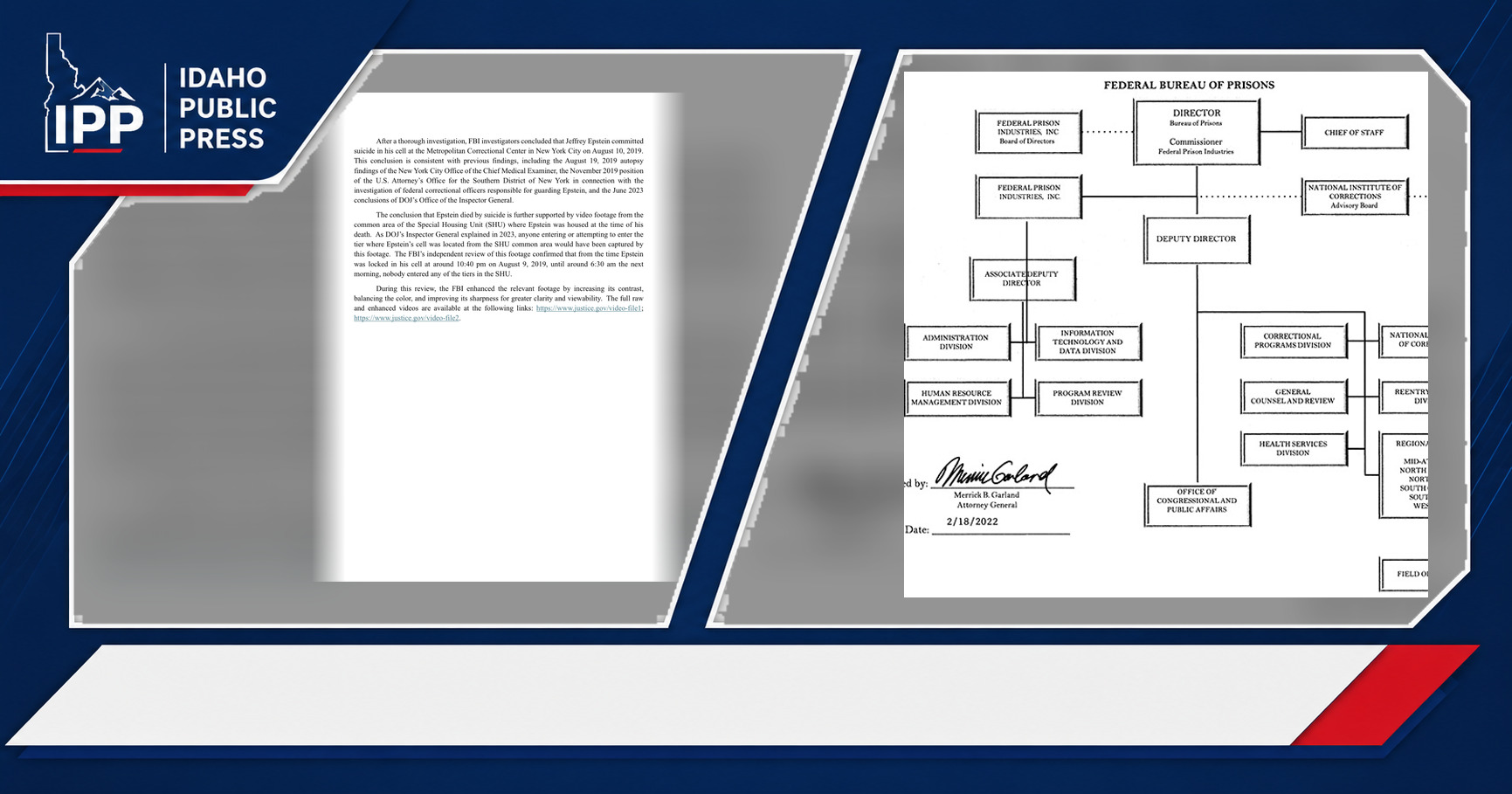
The FBI memo cited in the supplied record says investigators concluded Epstein committed suicide in his cell at the Metropolitan Correctional Center. The Justice Department inspector general’s public summary also states that Epstein died by suicide while in Bureau of Prisons custody.
For readers who distrust institutions, those conclusions may still feel inadequate. But distrust alone cannot supply the missing evidence for a murder claim.
The narrower lesson
Epstein’s death ended the criminal case against him before a public trial on the federal charges described by the AP. That made the failure of custody even more consequential, because the public was left with both an unresolved scandal and a damaged official process.
The clearest supported takeaway is narrower than the most viral claim. The record cited here supports suicide as the official and reported conclusion, and it supports severe criticism of the jail’s handling of Epstein.
Both points matter. Treating documented failures as proof of murder can obscure the failures that were actually found. Ignoring those failures, meanwhile, helps explain why the suicide conclusion has not settled the debate.










Leave a Reply