
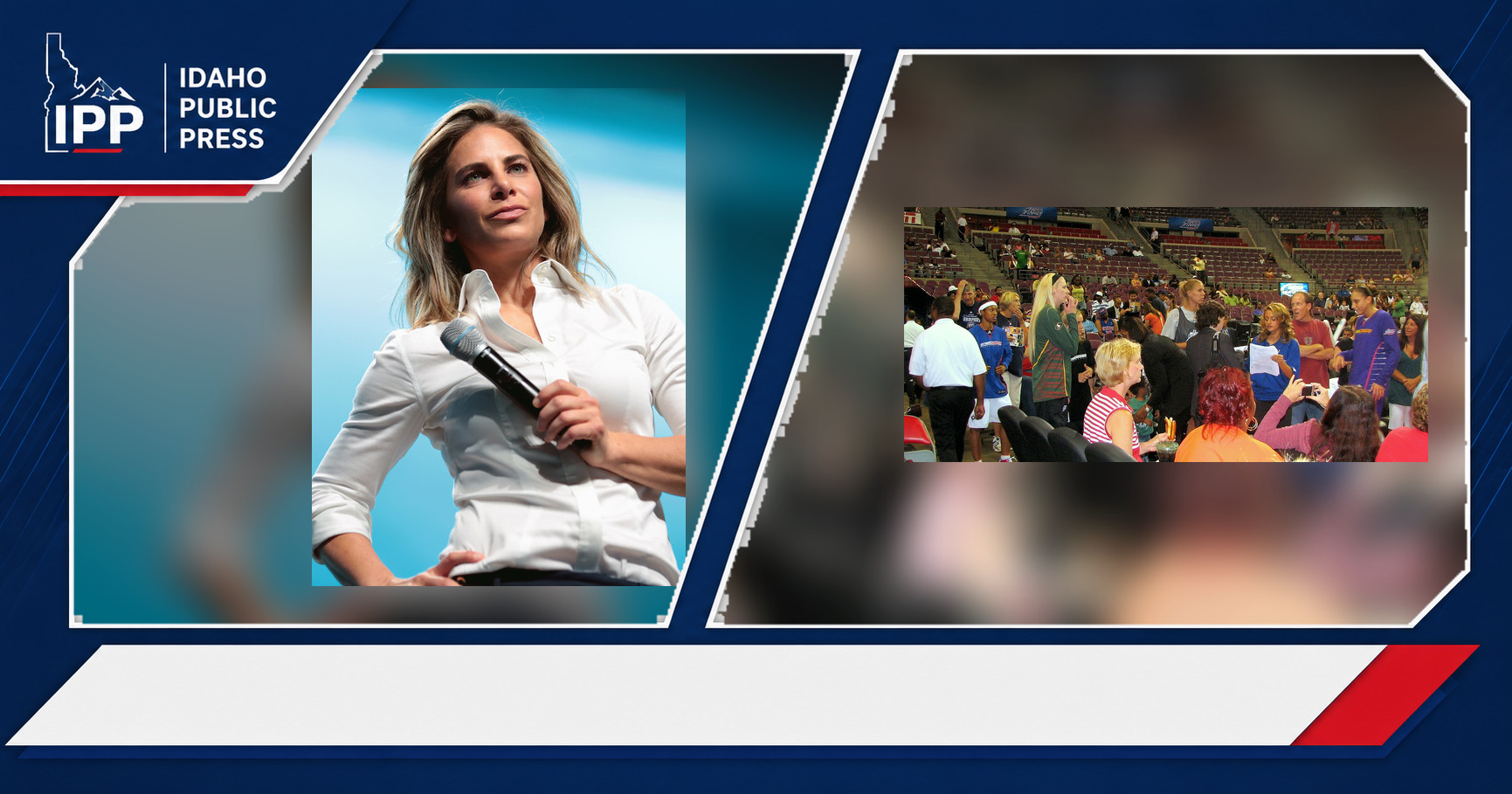
The fitness personality’s call puts a consumer boycott at the center of several heated debates around the WNBA. It also raises a basic question: what specific change, if any, is the league being asked to make?
Jillian Michaels called for an official boycott of the WNBA, arguing that viewers staying away could pressure the league to change amid controversies surrounding the WNBA. Speaking on NewsNation’s On Balance, Michaels said a boycott was a difficult proposition because she wants to support women athletes, but said she believes withholding viewership may be the way to force change.
Michaels’ comments followed a series of disputes involving race, player conduct and transgender participation in women’s sports. Her proposed WNBA boycott does not appear to be a formal campaign backed by an organization, and the reporting reviewed does not identify a specific policy change Michaels wants the league to adopt.
What Michaels said on NewsNation
Michaels, who hosts the Keeping It Real podcast and is best known for her fitness-media career, discussed the league during a Monday-night appearance with NewsNation host Leland Vittert.

“I think we should boycott it,” Michaels said, according to NewsNation. She acknowledged the tension in that position, saying fans want to support players and women’s sports, but argued that not watching could be a way to make the WNBA “change their ways.”
That distinction matters. Michaels was not announcing an action by the league, a players’ union or a major sponsor. She was urging viewers to make an individual consumer choice as a means of protest.
Boycott calls can rapidly become part of the public conversation, particularly when they come from a recognizable media figure. But their impact is difficult to measure without a defined organizer, stated demands or evidence that viewers are actually changing their behavior.
The incidents behind the criticism
NewsNation framed the comments around controversies involving race in the league and recent criticism directed at Indiana Fever guard Sophie Cunningham over her views on transgender athletes.
The report also pointed to a game against the Chicago Sky in which Cunningham received a hard foul from Sky player DiJonai Carrington, who was ejected. Afterward, Carrington posted the phrase “white privilege” on social media, according to the report.
Vittert characterized the play as a “planned attack.” That is his assessment, not an established finding cited in the material. The available reporting does not include a league determination that the foul was premeditated, nor does it provide Carrington’s full explanation of the incident.
That gap is central to the broader debate. A sharp on-court confrontation, an ejection and social-media posts can fuel competing narratives quickly, while the evidence needed to settle claims about motive is often limited or disputed.
Transgender participation drives debate
Michaels also focused on transgender participation in women’s sports, a subject that has become a flashpoint far beyond basketball. She praised former NBA players Enes Freedom and Royce White for publicly connecting their names to the 2027 WNBA Draft, describing their actions as pressure on the league.
White told Fox News that he is transgender and identifies as a woman “sometimes” for purposes of professional basketball, according to NewsNation. He said he would reconsider his position if the WNBA issued what he called a definitive statement on the issue. Freedom said in an X post that he had declared for the draft and wrote, “rules are rules.”
Michaels described the prospect of biological males competing in women’s professional sports as unacceptable. Advocates for transgender inclusion, by contrast, generally argue that participation rules should be grounded in sport-specific standards, medical evidence and fair treatment rather than broad assumptions about individual athletes.
The source material does not spell out the WNBA’s current eligibility rules, whether either former NBA player is eligible under them, or whether the league plans to alter any policy. Those details are essential before a symbolic draft declaration can be treated as a likely path onto a roster.
A boycott has competing consequences
Michaels’ argument is built on pressure: reduce attention and, potentially, revenue until the institution responds. It is a familiar tactic in political and cultural disputes, but sports boycotts carry an immediate complication. Lower viewership can affect the players whose careers, visibility and pay many fans say they want to advance.
That is the conflict Michaels herself identified. Supporting women’s sports and declining to watch a women’s league are not easily reconciled, especially as the WNBA seeks to grow its audience, attendance and commercial opportunities.
Critics of a boycott could argue that the approach punishes athletes, teams and local fans for disputes that have not been tied to a clear leaguewide remedy. Supporters may see it as one of the few tools audiences have when they believe a sports organization is not addressing concerns they consider fundamental.
Without concrete demands, though, it is hard to know how the WNBA could demonstrate that it had met the test Michaels is setting. A call for the league to “change” can mean very different things to different audiences.
What the WNBA has not said
The reporting reviewed does not include a response from the WNBA to Michaels’ boycott appeal. It also does not identify a formal boycott organization, a timetable, participating sponsors or a measurable benchmark for success.
The league has not been shown in the available material to have adopted a new policy in response to the comments. Nor is there evidence that Michaels’ call has translated into a broader, coordinated effort among fans.
For now, the episode is best understood as a prominent commentator’s argument that fans should use their attention as leverage. It is also another example of how debates over player conduct, race and transgender inclusion can become intertwined in a league where every major controversy is amplified well beyond the court.
The larger question for fans
The WNBA controversy is not only about whether viewers agree with Michaels. It is about what responsibility a professional league has to explain its standards, address conflict and keep public debate from being driven solely by viral moments and partisan interpretations.
Michaels has made her preferred response clear: stay away until the league changes. What remains unclear is the precise outcome she seeks, whether the WNBA will address her criticism and whether fans who support the league will see a boycott as accountability or as a step backward for women’s basketball.





Leave a Reply