Category: Uncategorized

  • A Major Wore His Uniform to Demand Trump’s Removal. Then Police Moved In

    A Major Wore His Uniform to Demand Trump’s Removal. Then Police Moved In

    The arrest of Maj. Jason Watson turned a political protest into a test of Capitol rules, military discipline and the power of a uniform in a partisan fight.

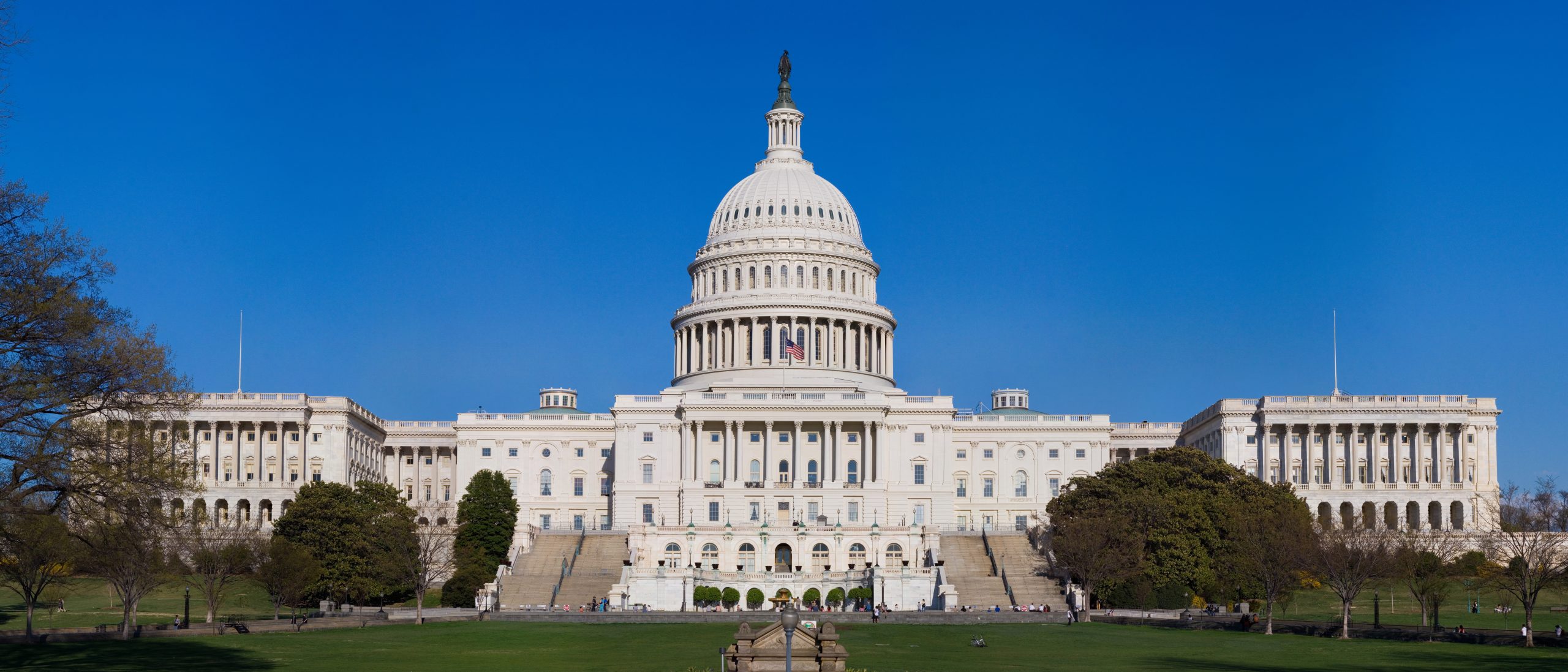
    An active-duty Air Force major walked onto the House steps in uniform and called for President Donald Trump and Vice President JD Vance to be removed from office. Minutes later, U.S. Capitol Police arrested him.

    The arrest of Maj. Jason Watson has landed in a volatile space: impeachment politics, military speech rules and the Capitol’s post-Jan. 6 security posture. It also raises a sharper question than the usual protest debate: what changes when the person making the political demand is wearing the uniform of the United States military?

    A protest built for confrontation

    Watson appeared Wednesday at a Capitol news conference organized by the Removal Coalition, a group pushing members of Congress to impeach Trump. According to NBC News, the event was attended by Rep. Al Green, the Texas Democrat who has repeatedly pursued articles of impeachment against Trump.

    Watson’s message was direct. He said Trump and Vance should be impeached, convicted and removed from office, arguing that Congress had failed to treat the matter with urgency.

    He also tried to separate his appearance from conventional party politics. Watson said he was not a Democrat and did not share Green’s policy positions, framing his remarks instead around oath-taking, constitutional limits and what he called civil resistance.

    That distinction may matter politically. It may matter much less under military regulations, which draw hard lines around service members using the uniform in political settings.

    Capitol Police cite House steps rules

    U.S. Capitol Police said the arrest was about where and how the demonstration occurred, not the viewpoint being expressed. In a statement reported by NBC News, the department said it is generally against the law for the public to demonstrate on the House steps unless they are with a member of Congress.

    Police said Watson had been escorted to the House steps by a member of Congress. Once that member left, officers said they gave Watson lawful orders to stop what they described as an illegal demonstration or face arrest.

    According to police, Watson refused those orders. The department identified him as the man arrested and said he faced a charge of “Crowding, Obstructing, and Incommoding.”

    Capitol Police also said protest is legal in other areas of the Capitol grounds. That point is central to the official explanation: the department is presenting the case as a location-and-compliance arrest, not a ban on protest itself.

    The uniform changes the stakes

    For civilians, the incident might remain a Capitol protest case. For Watson, the military dimension makes it more complicated.

    Active-duty service members are subject to restrictions that do not apply to ordinary citizens. The Uniform Code of Military Justice prohibits officers from using contemptuous language toward the president, vice president, Congress and other senior officials. Air Force guidance has reminded personnel of those limits.

    Military rules also generally bar service members from participating in political activity while in uniform. That restriction is meant to protect the military’s nonpartisan image and avoid the appearance that the armed forces are endorsing a political cause.

    The Air Force did not announce a disciplinary action in the NBC report. But a spokesperson said service members must comply with laws, regulations and policies governing conduct and uniform wear, and that Department of the Air Force personnel are expected to uphold high standards of discipline and professionalism on and off duty.

    Watson’s argument went beyond slogans

    Watson’s criticism of the administration focused partly on foreign policy. He accused the Trump administration of actions in Venezuela and Iran that he described as an unconstitutional usurpation of Congress’ authority and a violation of the War Powers Clause.

    He also tied those claims to military consequences, saying the alleged violations resulted in the deaths of 13 service members and injuries to hundreds more. Those were Watson’s assertions, made as part of his case for impeachment.

    Watson also criticized the administration’s immigration policies and tactics, calling them unconstitutional. The White House response, if any, was not included in the extracted report.

    That mix of arguments helps explain why the moment drew attention. Watson was not merely heckling from a sidewalk. He was invoking constitutional war powers, service member casualties and immigration policy while standing at the Capitol in uniform.

    Impeachment politics meet protest theater

    The presence of Green and the Removal Coalition made the event part of a broader effort to keep impeachment pressure alive. Green has become one of the most persistent congressional voices calling for Trump’s impeachment, even when the effort has not had broad support in Congress.

    Jessica Denson, founder of the Removal Coalition, told NBC News that Watson was being held at an Air Force base after the arrest. She said she expected significant charges to be filed against him and that Watson had anticipated that possibility before the protest.

    Denson also cast the arrest in Independence Day terms, arguing that it came just before July Fourth while Watson was speaking out against what she called tyranny. That framing is politically potent, but it does not answer the legal and military questions now surrounding him.

    The strongest symbol of the day may have been the uniform itself. To supporters, it could read as moral urgency from someone inside the military system. To critics, it could look like an active-duty officer dragging the armed forces into a partisan impeachment campaign.

    The unanswered question now

    The immediate criminal allegation appears narrow: Capitol Police say Watson refused orders to stop demonstrating in a restricted location. The larger consequences could come from the military side, where commanders have broader authority to review conduct, speech and uniform use.

    It remains unclear whether Watson will face military discipline, what form it could take, or whether any civilian charge will be resolved quickly. It is also unclear whether the arrest will become a one-day protest story or a longer fight over the boundary between military conscience and military neutrality.

    That boundary has always been tense. Service members do not surrender their constitutional identities, but they serve under rules designed to keep the military out of electoral and partisan combat.

    Watson’s arrest put that tension on the Capitol steps. The next decision may not come from the crowd or the cameras, but from the institutions now deciding whether his protest was protected expression, prohibited conduct or both.