

The century-old library sits in both Stanstead, Quebec, and Derby Line, Vermont. A new entry rule shows how tighter border politics can reshape even the most familiar local institutions.
Canadians must enter the Haskell Free Library and Opera House through the back door after border enforcement changes during the Trump era altered access to the unusual landmark on the Canada-U.S. border in Stanstead, Quebec and Derby Line, Vermont.
The restriction matters because the Haskell is not a typical library. It was built to serve both countries, yet U.S. Customs and Border Protection concerns about unauthorized crossings and smuggling have turned its front door into a symbol of a harder border.
A library split by a line
The Haskell Free Library and Opera House is famous because the international boundary runs through the building itself. Patrons can stand in one country and look across a taped line into another, with the library floor and opera house seating divided between Quebec and Vermont.
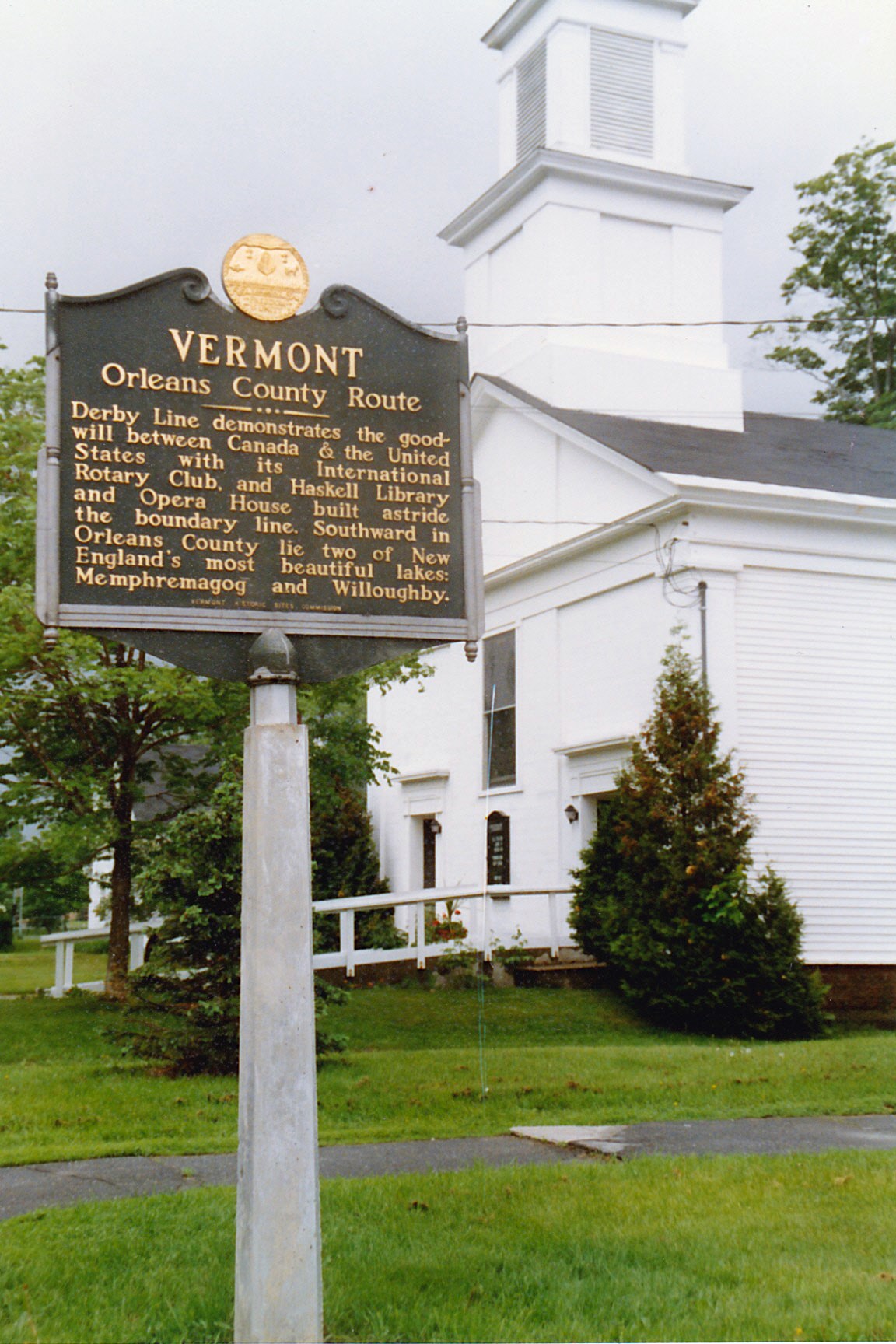
That odd geography has long been part of its appeal. The building opened in 1904 as a gift to residents on both sides of the border, according to historical accounts cited in reporting on the site. Its purpose was not just cultural; it was civic, a deliberate gesture of neighborliness between two towns that lived with the border every day.
For generations, the arrangement made the Haskell feel almost magically exempt from normal border logic. People used it for books, performances, community events and, at times, reunions between relatives who could not easily meet elsewhere.
Now the same feature that made the building beloved is making it difficult to manage. A public institution designed around shared access has been pulled into a political era defined by suspicion at the border.
Why Canadians are being rerouted
The central change is straightforward: Canadians are no longer being treated as though they can simply use the main U.S.-side approach as they once did. The back-door requirement reroutes access and makes the building’s border-straddling layout far less seamless.
U.S. officials have framed the issue as enforcement, not symbolism. The Guardian reported that U.S. authorities cited drug traffickers and smugglers “exploiting” the library’s accessibility and said tighter controls were meant to protect Americans. The same report noted that officials did not provide evidence with that claim.
There is at least one documented reason the site attracts scrutiny. In 2018, Canadian Alexis Vlachos was sentenced to 51 months in a U.S. prison for his role in using the library to smuggle more than 100 handguns into Canada, according to The Guardian’s account.
That case gives enforcement agencies a concrete example to point to. It does not settle the larger question of whether broad access restrictions are the right answer for a community institution that also serves ordinary readers, students, families and theatergoers.
The Trump-era border context
The timing has sharpened the reaction. The access change has been described in the context of the Trump era, when U.S.-Canada tensions have been more visible and more theatrical than usual.
The Guardian reported that Homeland Security Secretary Kristi Noem visited the Haskell in March and made remarks that upset some people connected to the library, including comments alluding to Canada as a “51st state.” That line echoed President Donald Trump’s repeated needling of Canada and its political leadership.
For many Canadians, that broader rhetoric changes how the entrance rule feels. A restriction that U.S. officials describe as a security measure can land locally as a rebuke, especially at a building created to represent cross-border friendship.
That is the tension at the heart of the dispute: border agencies see a vulnerability; patrons and staff see a shared civic space being treated like a loophole.
What the rule changes locally
On paper, rerouting Canadian visitors may sound minor. In practice, doors matter. Entrances shape who feels welcome, who has to take extra steps and who decides the trip is no longer worth it.
The Haskell is more than a collection of shelves. It hosts performances, readings and community gatherings. Its opera house has long been a draw in its own right, with the international line cutting through the audience area.
Any added friction could affect attendance, staffing, programming and the everyday rhythm of the two towns. Stanstead and Derby Line are not distant capitals debating border theory; they are neighboring communities whose shared landmark is now operating under a more complicated set of expectations.
The change also undercuts one of the Haskell’s most human roles. In recent years, the library has served as a meeting place for families separated by visa limits or immigration rules. Those meetings were sometimes emotionally important and sometimes uncomfortable for staff tasked with keeping the building within legal boundaries.
Security versus shared space
The enforcement argument is not imaginary. Borders are legal lines, and officials are responsible for preventing smuggling and unauthorized crossings. A building that physically bridges two countries creates challenges most public libraries never face.
Still, critics of the access change can argue that the Haskell’s value lies precisely in its exceptionality. If every unusual cross-border space is treated first as a threat, the social fabric that made border towns work begins to fray.
Both views can be true at once. The library’s openness can be exploited, and its openness can be worth preserving. The unresolved policy problem is how to address specific security risks without turning a 120-year-old symbol of cooperation into a checkpoint story.
That balance is especially hard in a polarized climate. Once a local access rule becomes part of a national argument over sovereignty, migration and Trump-era politics, compromise becomes harder to see.
What remains unclear
Several practical details still matter for patrons: how consistently the back-door requirement is being enforced, whether exceptions exist for events, and how people with mobility issues or limited transportation are affected.
It is also unclear whether the current arrangement is permanent or part of a broader reset in how U.S. Customs and Border Protection manages the library’s unusual footprint. The answer will shape whether this becomes a temporary disruption or a lasting change in how the Haskell functions.
For now, the image is powerful: Canadians approaching a library built for two countries and being directed away from the front. The Haskell Free Library and Opera House still straddles the border, but the border is now much harder to ignore.








Leave a Reply