

The debate over illegal immigration often turns on a broader question: does visible rule-breaking invite more disorder? The broken windows theory offers one framework, but it does not settle the evidence on immigration and crime.
Illegal immigration and the broken windows effect are often discussed together in arguments about public order, crime and enforcement. The broken windows theory links neighborhood disorder with criminal behavior, but applying that theory to unauthorized immigration requires several separate claims that should not be treated as proven simply because they sound connected.
The central question is not whether immigration law should be enforced; governments plainly make those decisions. It is whether violations of immigration law create the kind of local disorder that broken windows theory says can weaken informal social control and lead to more crime. The available research makes that a more complicated proposition than political rhetoric often suggests.
What broken windows theory claims
Broken windows theory became widely known after a 1982 article by James Q. Wilson and George L. Kelling. Its basic idea was that visible signs of disorder—such as vandalism, abandoned property, public intoxication or persistent nuisance behavior—can signal that a place is not being cared for.
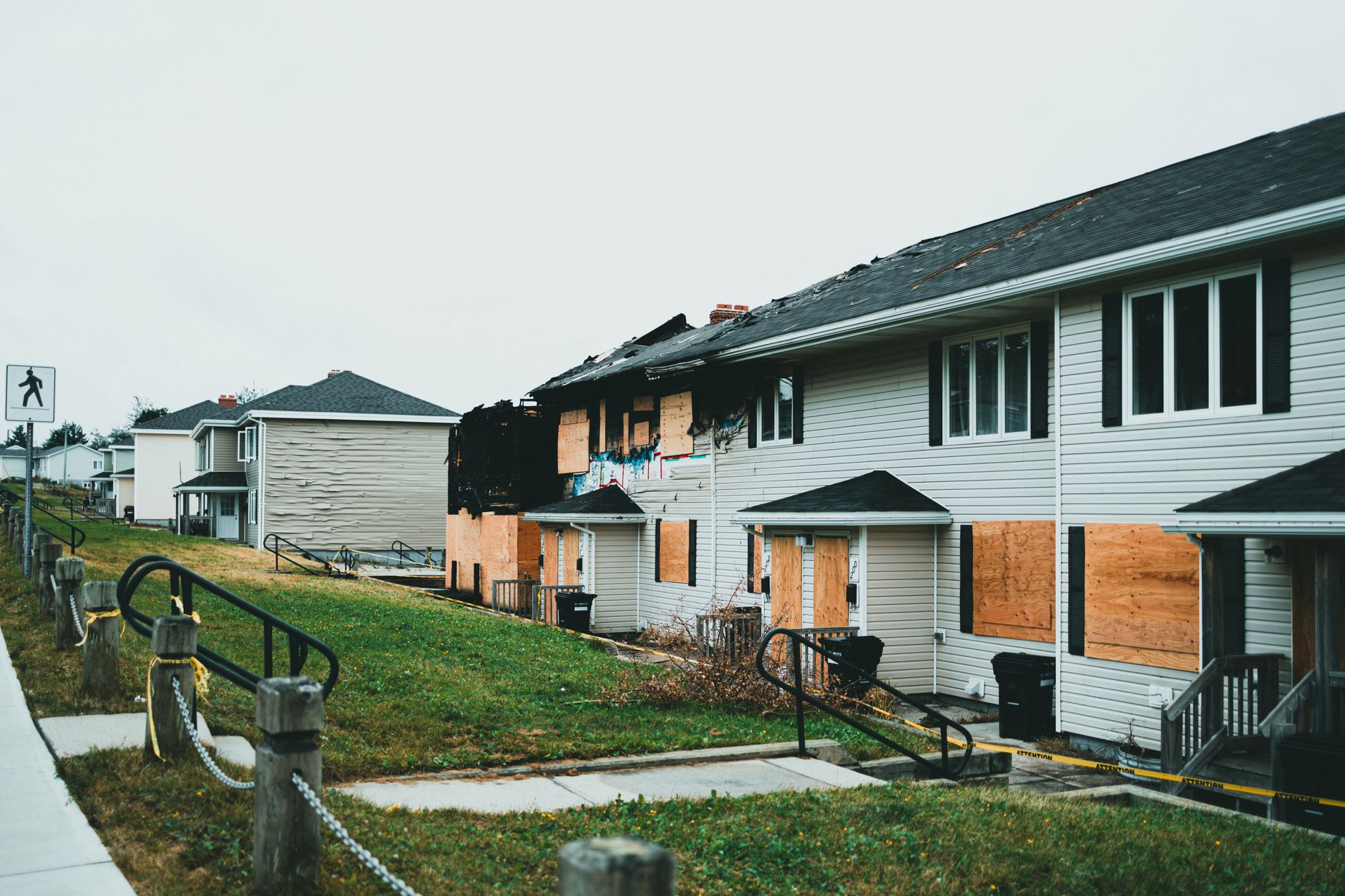
That signal, the theory holds, may change behavior. Residents may withdraw from public spaces, become less likely to intervene in problems, and lose confidence that rules will be enforced. In that environment, more serious offending could become easier or more likely.
Later research has refined the argument. A study by Christopher Lanfear, James P. Lynch and John P. McNulty, published in Criminology, describes the broken windows thesis as a claim that disorder may increase crime directly and indirectly by eroding informal social control.
That is an important distinction. The theory is about the social consequences of observable disorder in particular neighborhoods. It is not a general rule that every law violation causes broader criminal behavior.
Why immigration gets pulled in
Arguments connecting illegal immigration to broken windows typically begin with a straightforward point: an unauthorized border crossing or an expired visa is a violation of immigration law. From there, advocates may argue that inconsistent enforcement communicates that rules do not matter.
That is a policy argument about legitimacy, deterrence and the credibility of government institutions. It can carry weight for people who believe laws must be visibly enforced to retain public trust, particularly in communities dealing with strained housing, schools, workplaces or local services.
But a visible immigration-policy dispute is not automatically equivalent to the street-level disorder described in broken windows research. An individual’s legal status is frequently not visible to neighbors. Nor does a civil or criminal immigration violation, on its own, establish conduct that threatens a neighborhood’s daily safety.
The leap from “a law was broken” to “serious crime will rise” is therefore an empirical claim, not a conclusion built into the theory.
Crime data do not answer one question
Research on immigration and crime is difficult partly because the United States does not maintain a single, complete national measure of offenses by immigration status. The House Judiciary Committee’s January 2025 materials on undocumented immigrant offending noted that determining how often undocumented immigrants commit crimes is not easy.
Researchers also have to separate several questions that are often blended together: whether immigrants commit crimes at different rates from U.S.-born residents; whether a rise in a local immigrant population changes a neighborhood’s crime rate; and whether unauthorized immigration affects public disorder or perceptions of disorder.
Those questions can produce different answers. A study can find no broad relationship between a local unauthorized-immigrant population and crime while still leaving open concerns about specific places, particular offenses, enforcement capacity or the effects of sudden population change.
Conversely, an individual crime involving a noncitizen may be real and serious without proving a population-wide pattern. Anecdotes matter to victims and communities, but they cannot by themselves establish causation.
What recent research has examined
A 2024 Office of Justice Programs-supported study, Research into Immigration and Crime, examined the relationship between the presence of unauthorized immigrants in Census tracts and corresponding crime measures using multiple data sources. Its design points to the level at which the question has to be tested: location by location, with attention to who lives there and what crime is actually recorded.
Earlier scholarship has also challenged the assumption that undocumented immigration necessarily produces higher crime. Sociologist Michael T. Light’s 2018 research on undocumented immigration and crime is frequently cited in this debate, reflecting the scale of public concern as well as the need to test assumptions against data.
None of this means communities should dismiss quality-of-life problems. Residents reasonably want responsive policing, functional public spaces, secure borders and clear rules. The research caution is narrower: demographic change, immigration status and neighborhood disorder are not interchangeable measures.
The enforcement debate has two tracks
Supporters of tougher immigration enforcement can argue that predictable consequences deter unlawful entry and preserve confidence in the legal system. They may also point to the practical pressure that rapid arrivals can place on municipal budgets, shelters, health systems and schools.
Critics respond that treating immigration enforcement as a broken-windows policing project can encourage broad suspicion toward immigrant communities, including lawful residents and citizens. They also warn that aggressive local enforcement can make witnesses and victims less willing to contact police, potentially weakening the informal cooperation that broken windows theory itself treats as valuable.
Both concerns can exist at once. A community can seek orderly, enforceable immigration rules while recognizing that public safety depends on trust, accurate information and a distinction between immigration status and evidence of criminal conduct.
What the analogy leaves unresolved
The broken windows analogy is strongest as a question about government credibility: what happens when the public believes rules are inconsistently applied? It is much weaker when used as a shortcut for claiming that unauthorized immigrants as a group generate crime or neighborhood decay.
To support that stronger claim, analysts would need to show more than unauthorized presence. They would need evidence that it produces measurable disorder, that disorder changes local social control, and that those changes lead to additional criminal behavior after accounting for poverty, housing instability, policing, age, employment and other local conditions.
That standard matters because immigration policy has consequences far beyond a slogan. The most useful debate is not over whether order matters—it does—but over which policies actually improve safety, sustain public trust and match the evidence.










Leave a Reply