
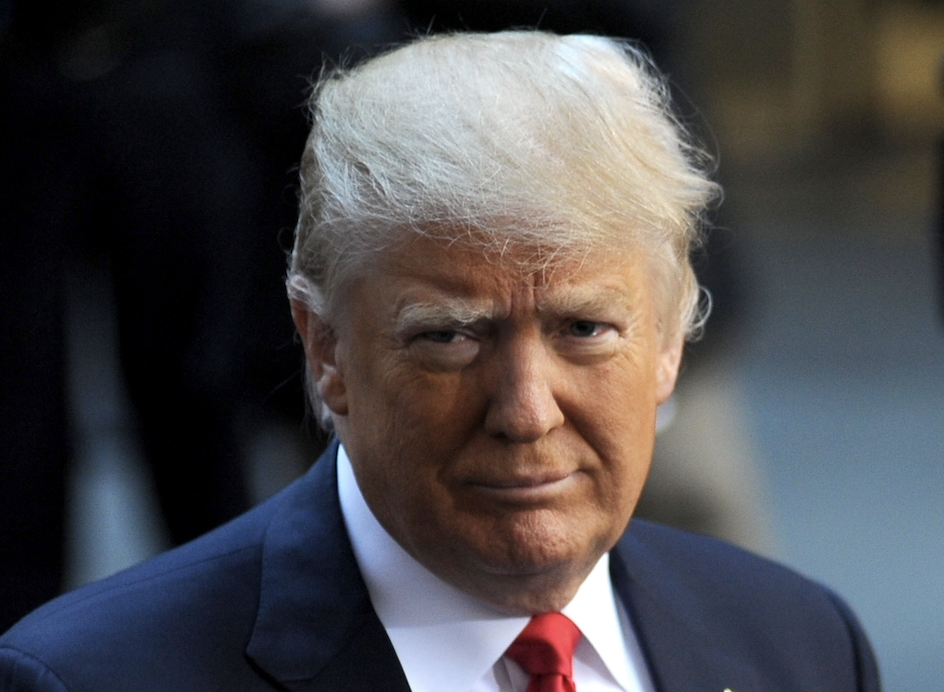
Bessent’s argument is more than a political scorecard: it is a defense of the Trump administration’s economic strategy. The available public record shows what he is promising, but not a single measure that can settle the debate.
Scott Bessent said Donald Trump fixed economic problems he attributed to Joe Biden, arguing that the economy is improving under Trump. The Treasury secretary’s description of the Biden-era economy as a “mess” is a political claim, but it also lays out the case the administration wants voters and businesses to judge: that tariffs, lower regulation, domestic production and tax changes can improve affordability.
Bessent’s comments matter because they frame the economic debate around lived costs, not just top-line growth. Whether the economy is truly “rising” depends on which measures people use—wages, prices, jobs, household debt, investment and the cost of essentials—and on how much time Trump’s policies have had to work.
Bessent’s case for a reset
The Newsmax headline summarized Bessent’s position bluntly: Trump had fixed a Biden-era “mess,” and the economy was moving upward. That is an assessment from a senior Trump administration official, not an independently established conclusion in the material available here.

In a Treasury Department release recounting an interview with Tucker Carlson, Bessent made a related argument. He said the private sector had, “in essence,” been in recession during the Biden years and said the administration’s goal was to “re-lever the private sector.”
His diagnosis is that businesses and households were held back by excessive regulation, government spending pressures and an economy too dependent on finance and imports. His preferred remedy is a larger role for private investment and more production inside the United States.
Tariffs sit at the center
Bessent has positioned tariffs as a tool that can reshape where companies make goods. In the Treasury release, he encouraged manufacturers to move factories from China, Mexico or Vietnam to the United States rather than face a tariff wall.
That approach reflects the administration’s broader view that economic security and national security are linked. Bessent cited concerns about supply chains and U.S. dependence on foreign production of medicines, semiconductors and ships.
Supporters of the strategy see tariffs as leverage: they can pressure companies to invest domestically, potentially strengthen selected industries and reduce exposure to geopolitical shocks. Bessent also argues that critics made similar inflation warnings during Trump’s first term and that those predictions did not play out as claimed.
Critics see a different risk. Tariffs are taxes paid at the border, and businesses can respond by raising prices, accepting lower margins, shifting sourcing or slowing investment. The eventual effect on households can vary by product, industry and whether companies find viable U.S. alternatives.
Affordability is the political test
Bessent’s argument is aimed especially at Americans who do not own substantial financial assets. In the Treasury-posted interview, he said the bottom half of households have more exposure to debt, credit-card bills, rent and auto loans, while stock ownership is concentrated among higher-income households.
He tied the administration’s economic pitch to relief for wage earners, citing proposals involving taxes on tips, Social Security, overtime and interest deductions for certain U.S.-made autos. He also said tariff revenue could help finance parts of that agenda.
The message is politically powerful because a strong stock market does not automatically translate into financial security for renters, borrowers or families facing high recurring bills. For many households, an improving economy means more than a favorable national statistic; it means whether paychecks stretch further than they did before.
Still, affordability claims require close scrutiny. Tax changes may benefit particular groups differently, while tariffs and changes in trade patterns may affect consumer prices. A policy that helps a domestic producer or protected worker may carry costs for buyers, importers or businesses using imported parts.
What “the economy is rising” means
“The economy is rising” is not one measurable condition. It can refer to stronger hiring, higher wages, falling inflation, increased investment, lower borrowing costs, growing output or improving consumer confidence. Those indicators can move in different directions at the same time.
That is why Bessent’s statement should be read as a directional judgment and a policy defense rather than a complete statistical account. The available Treasury material describes the administration’s intended mechanisms—tariffs, deregulation, energy policy, domestic manufacturing and tax policy—but does not provide a single set of current data proving that Trump has already resolved every problem Bessent attributes to Biden.
There is also a timing problem built into all presidential economic claims. Administrations inherit conditions shaped by prior policy, Federal Reserve decisions, global demand, wars, supply disruptions and business choices. New policies can take months or years to affect factory construction, supply chains, hiring and prices.
The Biden record remains contested
Bessent’s critique treats the Biden years as a period of private-sector weakness and government crowding-out. Democrats and defenders of Biden’s record have generally pointed to job growth, infrastructure and industrial investments, and efforts to expand U.S. manufacturing capacity.
The disagreement is not only about the facts each side emphasizes. It is also about cause and effect. One side may view public investment and industrial policy as necessary to rebuild capacity; the other may view them as evidence of excessive government intervention that discourages private activity.
Bessent’s comments make clear that the Trump administration favors the second interpretation. Its economic objective is not simply to post better quarterly numbers, but to change the mix of production, investment and regulation behind those numbers.
What would test Bessent’s claim
The strongest evidence for Bessent’s view would be a sustained improvement in household purchasing power alongside durable private investment and job creation, particularly in sectors the administration wants to expand. It would also require showing that any gains are broad enough to reach households facing rent, debt and everyday expenses.
The toughest questions are whether tariffs raise costs before domestic capacity catches up, whether tax changes are fully funded, and whether businesses respond to policy incentives by building in the United States rather than simply passing costs along. Those outcomes cannot be resolved by rhetoric alone.
For now, Bessent’s “fixed” assessment is a clear statement of the administration’s theory of the economy: reduce regulatory barriers, favor domestic production, use tariffs as leverage and target relief toward workers. The real verdict will rest on measurable results—and on whether families feel those results in their monthly budgets.









Leave a Reply